

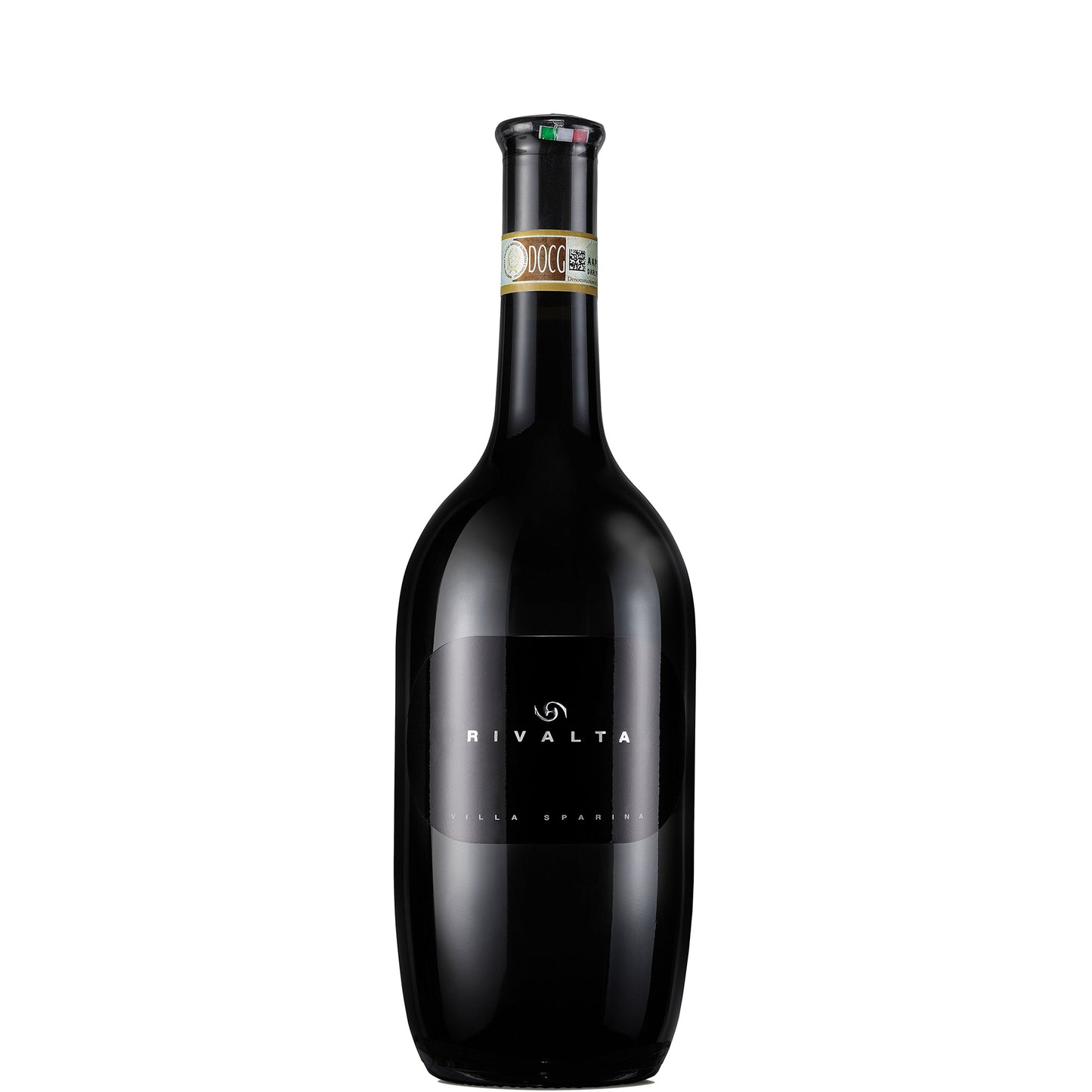
Villa Sparina, Rivalta Barbera del Monferrato Superiore, 2017
Villa Sparina, Rivalta Barbera del Monferrato Superiore, 2017
- Red Still
- 75.0cl
- 14.0%
- Barbera
Barbera is Piemonte's great democratiser — more widely planted than Nebbiolo, less celebrated, and frankly underestimated. Villa Sparina's Rivalta takes the grape seriously, spending time in oak to add structure without flattening the variety's most thrilling quality: that piercing, electric acidity that cuts through anything you put in front of it.
At nine years old, this 2017 is settling into something genuinely satisfying, the fruit rounded, the oak integrated, the whole thing feeling purposeful and composed.
- ❖ ABV: 14.0%
Grapes
Barbera
Vintage report
The 2017 growing season in Piemonte threw plenty at the region's growers, starting with a warm, dry spring that pushed budbreak early, followed by a scorching summer that had many producers genuinely worried. August brought the kind of heat that makes even seasoned vignerons pace their cellars at night, but September's cooler temperatures and some well-timed rain allowed the vines to catch their breath before harvest. The key was having old vines with deep roots and producers brave enough to green harvest heavily—those who did reaped the rewards of concentrated, ripe fruit with better balance than anyone dared hope for in late August.
What emerged was a vintage of surprising charm and immediate appeal, particularly for Nebbiolo, which produced wines with ripe tannins and generous fruit that sidestep the variety's usual austere youth. The Barberas show lovely freshness despite the heat, while Dolcetto delivered some of the most successful wines we've seen from this variety in years. These aren't wines built for decades of cellaring like the great years, but they're drinking beautifully now and should continue to please until the mid-2030s—sometimes the most enjoyable vintages are the ones that invite you in rather than make you wait.
Tasting Notes
AppearanceDeep ruby with a hint of garnet at the rim — showing nine years gracefully.
NoseRipe sour cherry and dark plum lead, with dried herbs, a whisper of vanilla from the oak, and something earthy and autumnal underneath. It's inviting rather than showy — the kind of nose that makes you want to eat something.
PalateThe acidity is the star, as it always is with Barbera — bright, clean, and energising without being sharp. The fruit is ripe and generous, with plum and black cherry, and the oak has settled into a background role, adding a gentle spice and texture rather than dominating. Tannins are soft and well-integrated.
FinishClean and persistent, with a slightly savoury, mineral edge that pulls you back for another sip.
Overall impressionA composed, food-friendly Barbera that has hit its stride and is drinking well right now.
Food Pairings
In the Monferrato and broader Piemontese tradition, Barbera is the everyday table wine — which is to say it goes with practically everything the locals eat, and they eat extremely well. Braised meats are the natural home: think bagna cauda, brasato al Barolo's humbler cousin made with Barbera itself, or a slow-cooked rabbit with rosemary and white wine. It's also the wine you'd reach for with tajarin, Piemonte's thin-cut egg pasta, dressed with a rich meat ragu. The acidity cuts beautifully through the fat of cured meats, and a plate of local salumi — lardo, coppa, salame della duja — alongside a glass of this is one of Italy's great simple pleasures.
We think this wine would go well with
Serve at around 16-17°C — cool enough to keep the acidity lively, warm enough to let the fruit express itself. A brief decant of 20-30 minutes will help open up any remaining reticence, though at nine years old it's unlikely to need much coaxing. A standard Bordeaux or Piemontese tulip glass works well; nothing too large or the wine's freshness starts to feel lost in the bowl.
The Rivalta vineyard sits in the Monferrato hills east of Asti, where the soils are predominantly calcareous clay — classic Piemontese territory, though less intense in mineral character than the Langhe's famous Tortonian and Helvetian marls. The altitude and aspect moderate the summer heat enough to preserve the acidity that defines good Barbera, while the clay helps the vine hold moisture through drier seasons. The result is a grape that ripens generously without losing its nerve.
Barbera del Monferrato Superiore DOC covers Barbera-based wines from the Monferrato hills in the provinces of Asti and Alessandria — one of Piemonte's oldest wine zones, though rarely the first name on anyone's lips. The Superiore designation requires a minimum of one year's ageing, at least six months of which in wood, and a higher minimum alcohol than the standard DOC. Compared to Barbera d'Asti or Barbera d'Alba, Monferrato tends to produce wines that are slightly lighter in texture and less intense, but the trade-off is freshness and drinkability.
The 2017 growing season in Piemonte threw plenty at the region's growers, starting with a warm, dry spring that pushed budbreak early, followed by a scorching summer that had many producers genuinely worried. August brought the kind of heat that makes even seasoned vignerons pace their cellars at night, but September's cooler temperatures and some well-timed rain allowed the vines to catch their breath before harvest. The key was having old vines with deep roots and producers brave enough to green harvest heavily—those who did reaped the rewards of concentrated, ripe fruit with better balance than anyone dared hope for in late August.
What emerged was a vintage of surprising charm and immediate appeal, particularly for Nebbiolo, which produced wines with ripe tannins and generous fruit that sidestep the variety's usual austere youth. The Barberas show lovely freshness despite the heat, while Dolcetto delivered some of the most successful wines we've seen from this variety in years. These aren't wines built for decades of cellaring like the great years, but they're drinking beautifully now and should continue to please until the mid-2030s—sometimes the most enjoyable vintages are the ones that invite you in rather than make you wait.
FAQs
What does this wine taste like?
Ripe sour cherry and dark plum, earthy and herbal, with a clean brightness from Barbera's naturally high acidity. The oak adds a gentle spice without overwhelming the fruit, and the finish is savoury and moreish. Think satisfying and honest rather than showy.
When should I drink it?
It's drinking well right now, in 2026 — the oak has integrated, the fruit is rounded, and it's hitting a lovely secondary phase. We'd drink it over the next three to four years, ideally before 2030, when the fruit may start to thin out.
What food should I pair it with?
This is a natural at the dinner table. Braised meats, rich pasta sauces, roast chicken, or even a well-aged hard cheese — Barbera's acidity cuts through fat and richness effortlessly. In Piemonte, they'd drink it with tajarin and ragu or a plate of local salumi without a second thought.
Is this worth cellaring further?
Not really. It has arrived at a satisfying point and is best enjoyed over the next few years rather than held for further development. Barbera preserves well thanks to its acidity, but it's not a variety that continues to gain complexity in the way Nebbiolo does. Drink it with dinner, soon.
How should I serve it?
Around 16-17°C — don't serve it too warm or you'll blunt that lively acidity. A short decant of 20-30 minutes won't hurt, though the wine is unlikely to be closed at this stage. A standard Bordeaux-style or Piemontese tulip glass is all you need.
How does this compare to Barbera d'Asti or Barbera d'Alba?
Barbera del Monferrato Superiore tends to be slightly lighter and fresher in style than Barbera d'Asti or the often richer Barbera d'Alba. The Superiore designation requires a minimum period of oak ageing, which adds structure. Think of it as Barbera with a little more formality, without losing the variety's essential energy and drinkability.
Want to know more?
Discuss your requirements with our account managers, Stephanie, Ed, & Jen
-
Personal Service
- Our team are always on hand to support you, taking orders online, by phone or email & responding to urgent requests.
- Our efficient warehouse & team of drivers always go the extra mile to deliver our wines to you.
- Our new, high-capacity warehouse ensures excellent availability of wines.
- Our new enterprise platform means hassle-free service, from inventory to billing.
-
Our Sales Team
Speak to one of our teamStephanie Duncan
With 25+ years in the wine trade, Steph knows the UK market inside out, from premium wine and wholesale to hospitality and retail. A WSET Diploma holder and unapologetic Champagne fan, she loves building great relationships and finding exciting wines.
Jen Neilan
Twenty years in hospitality later, after curating the wine list for Manchester’s first Neapolitan pizza restaurant, and running a natural wine bar, Jen made the move to the other side of the table.