
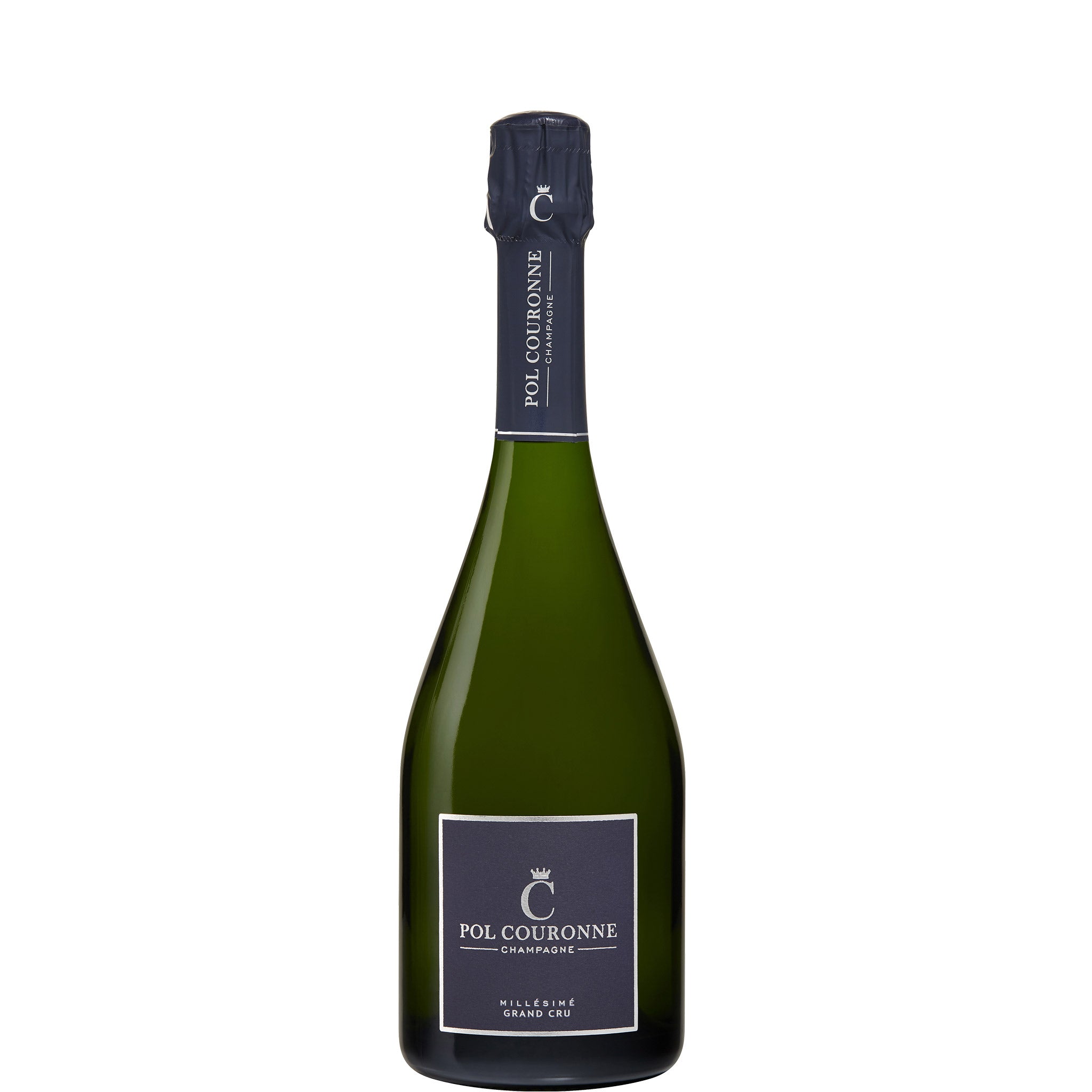
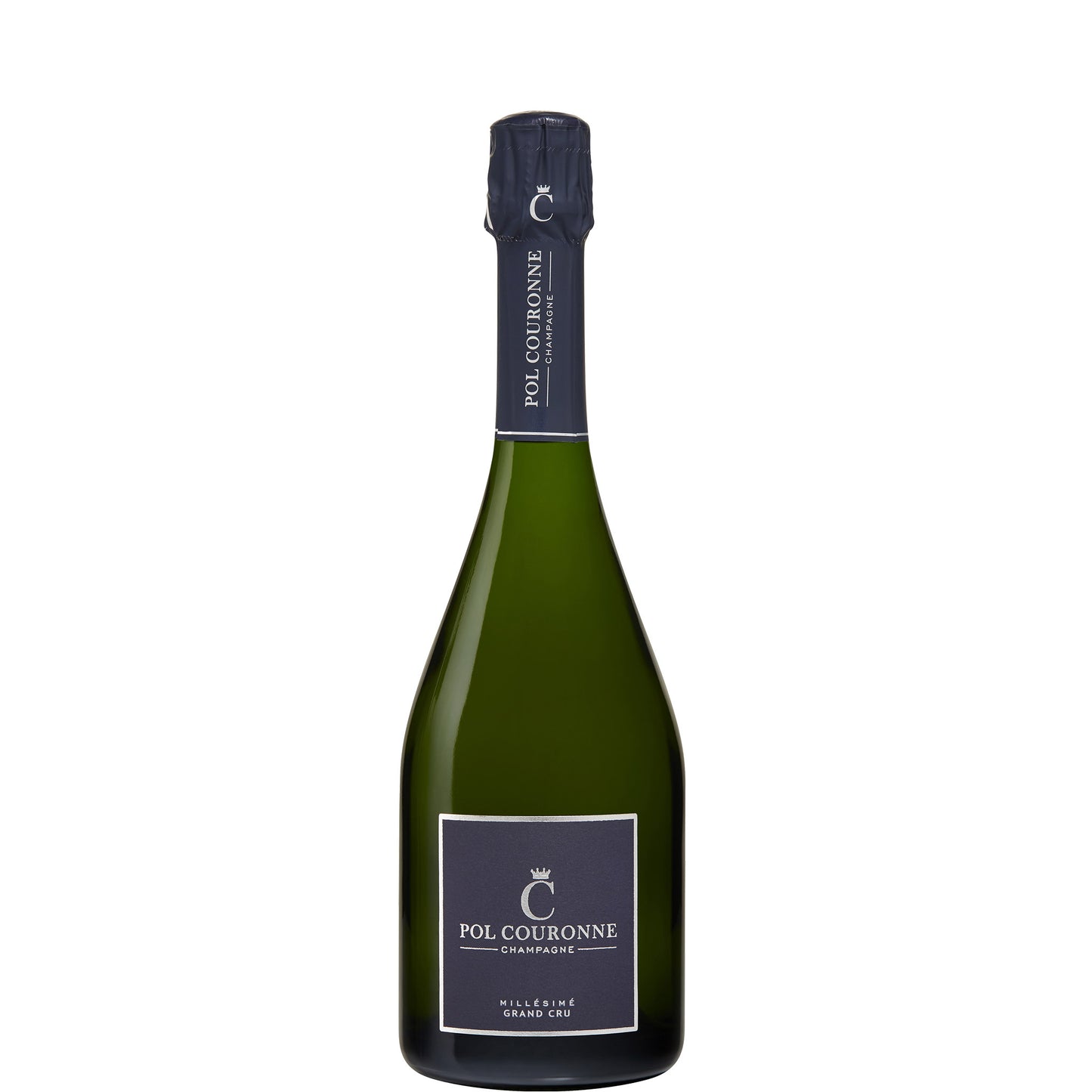
Pol Couronne, Cuvée Millésime, 2013
Pol Couronne, Cuvée Millésime, 2013
- White Sparkling
- 75.0cl
- 12.0%
- Chardonnay, Pinot Noir, Pinot Meunier
Pol Couronne is a small Champagne house producing wines from the Aube, the southernmost and often underestimated corner of the region. This 2013 Millésime is a vintage Champagne in the truest sense: a single harvest declared only when the year is genuinely worth it, and 2013 — cool, slow, and precise — was exactly that. The result is a wine of real energy and focus, with Chardonnay driving the tension and Pinot adding structure and a little weight behind it.
At thirteen years from harvest, this has moved gracefully through its primary phase into something richer and more contemplative: toasted brioche, preserved lemon, white stone fruit, and that distinctive chalky grip on the finish that marks out good Champagne from merely fizzy wine.
- ❖ ABV: 12.0%
Grapes
Chardonnay, Pinot Noir, Pinot Meunier
Vintage report
The 2013 vintage caught Champagne in a properly challenging mood. A cold, wet spring delayed budbreak well into May, followed by a summer that couldn't quite decide what it wanted to be — patchy sunshine punctuated by rain that had growers muttering into their morning coffee. Come harvest time in October, the latest picking dates in years meant racing against autumn's chill to gather fruit that had ripened slowly and unevenly across the region.
What emerged from this meteorological muddle was a vintage of surprising charm, though admittedly not one for the history books. The extended hang time gave the grapes a lovely mineral tension, particularly in the Chardonnay, while Pinot Noir struggled more with the conditions but still delivered decent colour and structure. Most houses declared a vintage, albeit in modest quantities, and we find these wines drinking rather well now — they've got that bright, food-friendly acidity that makes you reach for another glass, even if they lack the depth for long cellaring. Drink until 2028.
Tasting Notes
AppearancePale gold with a fine, persistent bead and a delicate ring of foam.
NoseToasted brioche and lemon curd up front, then white peach and a subtle almond pastry quality that comes with age. There is a clean, almost stony undercurrent that keeps things precise and focused rather than opulent.
PalateThe mousse is fine and creamy rather than aggressive, carrying bright acidity and preserved citrus fruit through the mid-palate. A little riper stone fruit — apricot, perhaps a touch of quince — adds mid-palate generosity without softening the wine's inherent tension.
FinishLong, dry, and chalky, with a citrus pith grip that keeps you coming back.
Overall impressionA mature vintage Champagne at a satisfying point of equilibrium — no longer primary, not yet declining.
Food Pairings
In the Aube, aged Champagne like this would typically be opened at the table rather than as an aperitif. Locals would think nothing of pouring it alongside andouillette or a generous slice of chaource — the local soft cow's milk cheese that matches the wine's acidity and creamy texture perfectly. Further up the Champagne table, this vintage style suits roast chicken with tarragon butter, grilled turbot, or a classic sole meunière. If you want to stay simple and honest, a plate of good smoked salmon with lemon and crème fraîche will do everything you need it to.
We think this wine would go well with
Serve at around 10-12°C — cold enough to preserve the mousse but not so cold that you lose the secondary complexity this wine has worked thirteen years to develop. No need to decant, but do give it ten minutes out of the fridge before pouring. A tulip-shaped or slightly wider Champagne glass rather than a flute will let the nose open properly and give the wine room to breathe.
The Aube's vineyards sit on Kimmeridgian limestone and clay soils — the same geological seam that runs north through Chablis — which gives wines from this corner of Champagne a distinctive chalky mineral grip and more weight than the Marne to the north. The continental climate here means cooler nights and a longer, more dramatic growing season, building natural acidity that makes vintages like 2013 particularly rewarding for age. That combination of chalk, clay, and climate tension is what separates Aube Champagne from its more famous neighbours.
Champagne is the most tightly regulated sparkling wine appellation in the world, covering a defined zone in northeast France with strict rules on permitted grape varieties, yields, minimum ageing, and production method. Vintage Champagne — Millésime — must be made entirely from a single harvest and aged for a minimum of three years on the lees, though serious producers age for considerably longer. The Aube sits roughly 100km south of Épernay and Reims, and while historically treated as second-tier, it has seen a surge of critical interest over the past decade as producers there demonstrate what their Kimmeridgian soils can genuinely achieve.
The 2013 vintage caught Champagne in a properly challenging mood. A cold, wet spring delayed budbreak well into May, followed by a summer that couldn't quite decide what it wanted to be — patchy sunshine punctuated by rain that had growers muttering into their morning coffee. Come harvest time in October, the latest picking dates in years meant racing against autumn's chill to gather fruit that had ripened slowly and unevenly across the region.
What emerged from this meteorological muddle was a vintage of surprising charm, though admittedly not one for the history books. The extended hang time gave the grapes a lovely mineral tension, particularly in the Chardonnay, while Pinot Noir struggled more with the conditions but still delivered decent colour and structure. Most houses declared a vintage, albeit in modest quantities, and we find these wines drinking rather well now — they've got that bright, food-friendly acidity that makes you reach for another glass, even if they lack the depth for long cellaring. Drink until 2028.
FAQs
What does this Champagne taste like?
It is a mature, precise vintage Champagne with toasted brioche, preserved lemon, white peach, and a long chalky finish. Think less of a celebration fizz and more of a serious wine that happens to have bubbles.
When should I drink this?
It is drinking very well right now in 2026, and will continue to do so until around 2030-2032. If anything, opening it sooner rather than later will catch the fruit while it still has some freshness to it.
Is the 2013 vintage worth seeking out?
Very much so. 2013 in Champagne was a cool, slow year that produced wines of real tension and natural acidity — the kind of vintage that does not flatter young but ages gracefully. It is not the flashiest year of the decade, which is precisely why bottles like this are often underestimated and underpriced.
What food works best with this wine?
It is versatile at the table: smoked salmon, grilled turbot, roast chicken, or soft washed-rind cheeses like chaource all work well. Avoid very sweet or very spicy food, which will overwhelm the wine's natural restraint.
How should I serve it?
Around 10-12°C is ideal. Take it out of the fridge ten minutes before pouring and use a tulip or wider white wine glass rather than a flute — you will get far more from the nose that way.
Is this worth cellaring further?
It is already well-aged and approaching its plateau, so further cellaring is a diminishing returns exercise rather than a meaningful investment in complexity. Enjoy it over the next four to six years rather than sitting on it.
Want to know more?
Discuss your requirements with our account managers, Stephanie, Ed, & Jen
-
Personal Service
- Our team are always on hand to support you, taking orders online, by phone or email & responding to urgent requests.
- Our efficient warehouse & team of drivers always go the extra mile to deliver our wines to you.
- Our new, high-capacity warehouse ensures excellent availability of wines.
- Our new enterprise platform means hassle-free service, from inventory to billing.
-
Our Sales Team
Speak to one of our teamStephanie Duncan
With 25+ years in the wine trade, Steph knows the UK market inside out, from premium wine and wholesale to hospitality and retail. A WSET Diploma holder and unapologetic Champagne fan, she loves building great relationships and finding exciting wines.
Jen Neilan
Twenty years in hospitality later, after curating the wine list for Manchester’s first Neapolitan pizza restaurant, and running a natural wine bar, Jen made the move to the other side of the table.