

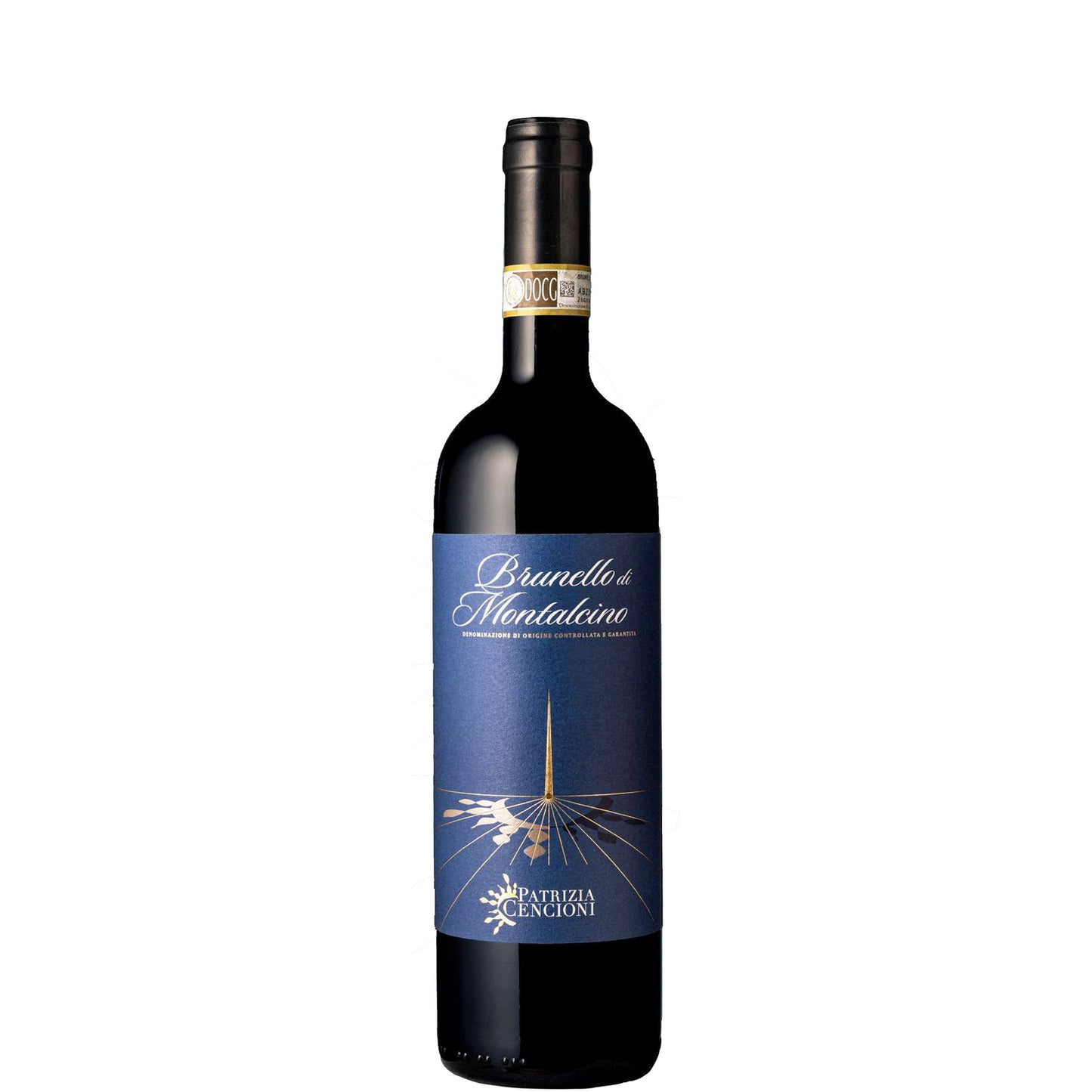
Patrizia Cencioni, Brunello Di Montalcino, 2018
Patrizia Cencioni, Brunello Di Montalcino, 2018
- Red Still
- 75.0cl
- 14.0%
- Sangiovese Grosso
Patrizia Cencioni is one of Montalcino's quieter heroes — a small, family-run estate farming around 4 hectares of Sangiovese Grosso in the Torrenieri area to the east of the hill.
The 2018 vintage was a gift: a warm, dry growing season that produced wines of real concentration and structural integrity, without the heat stress that can strip Brunello of its nerve. This is traditional winemaking in the best sense — long maceration, large Slavonian oak casks, no shortcuts — and the result is a wine that means business.
- ❖ ABV: 14.0%
Grapes
Sangiovese Grosso
Vintage report
The 2018 growing season in Tuscany served up drama worthy of a Renaissance plot. A wet spring had producers fretting about disease pressure, but summer heat arrived with perfect timing to dry things out and concentrate the fruit. The crucial factor proved to be autumn's extended dry spell, which allowed for leisurely harvest decisions and let each variety ripen at its own pace without the usual scramble against September storms.
What emerged from the cellars shows Tuscany at its most approachable. The Sangiovese displays that lovely balance of bright cherry fruit and earthy backbone that makes Chianti sing, whilst the international varieties found their footing beautifully in the coastal zones. These aren't the brooding, tannic monsters that demand a decade of patience, but wines with enough structure to age gracefully if you fancy waiting. Most are drinking beautifully now, though the finest examples from established producers will reward those who can resist temptation until the mid-2020s.
Tasting Notes
AppearanceDeep garnet with a translucent ruby rim, showing the clarity typical of traditionally made Brunello.
NoseDark cherry, dried rose petals, and a distinctly mineral, iron-rich quality that's very much the Torrenieri signature. With air, warm leather and a suggestion of tobacco and dried herbs begin to emerge.
PalateFull-bodied and firmly structured, with fine-grained but insistent tannins that need time to fully resolve. The fruit sits behind that structural wall right now — dark cherry, plum skin, and a savoury, earthy depth that gives the wine real personality.
FinishLong and mineral, with a drying tannic grip and a lingering iron-and-cherry echo that fades slowly.
Overall impressionA classically made Brunello that is very much still becoming what it will eventually be — buy now, cellar with intent.
Food Pairings
In Montalcino and the wider Sienese countryside, Brunello is inseparable from bistecca di chianina — thick-cut, simply grilled Chianina beef, served rare and finished with nothing more than Tuscan olive oil and sea salt. Slow-braised wild boar with pappardelle is another natural pairing, the richness of the ragù meeting the wine's tannic structure head-on. Aged Pecorino di Pienza, the local sheep's cheese with its sharp, nutty character, works surprisingly well as the wine opens up. On a more everyday note, the Sienese eat pici cacio e pepe — their thick, hand-rolled pasta with pecorino and pepper — alongside young Brunello and it is a genuinely excellent combination.
We think this wine would go well with
Serve at 17-18°C — no warmer, or the alcohol will start to dominate and the wine will feel heavy rather than structured. Decanting is not optional here; we'd pour it at least two hours before drinking, ideally three, to give the tannins time to soften and the nose to open up properly. A large-bowled Burgundy-style glass will give this wine the room it needs to breathe and express itself fully.
The Torrenieri area sits in the east of the Montalcino denomination at moderate altitude, with soils dominated by galestro — the crumbly, schist-like limestone-clay mix that gives Brunello its characteristic mineral edge and encourages deep root penetration. The eastern side of Montalcino tends to produce wines with slightly more tannic grip and aromatic intensity than the warmer, more generous southern slopes. The continental climate here, with warm days and genuinely cold nights, preserves acidity and keeps the wine's structure taut.
Brunello di Montalcino is one of Italy's most celebrated and strictly regulated DOCGs, requiring 100% Sangiovese Grosso (locally called Brunello) and a minimum of five years' ageing before release, including at least two years in oak and four months in bottle. The wines must come from the municipality of Montalcino in southern Tuscany, a hilltop town surrounded by vines at elevations ranging from 250 to 600 metres. Brunello sits above its neighbour Rosso di Montalcino in the hierarchy — Rosso uses the same grape but with far shorter ageing requirements, making it the more approachable, everyday expression. At its best, Brunello rivals Barolo as Italy's most age-worthy red wine.
The 2018 growing season in Tuscany served up drama worthy of a Renaissance plot. A wet spring had producers fretting about disease pressure, but summer heat arrived with perfect timing to dry things out and concentrate the fruit. The crucial factor proved to be autumn's extended dry spell, which allowed for leisurely harvest decisions and let each variety ripen at its own pace without the usual scramble against September storms.
What emerged from the cellars shows Tuscany at its most approachable. The Sangiovese displays that lovely balance of bright cherry fruit and earthy backbone that makes Chianti sing, whilst the international varieties found their footing beautifully in the coastal zones. These aren't the brooding, tannic monsters that demand a decade of patience, but wines with enough structure to age gracefully if you fancy waiting. Most are drinking beautifully now, though the finest examples from established producers will reward those who can resist temptation until the mid-2020s.
FAQs
What does Patrizia Cencioni's Brunello 2018 taste like?
Dark cherry, dried roses, leather, and an iron-rich, mineral quality that is very much the Torrenieri signature. The tannins are firm and structured right now, with a long, savoury finish. It needs time, but the raw material is excellent.
Does this wine need to be decanted?
Yes, firmly. Give it at least two hours in a decanter before drinking, ideally three. The tannins are significant and the wine needs air to open up properly. A large-bowled glass will also help.
What food should I serve with this?
Grilled Chianina beef is the classic match — rare, simply seasoned, and properly good. Braised wild boar with pappardelle works brilliantly too. If you want something simpler, aged Pecorino or a slow-cooked lamb shoulder will do the job handsomely.
How does this compare to better-known Brunello producers?
Cencioni is a small, artisan estate without the marketing budget or international profile of names like Biondi-Santi or Ciacci Piccolomini. What you get instead is honest, traditional Brunello made without compromise — and at a price that reflects the producer's size rather than their reputation. For those who know Montalcino, that is rather the point.
Want to know more?
Discuss your requirements with our account managers, Stephanie, Ed, & Jen

-
Personal Service
- Our team are always on hand to support you, taking orders online, by phone or email & responding to urgent requests.
- Our efficient warehouse & team of drivers always go the extra mile to deliver our wines to you.
- Our new, high-capacity warehouse ensures excellent availability of wines.
- Our new enterprise platform means hassle-free service, from inventory to billing.
-
Our Sales Team
Speak to one of our teamStephanie Duncan
With 25+ years in the wine trade, Steph knows the UK market inside out, from premium wine and wholesale to hospitality and retail. A WSET Diploma holder and unapologetic Champagne fan, she loves building great relationships and finding exciting wines.
Jen Neilan
Twenty years in hospitality later, after curating the wine list for Manchester’s first Neapolitan pizza restaurant, and running a natural wine bar, Jen made the move to the other side of the table.