

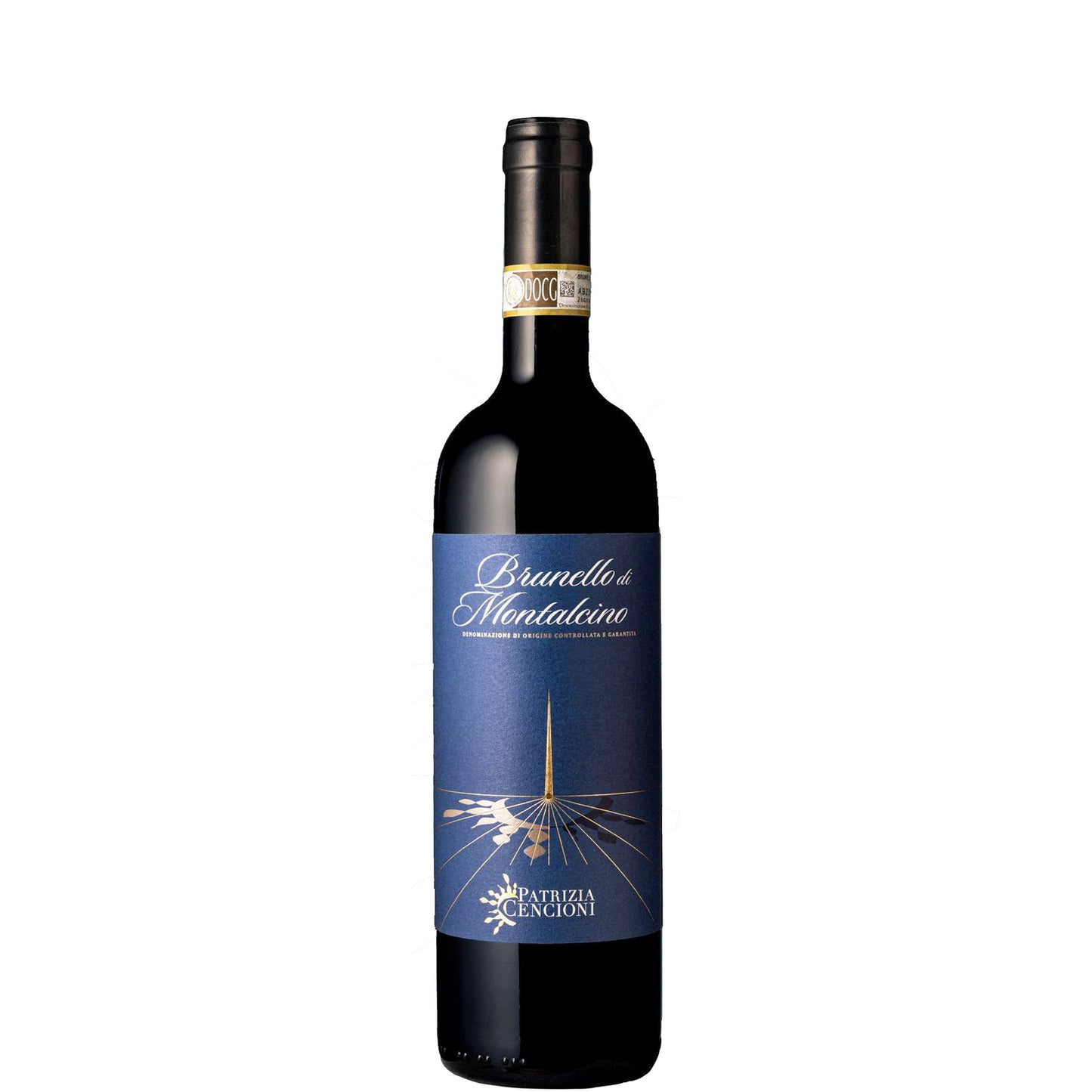
Patrizia Cencioni, Brunello Di Montalcino, 2016
Patrizia Cencioni, Brunello Di Montalcino, 2016
- Red Still
- 75.0cl
- 14.0%
- Sangiovese Grosso
Patrizia Cencioni is one of Montalcino's quieter treasures — a small, family-run estate that has never chased scores or shortcuts, farming just a handful of hectares on the southwestern slopes of the hill. The 2016 Brunello is everything this vintage promised: a wine of real authority that hasn't needed to shout about it. Sangiovese Grosso at this level gives you dark cherry, dried roses, and a savoury iron-and-leather undercurrent that speaks clearly of the clay-rich soils here.
The tannins are substantial but impeccably resolved for their age, and the acidity keeps everything taut and long. We think 2016 is one of the finest Brunello vintages of the modern era — and Cencioni's version, precisely because it is made without theatrical intervention, may be one of the most honest expressions of it.
- ❖ ABV: 14.0%
Grapes
Sangiovese Grosso
Vintage report
The 2016 growing season in Tuscany delivered exactly what winemakers dream about: a long, dry summer that allowed grapes to ripen slowly and steadily without the usual late-season rainfall dramas. We saw relatively mild temperatures throughout the harvest period, which stretched into October for many producers, giving them the luxury of picking each parcel at perfect ripeness. The result was healthy fruit with excellent concentration but without the jammy overripeness that can plague hotter vintages.
What emerged from the cellars shows Tuscany at its most balanced and food-friendly. The Sangiovese has that brilliant combination of bright cherry fruit and earthy backbone that makes Chianti so irresistible at table, while the international varieties like Cabernet Sauvignon and Merlot in the Super Tuscans show remarkable freshness alongside their power. These wines are drinking beautifully now—we find them more immediately approachable than some of the more structured vintages—but the best examples have the structure to age gracefully for another decade or more.
Tasting Notes
AppearanceDeep garnet with a translucent ruby rim, showing the first very subtle signs of bricking at the edge.
NoseDark cherry, dried violet, and a waft of iron filings that is unmistakably Sangiovese from this part of the hill. Beneath that, cured leather, tobacco leaf, and a thread of woodsmoke from the large oak ageing — nothing showy, just depth.
PalateFull-bodied but not heavy, with that characteristic Brunello balance of rich fruit and firm, drying tannin — like biting into a ripe plum that still has its skin on. The acidity is bright and persistent, pulling everything into a long, savoury line, and there is real mineral grip through the mid-palate that holds your attention.
FinishLong, iron-edged, and dry — the kind of finish that makes you want food and then more wine.
Overall impressionA wine in its early prime: serious, transparent, and built to last another two decades without flinching.
Food Pairings
In Montalcino and the wider Sienese countryside, Brunello is the wine you open for the slow-braised dishes that define Tuscan winter cooking — pappardelle with wild boar ragù is the classic pairing, the fat and acidity cutting each other perfectly. Bistecca alla Fiorentina, ideally from Chianina cattle, is another natural partner: the wine's tannin structure has been made for aged, well-marbled beef. Locals also drink it alongside pecorino stagionato — the aged sheep's cheese from the region — where the saltiness of the cheese softens the tannins beautifully. Cinghiale in umido, wild boar slow-cooked with tomatoes, juniper, and red wine, is arguably the most honest pairing of all: the same landscape on the plate and in the glass.
We think this wine would go well with
Serve at 17-18°C — any warmer and the alcohol starts to dominate; any cooler and the tannins tighten unhelpfully. A large-bowled Burgundy or Barolo glass works well, giving the nose room to open up and express the dried rose and iron character that defines this wine.
The Cencioni vineyards sit on the southwestern side of Montalcino at moderate altitude, on soils that are predominantly galestro (friable schist) mixed with clay — a combination that gives Brunello both its structural grip and its aromatic lift. The southwestern exposure means more warmth and slightly riper fruit than the cooler northern slopes, but the altitude tempers this, preserving the acidity that makes these wines age so well. The result is a style that leans generous rather than austere, without sacrificing the iron-and-mineral character that defines the best of Montalcino.
Brunello di Montalcino is one of Italy's most prestigious DOCG appellations, requiring 100% Sangiovese Grosso (locally called Brunello) and a minimum of five years' ageing before release, including at least two in oak and four months in bottle. The appellation covers the commune of Montalcino in southern Tuscany, and the diversity of its slopes — north versus south, high versus low, galestro versus clay — produces markedly different styles within the same rules. Compared to Chianti Classico to the north, Brunello is bigger, more structured, and built for longer cellaring; compared to its neighbour Rosso di Montalcino, it is simply the same grape given more time and more ambition.
The 2016 growing season in Tuscany delivered exactly what winemakers dream about: a long, dry summer that allowed grapes to ripen slowly and steadily without the usual late-season rainfall dramas. We saw relatively mild temperatures throughout the harvest period, which stretched into October for many producers, giving them the luxury of picking each parcel at perfect ripeness. The result was healthy fruit with excellent concentration but without the jammy overripeness that can plague hotter vintages.
What emerged from the cellars shows Tuscany at its most balanced and food-friendly. The Sangiovese has that brilliant combination of bright cherry fruit and earthy backbone that makes Chianti so irresistible at table, while the international varieties like Cabernet Sauvignon and Merlot in the Super Tuscans show remarkable freshness alongside their power. These wines are drinking beautifully now—we find them more immediately approachable than some of the more structured vintages—but the best examples have the structure to age gracefully for another decade or more.
FAQs
What does this Brunello taste like?
Dark cherry, dried violet, leather, and iron, with firm but polished tannins and a long, mineral finish. It is structured and serious, but not austere — there is real fruit generosity here from the 2016 vintage.
When is the best time to drink this wine?
It is approachable now with a long decant of two to three hours, but it will genuinely reward patience. We think the sweet spot is from around 2028 onwards, and the wine should remain at its best until around 2040.
Is the 2016 vintage worth cellaring?
Absolutely. The 2016 Brunello vintage is widely considered one of the finest of the modern era — warm enough for full ripeness, but with excellent natural acidity that gives these wines exceptional longevity. Cencioni's restrained, traditional winemaking is well suited to long ageing.
What food should I serve with this?
This is made for the table. Pappardelle with wild boar ragù is the regional classic, but slow-braised beef, bistecca alla Fiorentina, aged pecorino, or any rich, slow-cooked meat dish will work brilliantly. Avoid delicate food — this wine needs a partner that can stand up to it.
How should I serve it?
Serve at 17-18°C in a large-bowled glass, and decant for at least two hours before serving. If you are opening a bottle in its first few years of drinking, three hours is even better.
Who is Patrizia Cencioni?
Cencioni is a small, family-run estate on the southwestern slopes of Montalcino — not a famous name, but exactly the kind of producer that serious Brunello lovers seek out. The wines are made traditionally, without shortcuts, and they repay attention and time in the cellar.
Want to know more?
Discuss your requirements with our account managers, Jeremy & Jen

-
Personal Service
- Our team are always on hand to support you, taking orders online, by phone or email & responding to urgent requests.
- Our efficient warehouse & team of drivers always go the extra mile to deliver our wines to you.
- Our new, high-capacity warehouse ensures excellent availability of wines.
- Our new enterprise platform means hassle-free service, from inventory to billing.
-
Our Sales Team
Speak to one of our teamJeremy Cowan
After managing his own stores and a further stint in independent retail, Jeremy has dedicated 12 years to trade sales in the North West.
Jen Neilan
Twenty years in hospitality later, after curating the wine list for Manchester’s first Neapolitan pizza restaurant, and running a natural wine bar, Jen made the move to the other side of the table.