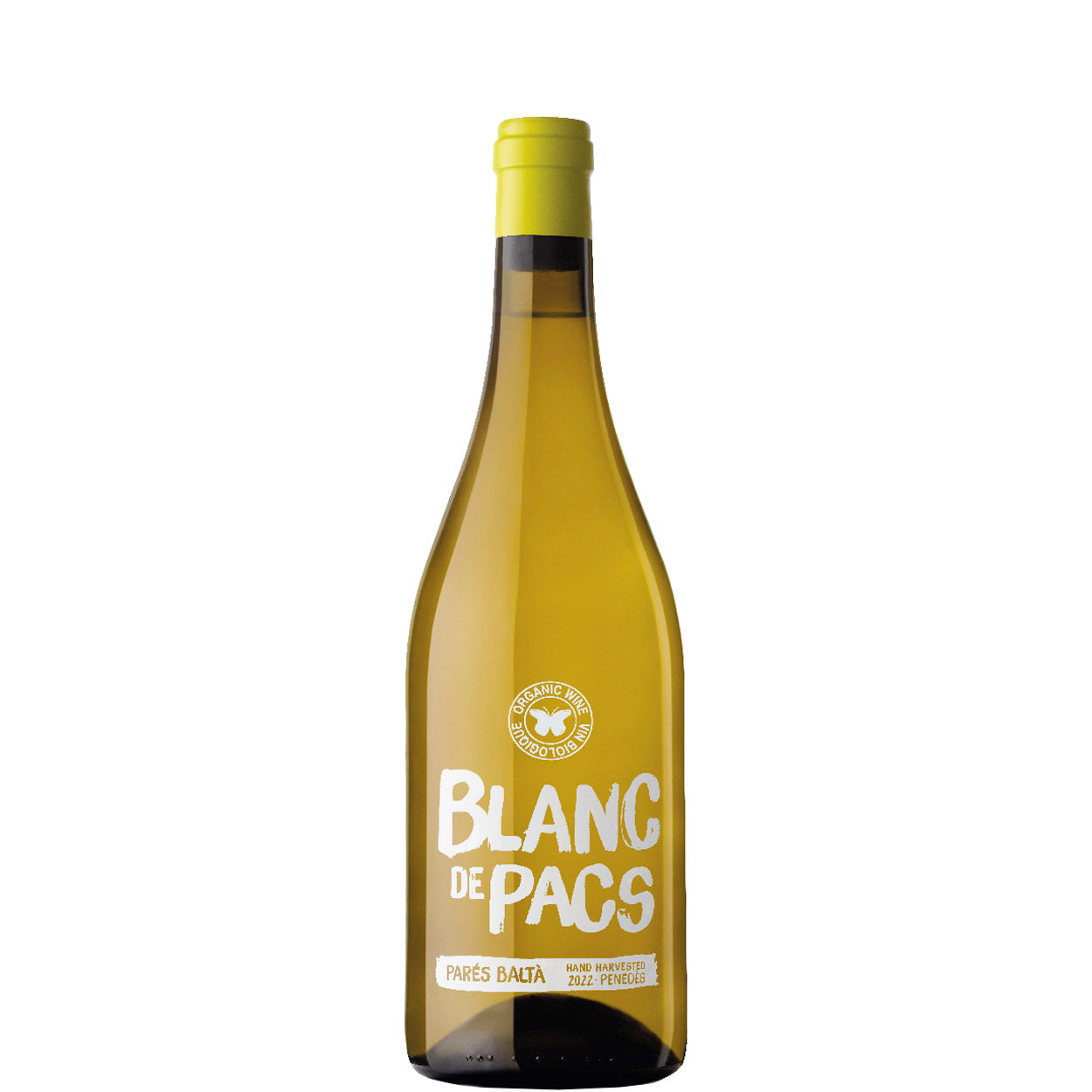

- White Still
- 75.0cl
- 11.5%
- Organic
- Biodynamic
- Vegetarian
- Vegan
- Xarel·lo, Macabeo, Parellada
Parés Baltà is one of Penedès's most forward-thinking estates, and Blanc de Pacs is their calling card: an unoaked white built from the classic Cava trio of Xarel·lo, Macabeo, and Parellada, but vinified still and drunk young. It's everything you want from a Catalan white — bright, dry, and refreshing, with a crunch of white stone fruit and a herbal, almost grassy energy that keeps it lively from first sniff to last sip.
This is the 2025, which means it's as fresh as it gets. Drink it over the next year or two while that primary fruit is singing, ideally alongside something simple off a Catalan grill. It won't improve with age, but it doesn't need to — pleasure is entirely the point here, and it delivers that with real generosity.
- ❖ ABV: 11.5%
Grapes
Xarel·lo, Macabeo, Parellada
Vintage report
The 2025 vintage in Catalonia is, frankly, too recent for us to give you a definitive read with the confidence it deserves — harvest was only completed in autumn 2024 for the 2024s, and 2025 wines are still finding their feet in barrel and bottle as we write this. What we can say is that the broader climatic pattern across north-east Spain has continued the trend of earlier harvests and concentrated fruit driven by hot, dry summers punctuated by critical late-season rainfall. Garnacha and Cariñena, the backbone of Priorat and Montsant, tend to thrive when water stress is managed well; where yields were kept in check, the results look promising.
We will update this note properly once we have tasted more widely across the appellation and growers start releasing. For now, the 2022s and 2023s from Catalonia are drinking superbly and represent the safer bet if you want something in the glass tonight rather than in the cellar. Watch this space — we take vintage accuracy seriously enough not to fill it with educated guesswork dressed up as fact.
Tasting Notes
AppearancePale lemon-gold with greenish highlights and good clarity.
NoseFresh and immediate, with white peach, green apple, and a squeeze of lemon zest. There's a pleasant herbal note underneath — fennel frond, perhaps — that gives it a distinctly Catalan character.
PalateLight to medium bodied and crisply dry, with the Xarel·lo bringing a slightly waxy texture alongside the citrus and stone fruit. Acidity is bright without being sharp, and there's a clean, chalky mineral quality on the mid-palate that keeps everything focused.
FinishShort and clean with a lingering hint of lemon pith and fresh herbs.
Overall impressionA genuinely cheerful, no-fuss white that earns its place on any warm-weather table.
Food Pairings
In Catalonia, a wine like this would be poured without ceremony alongside pa amb tomàquet — bread rubbed with ripe tomato and good olive oil — perhaps with a few slices of fuet or jamón on the side. It's a natural match for fresh seafood from the Costa Daurada: grilled razor clams, gambas al ajillo, or a simple plate of anchovies from L'Escala. Locals might also open a bottle with esqueixada, the Catalan salt cod salad dressed with olives and olive oil, where the wine's acidity cuts through the richness beautifully.
We think this wine would go well with
Serve well chilled at around 8-10°C — this is not a wine to let warm up in the glass. No need to decant; just open and pour. A standard white wine tulip or even a simple bistro glass works perfectly here; nothing too wide or it will lose that fresh, focused character.
The estate's vineyards sit on limestone and clay soils around the village of Pacs del Penedès, at altitudes of around 200 metres above sea level. The Mediterranean climate brings warm, dry summers tempered by cooling breezes off the sea, which help retain the natural acidity that makes this style so refreshing. Xarel·lo in particular thrives here, producing wines with a distinctive mineral snap that reflects the chalky subsoil beneath the vines.
Penedès DO sits in Catalonia, southwest of Barcelona, and is best known internationally as the heartland of Cava production. It permits a wide range of grape varieties, both local and international, across a broad swathe of terrain from the coast to the inland highlands. Still wines from Penedès can be underestimated next to their sparkling neighbours, but the best whites — especially those led by Xarel·lo — have a character all their own: dry, mineral, and distinctly Catalan in feel.
The 2025 vintage in Catalonia is, frankly, too recent for us to give you a definitive read with the confidence it deserves — harvest was only completed in autumn 2024 for the 2024s, and 2025 wines are still finding their feet in barrel and bottle as we write this. What we can say is that the broader climatic pattern across north-east Spain has continued the trend of earlier harvests and concentrated fruit driven by hot, dry summers punctuated by critical late-season rainfall. Garnacha and Cariñena, the backbone of Priorat and Montsant, tend to thrive when water stress is managed well; where yields were kept in check, the results look promising.
We will update this note properly once we have tasted more widely across the appellation and growers start releasing. For now, the 2022s and 2023s from Catalonia are drinking superbly and represent the safer bet if you want something in the glass tonight rather than in the cellar. Watch this space — we take vintage accuracy seriously enough not to fill it with educated guesswork dressed up as fact.
FAQs
What does Blanc de Pacs taste like?
Fresh and dry, with white peach, green apple, lemon zest, and a herbal lift. There's a clean mineral quality that keeps it focused and easy to drink. Think crisp Mediterranean white rather than anything rich or oaky.
When should I drink this wine?
Now, ideally. The 2025 vintage is at its best in 2026 and we would drink it before 2028 to catch it at its freshest. This is not a wine that improves significantly with age.
What food works well with this wine?
Anything light and fresh. Seafood is the obvious call — grilled prawns, anchovies, mussels, or a simple fish dish. It also works brilliantly as an aperitif with olives and charcuterie, or alongside a salad with plenty of acidity in the dressing.
What grapes are used?
The classic Penedès trio: Xarel·lo, Macabeo, and Parellada. These are the same varieties used to make Cava, but here they are vinified as a still white wine, keeping all that natural freshness and aromatics without the bubbles.
Is this wine worth cellaring?
Not really — and that is not a criticism. It is made to be enjoyed young while the fruit is vivid and the acidity is singing. Drink it within a couple of years of the vintage for the best experience.
How should I serve it?
Well chilled, around 8-10°C. No need to decant — just open and pour into a standard white wine glass. If anything, err on the colder side; it can always warm slightly in the glass.
Want to know more?
Discuss your requirements with our account managers, Jeremy & Jen
-
Personal Service
- Our team are always on hand to support you, taking orders online, by phone or email & responding to urgent requests.
- Our efficient warehouse & team of drivers always go the extra mile to deliver our wines to you.
- Our new, high-capacity warehouse ensures excellent availability of wines.
- Our new enterprise platform means hassle-free service, from inventory to billing.
-
Our Sales Team
Speak to one of our teamJeremy Cowan
After managing his own stores and a further stint in independent retail, Jeremy has dedicated 12 years to trade sales in the North West.
Jen Neilan
Twenty years in hospitality later, after curating the wine list for Manchester’s first Neapolitan pizza restaurant, and running a natural wine bar, Jen made the move to the other side of the table.