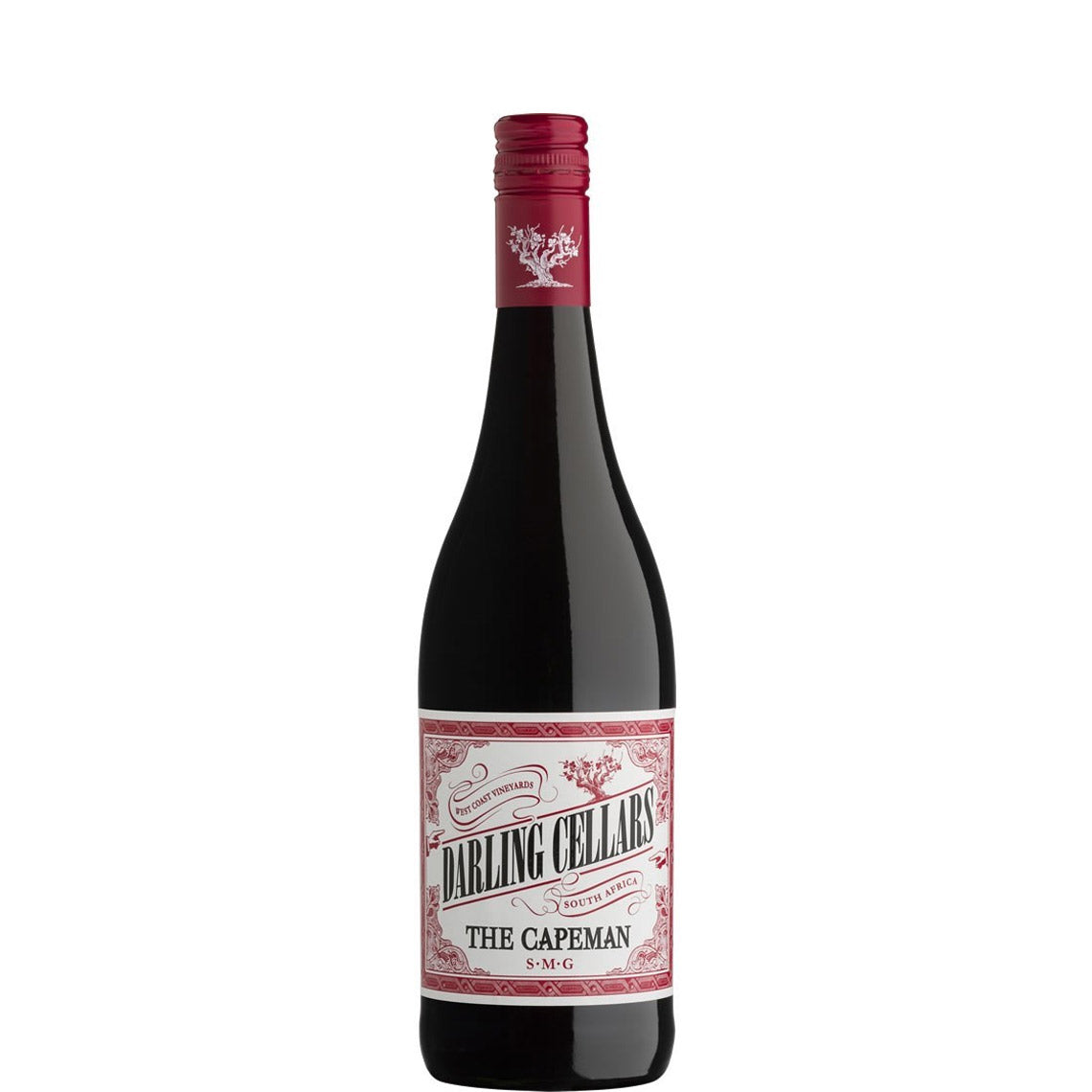

Darling Cellars, The Capeman SMG Red Blend, 2024
Darling Cellars, The Capeman SMG Red Blend, 2024
- Red Still
- 75.0cl
- 14.0%
- Shiraz, Mourvèdre, Grenache
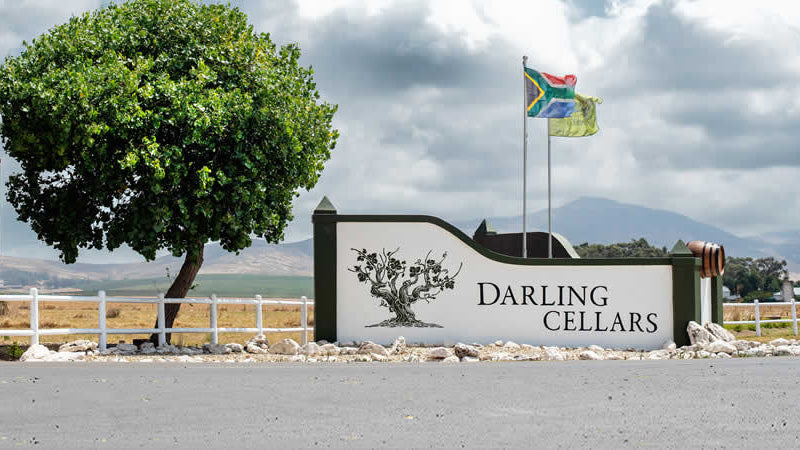
Darling Cellars sits in the Darling district, just north of Cape Town, where the cool Atlantic breezes off the west coast keep the vines honest and the wines fresher than you might expect from this latitude. The Capeman is their SMG blend — Shiraz, Mourvèdre, and Grenache — and it's unapologetically crowd-pleasing in the best sense: warmly fruited, generously spiced, and structured just enough to hold itself together at the dinner table.
The 2024 is a wine for now and the next few years rather than the cellar. Think dark plum and smoked meat from the Shiraz, a savoury, earthy backbone from the Mourvèdre, and Grenache lending its characteristic soft-fruit brightness and drinkability. Tannins are ripe and easy, and the finish has some grip and dried herb to keep things interesting.
- ❖ ABV: 14.0%
Grapes
Shiraz, Mourvèdre, Grenache
Vintage report
The 2024 vintage in the Western Cape arrived after a growing season shaped by La Niña conditions that had been easing, with most regions experiencing moderate temperatures and reasonably well-timed rainfall through the growing period. It is still early for detailed analysis to have filtered through fully, but the broad picture from producers is one of good natural acidity and fruit that came in at measured ripeness rather than the overblown, sun-baked characters that warmer years can push towards. Chenin Blanc, predictably, looks strong — the variety's ability to translate vintage precision into the glass is why it keeps drawing serious attention.
For Syrah and Grenache from Swartland and the Rhône-leaning producers of Stellenbosch, early indications suggest wines with real definition and grip rather than sheer weight. Cabernet from cooler pockets of Stellenbosch and Franschhoek appears to have ripened cleanly without the extracted heaviness that warmer years can bring. These are early days, and much of the 2024 crop is still settling in barrel. We would expect most reds to reward patience — drink from 2026 or 2027 onwards — while the whites, particularly the Chenins, are already showing well and will drink happily until 2028 and beyond.
Tasting Notes
AppearanceDeep ruby-purple with a youthful, saturated core and a bright, clean rim.
NoseOpen and inviting from the off: dark plum and blackberry lead, underpinned by smoked meat and dried thyme. There's a subtle peppery warmth — classic Shiraz in a warm-but-coastal register — with a hint of sun-dried olive keeping things savoury.
PalateMedium to full-bodied with ripe, rounded tannins that never feel imposing. The Grenache brings a juicy, soft-fruit brightness that lifts the mid-palate, while the Mourvèdre adds structure and an earthy, almost meaty depth. Freshness is better than the sun-drenched label might suggest.
FinishWarm and spiced, with lingering dried herb and a gentle grip that calls for another sip.
Overall impressionA generous, honest red that punches well above its station — and doesn't pretend to be anything other than exactly what it is.
Food Pairings
On the West Coast of South Africa, this is braai country, full stop — lamb chops over the coals, boerewors coiled and charred at the edges, or a slow-roasted leg of Karoo lamb with rosemary and garlic. The Mourvèdre in the blend has a particular affinity with Cape Malay-spiced dishes: think bobotie or a slow-cooked bredie (a rich tomato and lamb stew) that would make the wine's savoury backbone sing. Locally, this would also be poured happily alongside a simple snoek braai with apricot jam — that sweet-smoky combination is a Cape classic for good reason.
We think this wine would go well with
Serve at around 16-17°C — cool enough to keep the fruit precise, warm enough to let the Mourvèdre's savoury character unfold. A short decant of 20-30 minutes will open the nose and soften any residual CO2 from the bottling, but this isn't a wine that demands ceremony. A standard large-bowled red glass works perfectly well here.
The Darling district lies on the Swartland's western fringe, where cold Benguela Current air off the Atlantic moderates what would otherwise be a very warm growing season. Soils are predominantly Malmesbury shale and granite-derived, lending wines a degree of mineral grip and freshness unusual for inland Swartland neighbours. The combination of warm days and cool nights helps retain acidity while building ripe, generous fruit — exactly the profile that makes this SMG blend work.
The Darling Wine of Origin district is a coastal appellation northwest of Cape Town, formally recognised in the early 2000s. It shares some stylistic kinship with the Swartland to its east but benefits from more pronounced maritime cooling, which pushes wines toward fresher, more lifted profiles. Rhône varieties — Shiraz, Grenache, Mourvèdre, Viognier — have taken root here particularly well, and the district has built a quiet reputation for honest, terroir-driven wines at accessible prices.
The 2024 vintage in the Western Cape arrived after a growing season shaped by La Niña conditions that had been easing, with most regions experiencing moderate temperatures and reasonably well-timed rainfall through the growing period. It is still early for detailed analysis to have filtered through fully, but the broad picture from producers is one of good natural acidity and fruit that came in at measured ripeness rather than the overblown, sun-baked characters that warmer years can push towards. Chenin Blanc, predictably, looks strong — the variety's ability to translate vintage precision into the glass is why it keeps drawing serious attention.
For Syrah and Grenache from Swartland and the Rhône-leaning producers of Stellenbosch, early indications suggest wines with real definition and grip rather than sheer weight. Cabernet from cooler pockets of Stellenbosch and Franschhoek appears to have ripened cleanly without the extracted heaviness that warmer years can bring. These are early days, and much of the 2024 crop is still settling in barrel. We would expect most reds to reward patience — drink from 2026 or 2027 onwards — while the whites, particularly the Chenins, are already showing well and will drink happily until 2028 and beyond.
FAQs
What does The Capeman taste like?
It's a warm, generous red with dark plum, smoked meat, dried herbs, and a lick of pepper spice. The Grenache keeps it bright and juicy, the Mourvèdre gives it a savoury, earthy edge, and the whole thing is held together by soft, ripe tannins. Approachable and satisfying without being simple.
When should I drink this wine?
Right now, honestly. The 2024 is already drinking well and will continue to do so until around 2030. There's nothing to be gained from cellaring it — this is a wine built for pleasure in the short to medium term, not the long haul.
What food does it pair well with?
It's a natural fit for the braai — lamb chops, boerewors, anything charred and smoky. Beyond that, try it with slow-cooked lamb stews, Cape Malay spiced dishes like bobotie, or a hearty pasta with a meat ragu. The savoury, spiced character means it's very food-friendly across the board.
How should I serve it?
Serve at around 16-17°C — slightly cooler than room temperature in a warm house. A short 20-30 minute decant is worth doing if you have the time, but it's not essential. A standard large-bowled red wine glass will do the job perfectly.
Is this worth putting in the cellar?
Not particularly. The Capeman is designed for near-term drinking and will be at its best between now and 2030. The fruit is the main event here, and that's what will fade first. Enjoy it while it's lively.
What is SMG as a blend?
SMG stands for Shiraz, Mourvèdre, and Grenache — the South African shorthand for what the Rhône Valley calls a GSM (or sometimes SMG) blend. It's a combination that has become something of a signature for South Africa's west coast, where the grape varieties thrive in warm days and cool, Atlantic-influenced nights. Each variety brings something different: Shiraz for body and spice, Mourvèdre for savoury depth and structure, and Grenache for lift, freshness, and soft fruit.
Want to know more?
Discuss your requirements with our account managers, Stephanie, Ed, & Jen
-
Personal Service
- Our team are always on hand to support you, taking orders online, by phone or email & responding to urgent requests.
- Our efficient warehouse & team of drivers always go the extra mile to deliver our wines to you.
- Our new, high-capacity warehouse ensures excellent availability of wines.
- Our new enterprise platform means hassle-free service, from inventory to billing.
-
Our Sales Team
Speak to one of our teamStephanie Duncan
With 25+ years in the wine trade, Steph knows the UK market inside out, from premium wine and wholesale to hospitality and retail. A WSET Diploma holder and unapologetic Champagne fan, she loves building great relationships and finding exciting wines.
Jen Neilan
Twenty years in hospitality later, after curating the wine list for Manchester’s first Neapolitan pizza restaurant, and running a natural wine bar, Jen made the move to the other side of the table.