

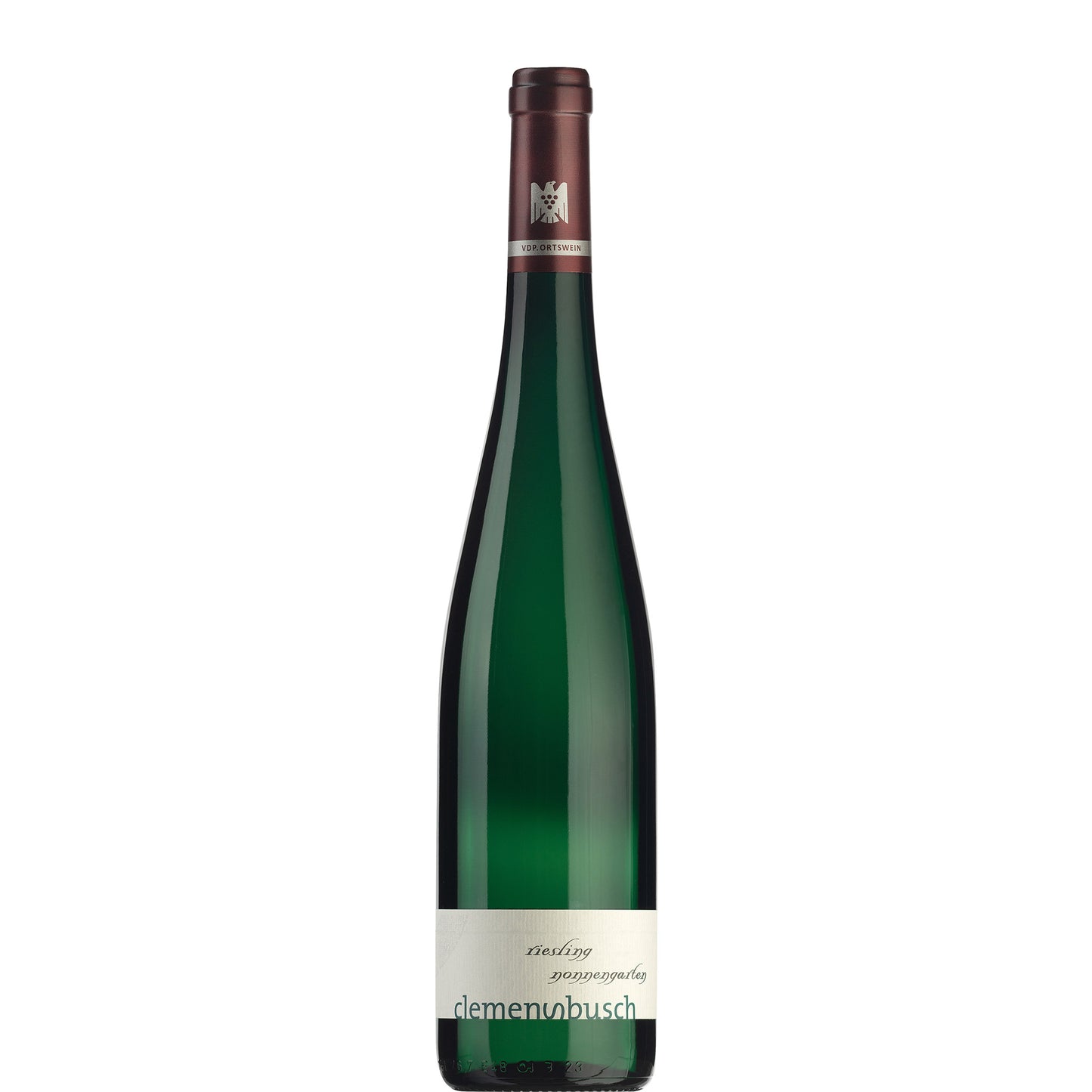
Clemens Busch, Nonnengarten Riesling Trocken, 2022
Clemens Busch, Nonnengarten Riesling Trocken, 2022
- White Still
- 75.0cl
- 11.5%
- Organic
- Biodynamic
- Vegetarian
- Vegan
- Riesling
Clemens Busch is one of the Mosel's most serious growers, and the Nonnengarten is a site that demands to be taken seriously. Carved into the steep, blue Devonian slate slopes above Pünderich, it yields a dry Riesling of real precision: taut, mineral, and built around tension rather than generosity. The 2022 vintage gave warm, ripe conditions across the Mosel, but in Busch's hands that warmth is kept in check by the site's natural acidity and the discipline of dry vinification. What you get is a wine with real presence without ever feeling heavy.
On the palate it's all white peach, green apple, and that electric slate-and-citrus energy that Mosel trocken does like nowhere else. It's drinking well now but still has plenty to say in five or six years' time.
- ❖ ABV: 11.5%
Grapes
Riesling
Vintage report
The 2022 vintage in the Mosel delivered one of those seasons that remind us why Riesling and these slate slopes were made for each other. After a challenging spring with late frosts threatening some vineyards, the summer brought sustained warmth without the punishing heat waves that can shut down ripening in other regions. The steep, river-facing sites that define the Mosel's greatest vineyards caught every available ray while the cooling influence of the river kept things civilised, allowing the grapes to ripen slowly and steadily through a long, dry autumn.
What emerged from the cellars shows classic Mosel character with a modern polish. The Rieslings display that thrilling interplay between ripe stone fruit and laser-sharp acidity that makes your mouth water, while the dry wines have a backbone that suggests they'll reward patience. We find the Kabinetts and Spätleses particularly compelling this year, showing immediate charm but with enough structure to develop beautifully over the next decade. The finest wines are drinking superbly now if you can't resist, though we suspect the real magic will unfold from 2025 onwards.
Tasting Notes
AppearancePale gold with a green tint, bright and clear in the glass.
NoseImmediately stony and cool, with white peach, lemon curd, and a flinty, almost smoky edge from the slate. There's a thread of fresh herbs underneath that keeps it alert rather than simply fruity.
PalateBone dry and precise, with green apple and citrus pith giving way to that distinctive wet-slate mineral quality. The acidity is high but completely integrated, driving a long, focused line through the wine rather than jarring against it.
FinishLong and saline, with a clean, stony persistence and a final squeeze of lemon that keeps you coming back to the glass.
Overall impressionA dry Mosel Riesling of real discipline and genuine site expression — this is precision winemaking from uncompromising ground.
Food Pairings
Along the Mosel, a dry Riesling like this is a natural partner for freshwater fish from the river itself: pike-perch or trout, simply grilled or poached in butter, let the wine do the talking. Riesling Trocken also has a long local tradition alongside asparagus, particularly the white spargel that dominates Rhineland tables in late spring, dressed with hollandaise or brown butter. Further afield but still within the German tradition, it pairs beautifully with a good Flammkuchen, the thin-crust Alsatian-style flatbread with crème fraîche and lardons, where the acidity cuts through the richness. It also holds its own against mild, young cheeses like fresh Limburger or a soft goat's cheese, where its citrus-mineral edge acts as a foil rather than a contrast.
We think this wine would go well with
Serve at 10-12°C, cool enough to show the wine's precision without muting its complexity. No need to decant, though giving it fifteen minutes in the glass will allow the stony, slightly reductive character to open up. A tall, narrow white Burgundy or classic Riesling glass with a slightly tapered rim is ideal, concentrating the aromatics and letting the acidity present cleanly on the palate.
The Nonnengarten lies on the steep Devonian blue slate slopes that define the best sites in the Terrassenmosel around Pünderich. Blue slate drains quickly, stores heat during the day, and releases it at night, helping grapes achieve physiological ripeness while retaining the sharp acidity that gives these wines their backbone. The aspect is south-facing, maximising sun exposure in what is already a cool continental climate, and the thin topsoils force vines to root deeply, which shows in the wine's mineral character. This is slate you can almost taste.
The Mosel is Germany's most celebrated white wine region, stretching some 250 kilometres from Koblenz to the French border, with the steep slate slopes of the Mittelmosel and Terrassenmosel producing its most distinguished Rieslings. Unlike Rheingau or Pfalz, which lean toward richer styles, the Mosel is defined by its soaring acidity, relatively low alcohol, and a kind of crystalline mineral energy that comes directly from the slate and schist soils. Wines labelled Trocken must contain fewer than 9 grams per litre of residual sugar, a demanding standard when the underlying acidity is this pronounced. Busch's Pünderich sits in the Terrassenmosel, a stretch that lacks the star billing of Bernkastel or Wehlen but is increasingly recognised for producing site-driven wines of real character.
The 2022 vintage in the Mosel delivered one of those seasons that remind us why Riesling and these slate slopes were made for each other. After a challenging spring with late frosts threatening some vineyards, the summer brought sustained warmth without the punishing heat waves that can shut down ripening in other regions. The steep, river-facing sites that define the Mosel's greatest vineyards caught every available ray while the cooling influence of the river kept things civilised, allowing the grapes to ripen slowly and steadily through a long, dry autumn.
What emerged from the cellars shows classic Mosel character with a modern polish. The Rieslings display that thrilling interplay between ripe stone fruit and laser-sharp acidity that makes your mouth water, while the dry wines have a backbone that suggests they'll reward patience. We find the Kabinetts and Spätleses particularly compelling this year, showing immediate charm but with enough structure to develop beautifully over the next decade. The finest wines are drinking superbly now if you can't resist, though we suspect the real magic will unfold from 2025 onwards.
FAQs
What does Nonnengarten Riesling Trocken taste like?
It's a dry, precise, and mineral Riesling built around tension rather than richness. Think white peach, green apple, lemon pith, and a stony, slate-driven quality that runs through the whole wine. The acidity is high but focused, not aggressive, and the finish is long and saline.
Is this wine dry?
Yes, fully dry. Trocken means fewer than 9 grams of residual sugar per litre, and with the acidity this wine carries, it tastes even leaner and more precise than that. There is no sweetness here at all.
When should I drink this wine?
It's drinking well now, but we think it has its best years ahead. From 2028 onwards it should start showing real complexity, with the petrol and waxy richness that aged dry Riesling develops so distinctively. We'd aim to drink it until around 2038.
What food does it pair with?
River fish is the classic local match — trout or pike-perch, simply cooked. White asparagus with hollandaise is another traditional partner. It also works well with Flammkuchen, mild soft cheeses, or anything with a buttery richness that needs the acidity to cut through.
How should I serve it?
Serve at around 10-12°C. No decanting needed, but give it a few minutes in a tall Riesling glass to open up. If it smells slightly reductive at first, that's normal and will blow off quickly.
What makes Clemens Busch worth seeking out?
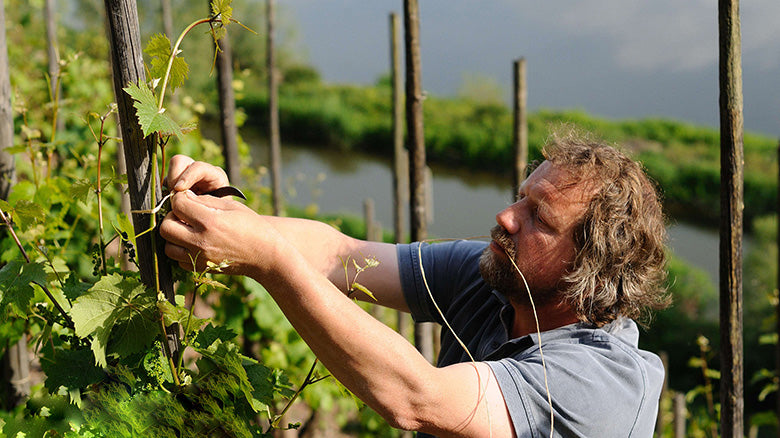
Busch is one of the Mosel's most committed growers: biodynamic since the early 2000s, farming steep slate terraces by hand, and making wines with minimal intervention that genuinely reflect where they come from. The Nonnengarten is a benchmark site in the Terrassenmosel, and his dry Rieslings have a following among sommeliers and collectors who know the region well.
Want to know more?
Discuss your requirements with our account managers, Jeremy & Jen
-
Personal Service
- Our team are always on hand to support you, taking orders online, by phone or email & responding to urgent requests.
- Our efficient warehouse & team of drivers always go the extra mile to deliver our wines to you.
- Our new, high-capacity warehouse ensures excellent availability of wines.
- Our new enterprise platform means hassle-free service, from inventory to billing.
-
Our Sales Team
Speak to one of our teamJeremy Cowan
After managing his own stores and a further stint in independent retail, Jeremy has dedicated 12 years to trade sales in the North West.
Jen Neilan
Twenty years in hospitality later, after curating the wine list for Manchester’s first Neapolitan pizza restaurant, and running a natural wine bar, Jen made the move to the other side of the table.