

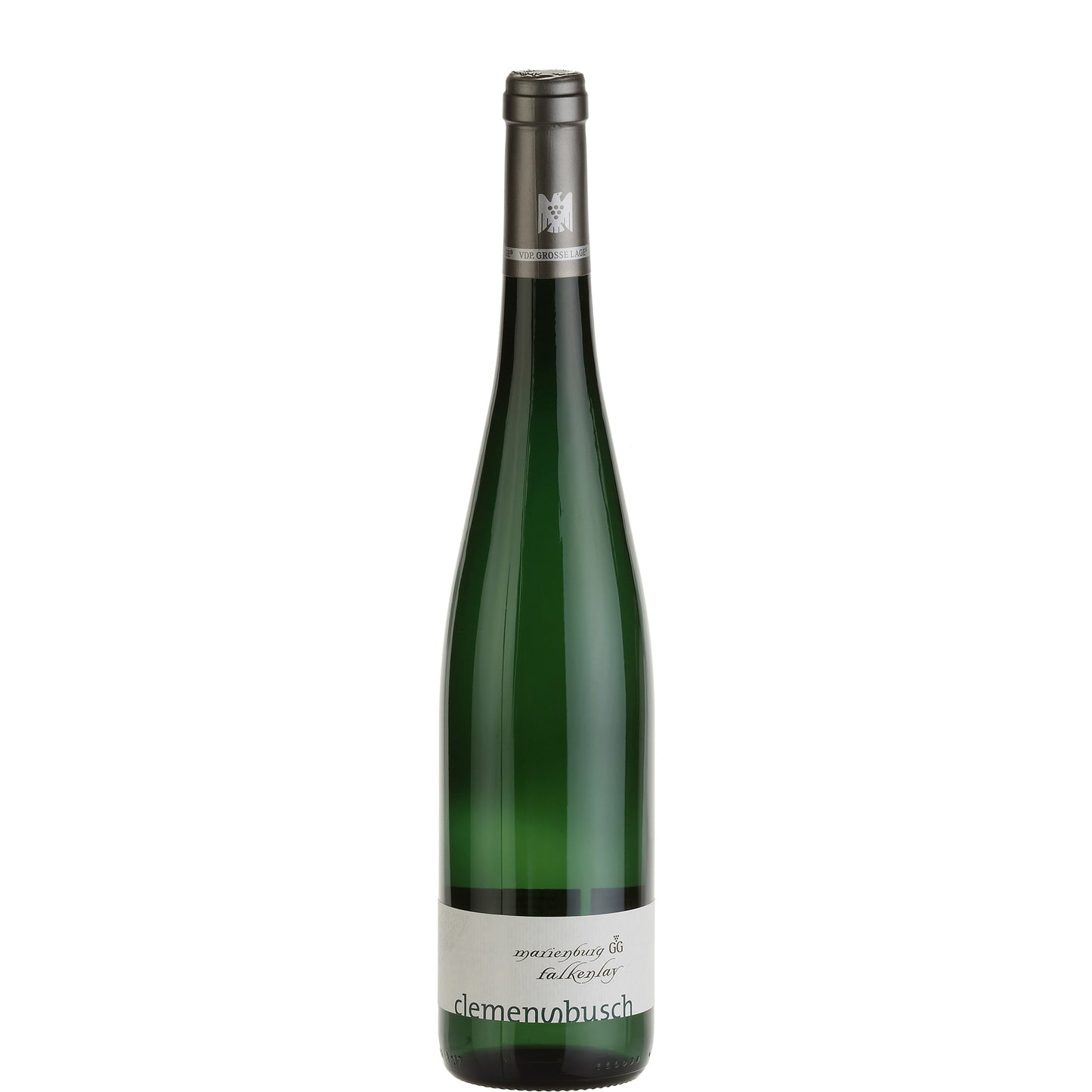
Clemens Busch, Marienburg Falkenlay Riesling Trocken GG, 2019
Clemens Busch, Marienburg Falkenlay Riesling Trocken GG, 2019
- White Still
- 75.0cl
- 12.5%
- Organic
- Biodynamic
- Vegetarian
- Vegan
- Riesling
Clemens Busch's Falkenlay is one of the Mosel's quietly thrilling addresses — a steep, south-facing parcel within the grand Marienburg monopole at Pünderich, planted on volcanic blue-grey slate that gives the wine its spine. The 2019 vintage delivered warmth but not excess, and this Grosses Gewächs (Germany's answer to Grand Cru dry white) has the structure to show for it: bone dry, high-wire tense, with a mineral intensity that is less decoration than architecture.
We find it in a fine but demanding place right now — the fruit is vivid and precise, the acidity needle-sharp, and the slate-driven salinity runs through the whole thing like a current. Give it another year or two and it will begin to open into something more textured and complex. Drink from 2026 until 2042, though the best bottles will likely outlast that with ease.
- ❖ ABV: 12.5%
Grapes
Riesling
Vintage report
The 2019 Mosel vintage delivered one of those seasons that reminds you why Riesling and slate were made for each other. After a relatively cool spring that kept the vines in check, summer brought sustained warmth without the punishing heat that can strip away the variety's signature freshness. The harvest ran later than some recent years, giving the grapes time to develop that magical balance between ripeness and acidity that makes great Mosel tick.
What emerged from the cellars shows classic Mosel character with a modern polish. The Rieslings have that crystalline purity we love, with fruit that feels both generous and precise—think white peach and lime rather than the more tropical flavours of hotter years. Quality is strong across the board, from everyday QbA bottlings through to the Auslesen, which are singing right now. These wines are already showing beautifully if you fancy diving in, but the better examples will reward a few more years in the cellar, particularly the Spätlesen from top sites like Wehlen or Graach.
Tasting Notes
AppearancePale gold with a faint green tinge, bright and clear in the glass.
NoseThe slate announces itself immediately — a cool, wet-stone quality that frames white peach, dried citrus peel, and a faint whiff of petrol that signals age-worthiness rather than age. There is real tension here; the fruit feels coiled rather than open.
PalateBone dry, with an acidity that cuts clean and precise rather than aggressive. White peach and lemon pith are the dominant fruit registers, but the mineral quality — chalky, saline, almost electric — is the real story. The body is medium but the intensity is considerable.
FinishLong, stony, and bracingly dry, with that lemon-pith grip persisting well past the swallow.
Overall impressionA wine that is more about what it withholds than what it gives right now — which is precisely the point.
Food Pairings
Along the Mosel, this style of dry Riesling is traditionally paired with freshwater fish pulled from the river itself — pike-perch with a simple butter sauce, or trout pan-fried with almonds. The local Sauerbraten (braised, marinated beef) is another classic match, where the wine's acidity cuts through the richness. Riesling Trocken at this level also does something quietly brilliant with aged Gouda or a firm, washed-rind cheese. Simpler but equally satisfying: a plate of charcuterie, good rye bread, and river air.
We think this wine would go well with
Serve at 10-12°C — cold enough to preserve the tension but not so cold it shuts the wine down. No need to decant, though giving it twenty minutes in a large white-wine glass to open up is well worth it. A wide-bowled white Burgundy glass will serve it better than a narrow Riesling flute, which can constrain the aromatic complexity at this level.
The Falkenlay is a distinct parcel within the Marienburg, one of the Mosel's most celebrated single vineyards, rising steeply above the village of Pünderich on the Terrassenmosel. The soils here are primarily blue Devonian slate, which drains rapidly, retains heat overnight, and imparts that characteristic stony, almost electric mineral quality that defines the site. The steep gradient forces the vines to dig deep and keeps yields naturally low. Combined with the Mosel's cool continental climate, this produces Riesling of extraordinary precision and longevity.
The Mosel is Germany's most famous wine region, stretching along the river from Koblenz to the Luxembourg border, with its greatest vineyards planted on near-impossibly steep slate slopes. Grosses Gewächs (GG) is the VDP's classification for dry wines from top-ranked single vineyards, broadly equivalent in ambition to Burgundy's Premier or Grand Cru — the wines must be harvested late, yields are restricted, and they must be released no earlier than September after harvest. The Terrassenmosel around Pünderich sits away from the more famous Middle Mosel villages like Bernkastel and Wehlen, but estates like Busch have been making the argument for years that its volcanic slate produces something altogether wilder and more distinctive.
The 2019 Mosel vintage delivered one of those seasons that reminds you why Riesling and slate were made for each other. After a relatively cool spring that kept the vines in check, summer brought sustained warmth without the punishing heat that can strip away the variety's signature freshness. The harvest ran later than some recent years, giving the grapes time to develop that magical balance between ripeness and acidity that makes great Mosel tick.
What emerged from the cellars shows classic Mosel character with a modern polish. The Rieslings have that crystalline purity we love, with fruit that feels both generous and precise—think white peach and lime rather than the more tropical flavours of hotter years. Quality is strong across the board, from everyday QbA bottlings through to the Auslesen, which are singing right now. These wines are already showing beautifully if you fancy diving in, but the better examples will reward a few more years in the cellar, particularly the Spätlesen from top sites like Wehlen or Graach.
FAQs
What does the Falkenlay GG taste like?
Bone dry, taut, and mineral-driven, with white peach, lemon pith, and a stony, saline quality that runs through the whole wine. It is less about fruit generosity and more about precision and length — this is Riesling as a wine of tension rather than charm.
When should I drink this wine?
It is drinking now, but it is not yet at its peak. We would suggest patience until at least 2028 for those who want to see what it becomes. Properly cellared, it will hold until 2042 and possibly beyond.
What food works best with this wine?
Freshwater fish — trout, pike-perch — with simple sauces are the classic local match. Beyond that, aged hard cheeses, charcuterie, or anything with enough richness and salt to stand up to the acidity. Avoid heavy, sweet, or heavily spiced dishes.
What makes this a Grosses Gewächs, and does it matter?
Grosses Gewächs is the VDP's top classification for dry wines from single vineyards — the German equivalent of Grand Cru in ambition and intent. It means low yields, late harvesting, and strict quality controls. In Busch's hands, it also means old vines, biodynamic farming, and a wine designed to age for fifteen years or more. It matters quite a lot.
How should I serve it?
At 10-12°C, in a wide-bowled white wine glass rather than a narrow Riesling flute. Give it twenty minutes in the glass before judging — it opens up considerably with a little air.
Is this worth cellaring?
Absolutely, and without much hesitation. The 2019 vintage has the structure and acidity to develop over at least fifteen years, and Busch's Falkenlay has a track record of rewarding patience handsomely. Buy extra if you can.
Want to know more?
Discuss your requirements with our account managers, Jeremy & Jen
-
Personal Service
- Our team are always on hand to support you, taking orders online, by phone or email & responding to urgent requests.
- Our efficient warehouse & team of drivers always go the extra mile to deliver our wines to you.
- Our new, high-capacity warehouse ensures excellent availability of wines.
- Our new enterprise platform means hassle-free service, from inventory to billing.
-
Our Sales Team
Speak to one of our teamJeremy Cowan
After managing his own stores and a further stint in independent retail, Jeremy has dedicated 12 years to trade sales in the North West.
Jen Neilan
Twenty years in hospitality later, after curating the wine list for Manchester’s first Neapolitan pizza restaurant, and running a natural wine bar, Jen made the move to the other side of the table.