


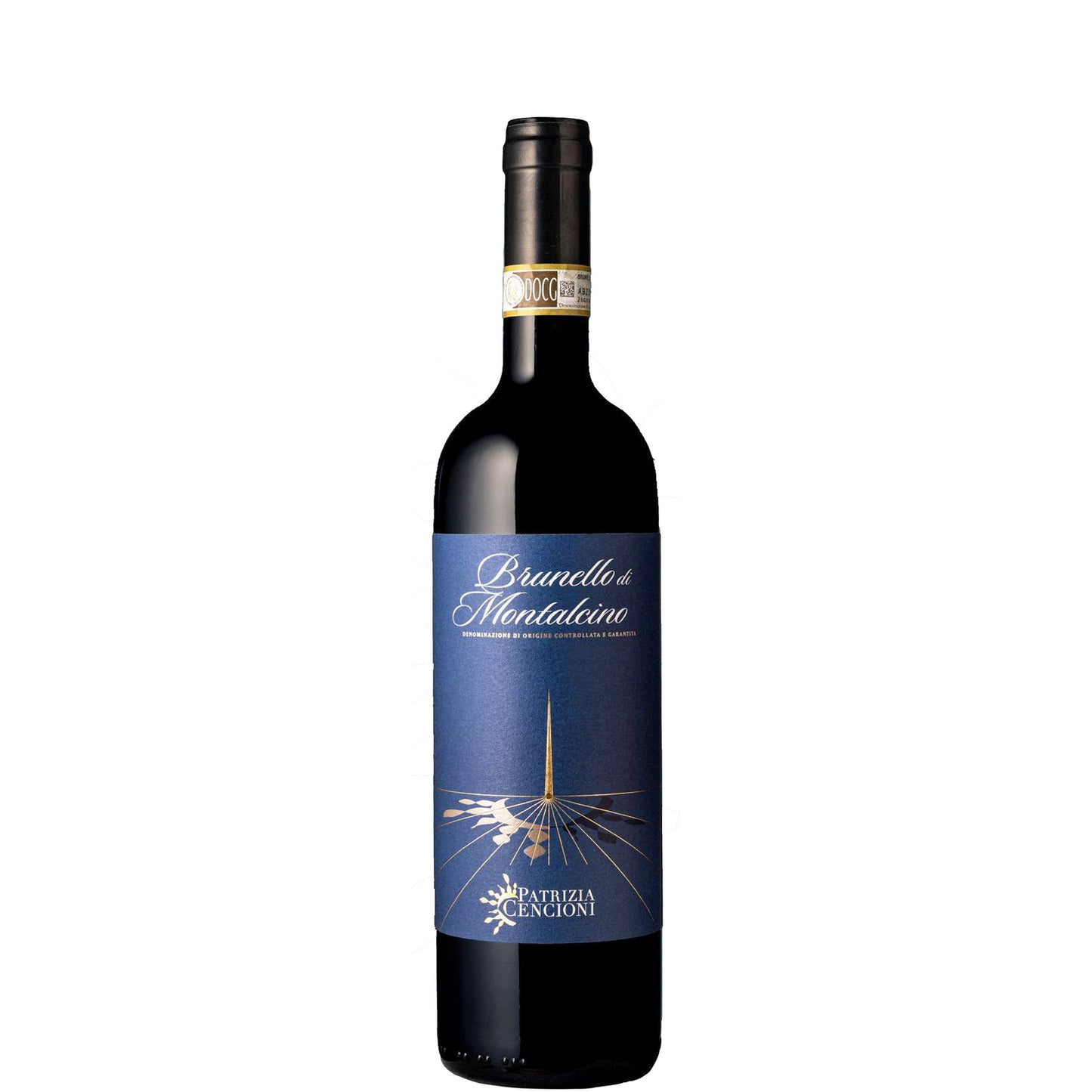
Brunello di Montalcino, Patrizia Cencioni, 2019
Brunello di Montalcino, Patrizia Cencioni, 2019
- Red Still
- 75.0cl
- 14.5%
- Sangiovese Grosso
Patrizia Cencioni is one of Montalcino's quiet achievers — a small, family-run estate producing Brunello the traditional way, without the shortcuts or the marketing machine. The 2019 vintage was a warm, generous year across Tuscany, and in the right hands it has produced wines of real depth and structural integrity rather than mere plushness. Cencioni's version has that characteristic iron-and-rose combination that makes great Brunello so compelling — it smells ancient and alive at the same time.
Sangiovese Grosso at this level needs time to settle, and while the 2019 is more approachable than some older vintages, we'd suggest leaving it alone until 2028 at the earliest. By then, the tannins — which are firm but never coarse — will have softened into something genuinely thrilling. A wine for people who believe patience is its own reward, and who have a decent rack to prove it.
- ❖ ABV: 14.5%
Grapes
Sangiovese Grosso
Vintage report
What a cracker 2019 turned out to be in Tuscany. We had one of those seasons that reminds you why the Italians have been making wine here for centuries. Spring arrived early with plenty of rain to fill the reservoirs, then summer delivered the goods with consistent warmth and those crucial cool nights that keep the acids singing. The real magic happened in late August when temperatures dropped just enough to slow ripening and let the flavours catch up with the sugar levels – precisely what Sangiovese dreams about. The wines are absolutely singing right now, with 2019 producing some of the most balanced and expressive Tuscan reds we've tasted in years. There's a lovely tension between the ripe, generous fruit and that classic Tuscan backbone of tannin and acidity. The Chiantis have more depth than the rather lean 2017s, while avoiding the sometimes overripe character of 2018. Even the Super Tuscans managed to keep their elegance intact despite the generous conditions. Most 2019 Tuscans are drinking beautifully now – they've got that irresistible combination of youthful energy and enough development to show their personality. The top Brunellos will happily cellar for another decade or more, but honestly, we find them so charming at this stage that restraint becomes rather difficult. If you've got any tucked away, this is the perfect moment to start exploring them.
Tasting Notes
AppearanceDeep garnet with a still-bright ruby rim, showing the vintage's warmth without any sign of premature evolution.
NoseDark cherry, dried violet, and a distinct iron-and-earth quality that is very much the Montalcino signature. With air, there's a hint of tobacco leaf and something faintly resinous — like a cedar box left in the sun.
PalateFull and concentrated, but not heavy — the acidity keeps everything taut and purposeful. The tannins are firm and well-resolved for a young Brunello, framing dark plum and cherry fruit alongside a mineral, almost chalky grip on the mid-palate.
FinishLong and dry, with that characteristic iron-mineral persistence that lingers well after the fruit has faded.
Overall impressionA serious, classically built Brunello that is promising everything now and delivering it properly in about three to five years.
Food Pairings
In Montalcino and the broader Sienese countryside, Brunello is drunk with dishes that have the weight and richness to match it. Bistecca alla Fiorentina — the vast, rare T-bone from Chianina cattle — is the obvious companion, as is cinghiale in umido, wild boar slow-braised with tomato, red wine, and herbs until it falls apart. Pappardelle al ragù di lepre, wide ribbons of pasta with hare ragù, is another classic pairing that has stood the test of several centuries. Hard, aged Pecorino di Pienza works surprisingly well too, especially at the end of a meal when the tannins and the salt fat of the cheese find a natural harmony.
We think this wine would go well with
Serve at 17 to 18°C — any warmer and the alcohol starts to dominate; any cooler and the tannins feel harder than they are. Decanting is not optional here: give it at least 90 minutes in the decanter, ideally two hours, to allow the wine to open up and lose its initial reticence. A large-bowled Burgundy-style glass will give the aromas the space they need to develop and reward the patience you've already invested.
The Cencioni vineyards sit on the southern and south-western flanks of the Montalcino hill, where the soils shift between galestro — the crumbly, schist-like limestone that gives Brunello its nervous mineral edge — and clay, which adds body and depth. Altitude here sits around 250 to 350 metres, offering warm days but cool nights that help Sangiovese retain its natural acidity even in ripe years like 2019. This combination of heat accumulation and thermal swing is what keeps the wine lively rather than fat.
Brunello di Montalcino is one of Italy's most celebrated and strictly regulated DOCGs, requiring 100% Sangiovese Grosso (locally called Brunello) and a minimum of five years ageing before release — including at least two in oak and four months in bottle. The result is a wine that arrives on the market already shaped by time, though still far from its peak. Compared to its neighbour Chianti Classico, Brunello is bigger, more structured, and more demanding of patience; compared to Barolo, it tends toward more floral, iron-inflected elegance rather than tar and roses.
FAQs
What does this wine taste like?
Dark cherry, dried violet, and iron-tinged earth are the dominant impressions, with firm tannins and a mineral, almost chalky grip on the palate. It is structured and serious rather than immediately fruit-forward — classic Brunello, built for the long haul.
When should I drink this wine?
The sweet spot is likely 2026 to 2040, with good bottles holding until 2045.
What food should I pair it with?
Think generous, slow-cooked Tuscan food: wild boar ragù, braised hare with pappardelle, or a proper bistecca. Aged Pecorino di Pienza works well too if you want something simpler at the end of the meal.
Do I need to decant it?
Yes, and generously. Give it at least 90 minutes in a decanter, ideally two hours. Young Brunello can be quite closed on first pour and needs air to show what it is capable of. A large-bowled glass helps too.
Is this worth cellaring?
Absolutely. This is precisely the sort of wine that rewards a few years of patience with a level of complexity you simply cannot buy at release.
How does Patrizia Cencioni compare to bigger Brunello names?
Cencioni is a small, traditional producer without the profile or the marketing of estates like Biondi-Santi or Casanova di Neri. What you get instead is a genuine artisan wine made without shortcuts — limited production, traditional winemaking, and a strong sense of place. For those who seek it out, that is very much the appeal.
Want to know more?
Discuss your requirements with our account managers, Stephanie, Ed, & Jen

-
Personal Service
- Our team are always on hand to support you, taking orders online, by phone or email & responding to urgent requests.
- Our efficient warehouse & team of drivers always go the extra mile to deliver our wines to you.
- Our new, high-capacity warehouse ensures excellent availability of wines.
- Our new enterprise platform means hassle-free service, from inventory to billing.
-
Our Sales Team
Speak to one of our teamStephanie Duncan
With 25+ years in the wine trade, Steph knows the UK market inside out, from premium wine and wholesale to hospitality and retail. A WSET Diploma holder and unapologetic Champagne fan, she loves building great relationships and finding exciting wines.
Jen Neilan
Twenty years in hospitality later, after curating the wine list for Manchester’s first Neapolitan pizza restaurant, and running a natural wine bar, Jen made the move to the other side of the table.