


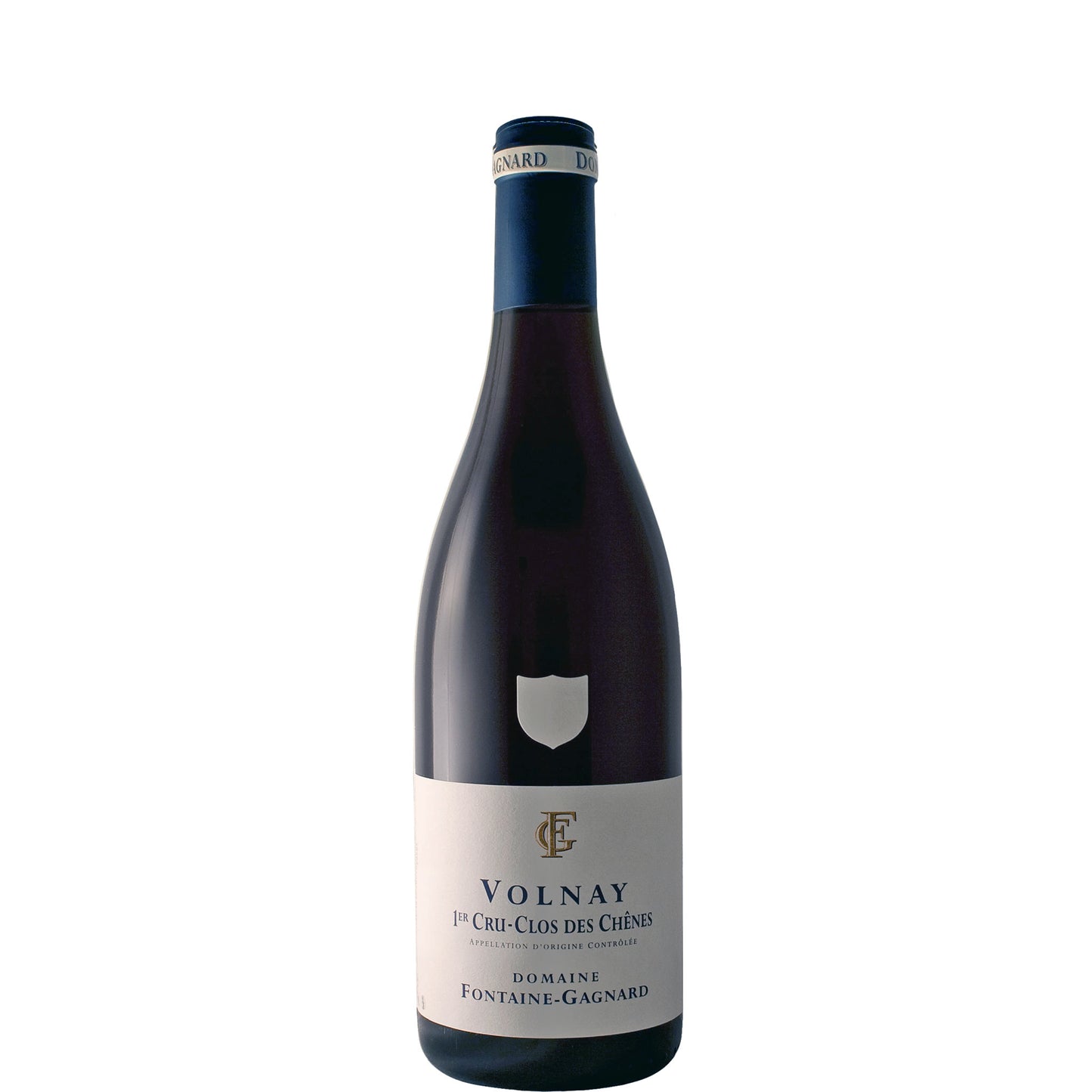
Volnay Premier Cru 'Clos Des Chênes', Domaine Fontaine-Gagnard, 2018
Volnay Premier Cru 'Clos Des Chênes', Domaine Fontaine-Gagnard, 2018
- Red Still
- 75.0cl
- 13.0%
- Organic
- Pinot Noir
Fontaine-Gagnard is best known for its white wines from Chassagne-Montrachet, so finding them make Volnay of this quality feels like a happy secret. Clos des Chênes is one of the appellation's most celebrated premier crus, a south-facing slope above Volnay village that consistently produces reds of unusual elegance and longevity. The 2018 vintage gave Burgundy producers ripe, generous fruit without the heat stress that plagued parts of the south, and this wine is a fine example of that balance: silk over structure, charm over brute force.
We find it drinking well now; the tannins have settled into something fine-grained and the fruit is lovely and expressive, but there's enough grip and freshness to reward another five to eight years in the cellar. Think of it as a wine currently in its most enjoyable middle chapter, with the best pages still to come.
- ❖ ABV: 13.0%
Grapes
Pinot Noir
Vintage report
Burgundy growers will tell you that 2018 was the vintage that reminded them why they fell in love with their vineyards in the first place. A glorious summer of sustained warmth without the punishing heat that can strip freshness from Pinot Noir, followed by cool nights that preserved the acidity. The flowering went smoothly, fruit set was generous, and harvest arrived early but without panic—exactly the sort of classical growing season that becomes rarer each decade.
What landed in the cellars was Burgundy at its most seductive: Pinot Noir with real depth of colour and fruit concentration, yet still dancing on its toes rather than plodding along. The Chardonnays show beautiful ripeness balanced by that crucial mineral backbone, particularly from the better sites in Chablis and the Côte de Beaune. We're drinking these wines now with enormous pleasure—they hit that sweet spot where primary fruit hasn't faded but the tannins have softened into silk. The top cuvées will cellar beautifully for another decade, but frankly, why wait?
Tasting Notes
AppearanceClear, medium ruby with a translucent rim and good brightness for an eight-year-old wine.
NoseRed cherry, dried rose petal, and a streak of violet give way to something more earthy and savoury underneath — forest floor, dry stone, a whisper of cinnamon. The oak is fully integrated; you sense it as a structural presence rather than a flavour.
PalateThe 2018 ripeness is there in the fruit weight — this is not a lean or austere Volnay — but the acidity keeps everything honest and the tannins are genuinely fine-grained. Red plum and cherry skin dominate, with a savoury, iron-tinged undercurrent that is very much Clos des Chênes speaking rather than the vintage.
FinishLong and persistent, with dried cherry and a chalky mineral dryness that lingers well past the last sip.
Overall impressionA wine of real precision and quiet authority — Volnay doing exactly what Volnay does best.
Food Pairings
In Burgundy, a wine like this would most naturally appear alongside roast guinea fowl or a poulet de Bresse with tarragon cream — the acidity cuts the richness and the wine's perfume survives the plate. Locals also love Volnay with rabbit cooked slowly in mustard and white wine, a pairing that sounds simple and tastes extraordinary. A plateau of Burgundian cheeses at the end of a meal — Époisses aside, which would flatten the wine — is another classic move. Further afield, duck breast with cherries or a mushroom-heavy risotto would both be excellent matches.
We think this wine would go well with
Serve at around 16°C — slightly cooler than you might expect for red Burgundy, which allows the aromatics to lift and the fruit to stay precise rather than jammy. A brief decant of 20-30 minutes will help open the wine up, though at eight years old it needs less air than it would have done at release. A large-bowled Burgundy glass is the obvious choice and the right one; it gives the perfume space to breathe.
Clos des Chênes sits on the upper slopes of the Volnay premier cru belt, facing south and south-east at around 280-320 metres. The soils here are limestone-rich with a high proportion of active chalk and relatively thin topsoil, which keeps vine vigour in check and concentrates flavour. That limestone backbone is the reason Clos des Chênes Pinots tend toward finesse and aromatic lift rather than the broader, fleshier style you find lower on the slope — it is a site that rewards patience more than most of its neighbours.
Volnay is a small commune in the Côte de Beaune producing exclusively red wine from Pinot Noir — an anomaly in a stretch of the Côte otherwise famous for its whites. It sits between Pommard to the north and Meursault to the south, and makes a very different style from either: where Pommard leans toward muscle and dark fruit, Volnay is all perfume, lift, and silky texture. There are no grand crus here — the village has always argued its best premier crus deserve that elevation — but Clos des Chênes, Champans, and Caillerets are consistently among the most compelling reds on the entire Côte.
Burgundy growers will tell you that 2018 was the vintage that reminded them why they fell in love with their vineyards in the first place. A glorious summer of sustained warmth without the punishing heat that can strip freshness from Pinot Noir, followed by cool nights that preserved the acidity. The flowering went smoothly, fruit set was generous, and harvest arrived early but without panic—exactly the sort of classical growing season that becomes rarer each decade.
What landed in the cellars was Burgundy at its most seductive: Pinot Noir with real depth of colour and fruit concentration, yet still dancing on its toes rather than plodding along. The Chardonnays show beautiful ripeness balanced by that crucial mineral backbone, particularly from the better sites in Chablis and the Côte de Beaune. We're drinking these wines now with enormous pleasure—they hit that sweet spot where primary fruit hasn't faded but the tannins have softened into silk. The top cuvées will cellar beautifully for another decade, but frankly, why wait?
FAQs
What does this wine taste like?
This is classic Volnay: silky, perfumed, and precise rather than big or bold. You get red cherry, violet, dried rose, and earthy savoury complexity underneath — iron, forest floor, a hint of spice. It is a wine of finesse rather than muscle, with fine-grained tannins and bright acidity keeping everything lively.
When should I drink this wine?
It is drinking well right now and we think 2026 to 2038 is the sweet spot. At eight years old, the primary fruit is still expressive but secondary complexity is starting to build — which is exactly where you want a Volnay premier cru to be. If you have the patience, another three to five years will add further depth.
Is this worth cellaring?
Yes, genuinely. Clos des Chênes is one of Volnay's most age-worthy premier crus, and the 2018 vintage gave the wine enough structure to develop well. It won't become a different wine — it will become a more complete one. Aim for 2029 to 2033 if you want to catch it at peak complexity.
What food should I serve with this?
Roast guinea fowl, chicken with tarragon cream, or duck breast are the obvious companions. Rabbit cooked in mustard and white wine is very traditional in Burgundy and works brilliantly. If you want something simpler, a good mushroom dish or a board of aged Burgundian cheeses — avoiding anything too pungent — will do the job nicely.
How should I serve it?
Serve at around 16°C and give it a short decant of 20 to 30 minutes. A large-bowled Burgundy glass will let the aromatics open up properly. Don't serve it too warm or the subtlety gets lost.
How does Fontaine-Gagnard compare to other Volnay producers?
Fontaine-Gagnard is primarily celebrated for white Burgundy from Chassagne-Montrachet, so their Volnay is something of a hidden gem rather than a headline act. The winemaking is restrained and precise — no over-extraction, no heavy oak — and the result is very much in the classical Volnay mould. For the price, it sits comfortably alongside better-known names from the appellation.
Want to know more?
Discuss your requirements with our account managers, Jeremy & Jen
-
Personal Service
- Our team are always on hand to support you, taking orders online, by phone or email & responding to urgent requests.
- Our efficient warehouse & team of drivers always go the extra mile to deliver our wines to you.
- Our new, high-capacity warehouse ensures excellent availability of wines.
- Our new enterprise platform means hassle-free service, from inventory to billing.
-
Our Sales Team
Speak to one of our teamJeremy Cowan
After managing his own stores and a further stint in independent retail, Jeremy has dedicated 12 years to trade sales in the North West.
Jen Neilan
Twenty years in hospitality later, after curating the wine list for Manchester’s first Neapolitan pizza restaurant, and running a natural wine bar, Jen made the move to the other side of the table.