

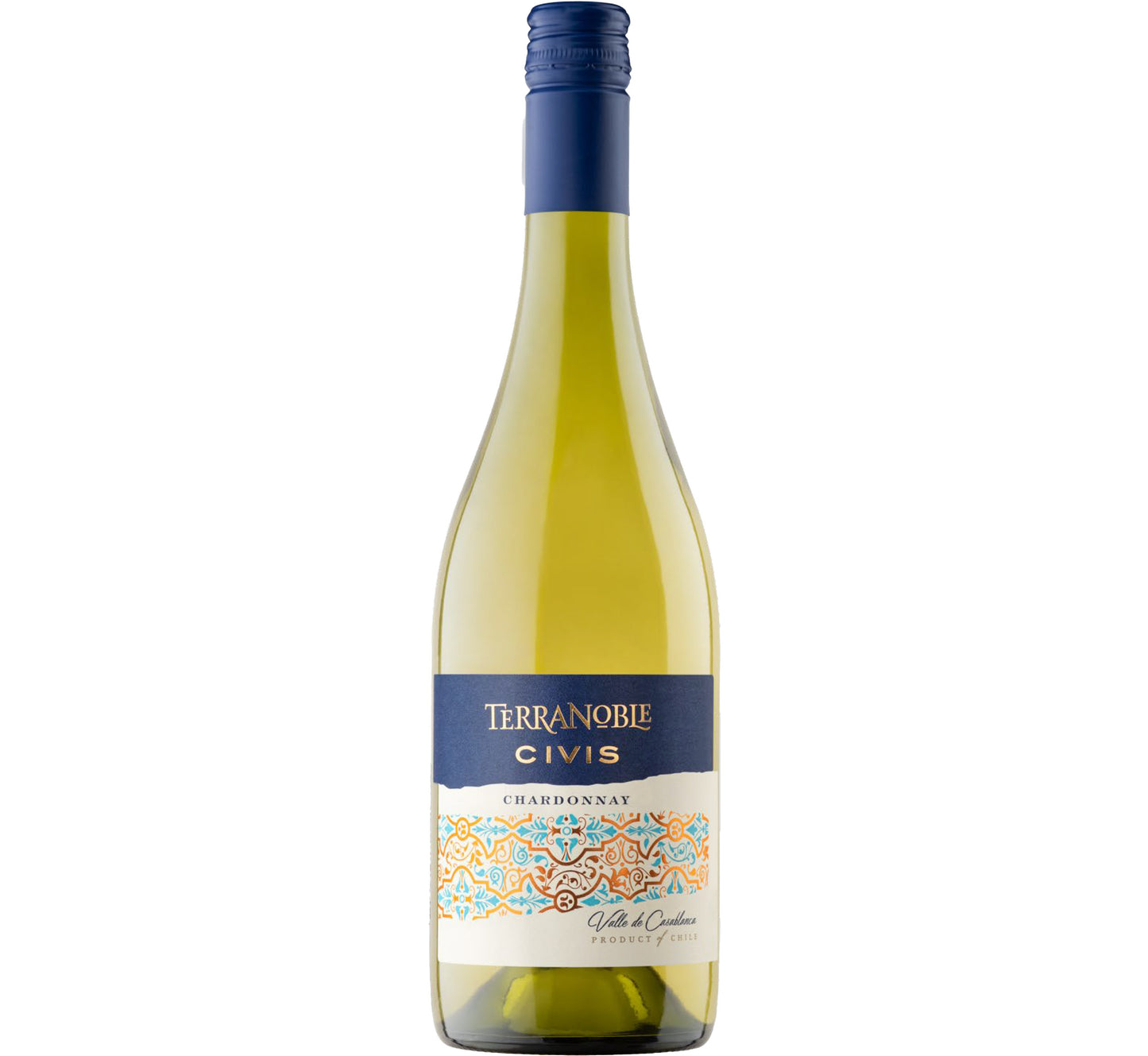
TerraNoble, CIVIS Chardonnay, 2023
TerraNoble, CIVIS Chardonnay, 2023
- White Still
- 75.0cl
- 13.0%
- Chardonnay
This bright, expressive Chardonnay is soft, clean, and full of charm. Around 20% of the wine is barrel-fermented, adding a gentle roundness to its fresh tropical and citrus profile - think pineapple, lime, and lemon, all lifted by a hint of creaminess. The palate is beautifully balanced, finishing long and fresh with just the right touch of richness.
It’s a natural match for fish and seafood, but really shines alongside a creamy risotto or roast chicken.
- ❖ ABV: 13.0%
Grapes
Chardonnay
Vintage report
Chile's 2023 vintage arrived after a growing season shaped by unusually high rainfall during winter and spring — a genuine rarity in these parts — followed by a warm, dry summer that allowed growers to exhale. In Casablanca, the cooler maritime conditions kept things ticking along nicely, with slower ripening producing whites and Pinot Noir with real definition and freshness. Maipo's Cabernet Sauvignon benefited from the dry finish to the season, building concentration without losing the structural clarity the valley does best. Colchagua ran warmer, as it tends to, but the preceding moisture meant vines weren't stressed, and the Carménère and Syrah came in with more poise than some recent years.
The overall picture is a vintage of genuine quality rather than sheer power — the wines have fruit, but they're not shouting about it. Casablanca whites are drinking well now and will continue to do so over the next two to three years. The Maipo reds have the bones to reward patience; we'd give the better Cabernets until 2028 or beyond. Colchagua's reds sit somewhere in between — approachable already, but with enough to them that there's no rush.
Tasting Notes
AppearancePale gold with bright, greenish glints and good clarity.
NoseFresh and inviting — pineapple and lime lead, followed by a soft suggestion of lemon curd and a faint vanilla whisper from the barrel work. It's generous without being showy.
PalateLight to medium body with a clean, fruit-forward attack; that 20% barrel fermentation shows in a gentle creamy texture rather than any obvious oak flavour. Citrus and tropical fruit hold the middle ground, balanced by lively acidity.
FinishFresh, clean, and longer than you'd expect at this level, with a pleasing citrus lift right at the end.
Overall impressionA genuinely well-made, pleasure-driven Chardonnay that earns its place on the table.
Food Pairings
In Chile's Central Valley, a white like this would naturally find its way onto a table alongside chupe de mariscos — a rich, creamy shellfish stew that's a Chilean coastal staple. Cazuela de vacuno with its lighter broth and root vegetables would also work well, as would empanadas de pino fresh from the oven. Along the coast, grilled corvina with garlic and lemon is a perfect pairing. The wine's creamy texture and tropical fruit make it equally comfortable with the richly sauced chicken dishes common across the region.
We think this wine would go well with
Serve at around 10-12°C — cold enough to keep the acidity bright but not so chilled that the fruit closes up. No need to decant; just open and pour. A standard white wine glass with a slightly wider bowl than a flute will show the fruit and texture at their best without dissipating the freshness too quickly.
The Valle Central is Chile's viticultural heartland, benefiting from the cooling influence of the Andes to the east and the Pacific Ocean to the west. Chardonnay grown here tends to retain good natural acidity thanks to the diurnal temperature swings — warm days and cool nights that slow ripening and preserve freshness. Soils vary but typically include alluvial loams with good drainage, which keeps vine stress in check and concentrates flavour without sacrificing delicacy.
Valle Central is Chile's largest and most productive wine region, encompassing several sub-valleys including Maipo, Rapel, Curicó, and Maule. It's best known internationally for Cabernet Sauvignon and Carménère, but increasingly produces whites of real character as producers chase cooler sites and earlier harvesting. The DO allows a wide range of varieties and winemaking approaches, making it a broad church — quality ranges enormously, but the best examples show genuine freshness and varietal clarity.
Chile's 2023 vintage arrived after a growing season shaped by unusually high rainfall during winter and spring — a genuine rarity in these parts — followed by a warm, dry summer that allowed growers to exhale. In Casablanca, the cooler maritime conditions kept things ticking along nicely, with slower ripening producing whites and Pinot Noir with real definition and freshness. Maipo's Cabernet Sauvignon benefited from the dry finish to the season, building concentration without losing the structural clarity the valley does best. Colchagua ran warmer, as it tends to, but the preceding moisture meant vines weren't stressed, and the Carménère and Syrah came in with more poise than some recent years.
The overall picture is a vintage of genuine quality rather than sheer power — the wines have fruit, but they're not shouting about it. Casablanca whites are drinking well now and will continue to do so over the next two to three years. The Maipo reds have the bones to reward patience; we'd give the better Cabernets until 2028 or beyond. Colchagua's reds sit somewhere in between — approachable already, but with enough to them that there's no rush.
FAQs
What does this Chardonnay taste like?
Fresh and fruit-forward, with pineapple, lime, and lemon at the core, a gentle creamy texture from partial barrel fermentation, and a clean, lingering finish. It's approachable and generous rather than weighty or oaky.
When should I drink this wine?
Now, ideally. This is a wine built for freshness and immediate pleasure — drink it through 2028 at the latest, while the fruit is still vibrant. There's no benefit to holding it longer.
What food works well with this wine?
It's a natural match for fish and seafood, but also excellent with roast chicken, creamy risotto, or pasta in a light cream sauce. The soft texture and acidity mean it handles richer dishes without being overwhelmed.
How should I serve it?
Serve at around 10-12°C in a standard white wine glass. No need to decant — just open and enjoy. If it's been in the fridge, give it 10 minutes out of the cold before pouring.
Is this worth cellaring?
No. This is exactly the kind of wine you open, not store. Its appeal is in its freshness and fruit, both of which are at their peak right now. Pop it tonight.
How does this compare to other New World Chardonnays at this price?
It sits well above average for its bracket. The partial barrel fermentation adds genuine texture without the heavy oak that makes cheaper Chardonnay feel clumsy, and the acidity is well-judged. For the price, it's hard to beat.
Want to know more?
Discuss your requirements with our account managers, Stephanie, Ed, & Jen
-
Personal Service
- Our team are always on hand to support you, taking orders online, by phone or email & responding to urgent requests.
- Our efficient warehouse & team of drivers always go the extra mile to deliver our wines to you.
- Our new, high-capacity warehouse ensures excellent availability of wines.
- Our new enterprise platform means hassle-free service, from inventory to billing.
-
Our Sales Team
Speak to one of our teamStephanie Duncan
With 25+ years in the wine trade, Steph knows the UK market inside out, from premium wine and wholesale to hospitality and retail. A WSET Diploma holder and unapologetic Champagne fan, she loves building great relationships and finding exciting wines.
Jen Neilan
Twenty years in hospitality later, after curating the wine list for Manchester’s first Neapolitan pizza restaurant, and running a natural wine bar, Jen made the move to the other side of the table.