

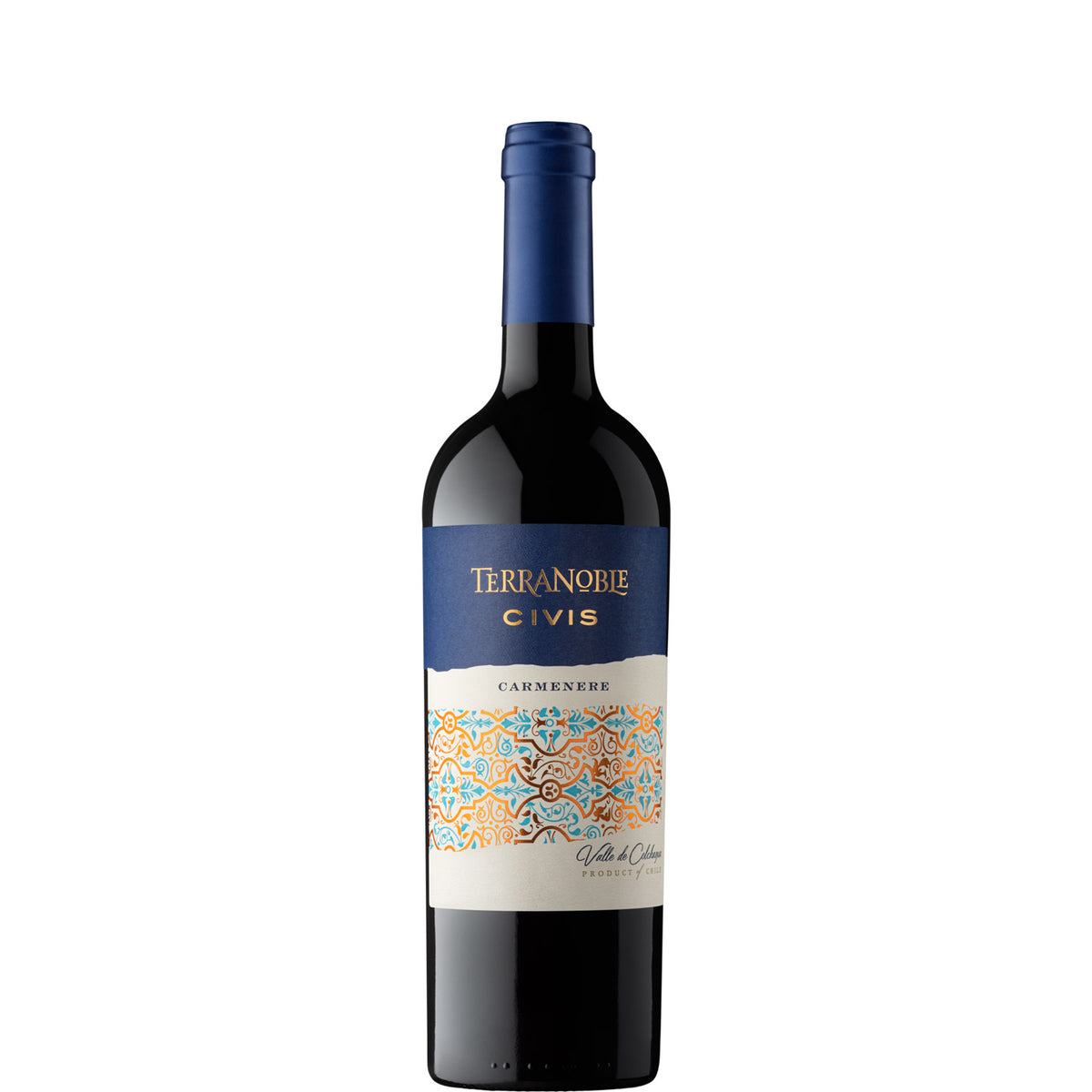
TerraNoble CIVIS Carmenere, 2023
TerraNoble CIVIS Carmenere, 2023
- Red Still
- 75.0cl
- 13.9%
- Carmenere
Carmenere is Chile's signature grape — the variety that quietly disappeared from Bordeaux after phylloxera, then turned up alive and well in the Colchagua Valley, where it had been masquerading as Merlot for decades. TerraNoble have been working this corner of Chile's Central Valley long enough to understand what the grape needs: warmth, patience, and restraint. The Sol de Andes Reserva delivers exactly that — a ripe, generously built red with the characteristic dark fruit and green-herb edge that makes Carmenere so instantly recognisable.
This is a wine for now and the next few years rather than the cellar. There's enough structure to handle a good steak, but the fruit is forward and welcoming. We'd open it tonight with no apologies.
- ❖ ABV: 13.9%
Grapes
Carmenere
Vintage report
The 2023 growing season in Colchagua Valley was defined by a drier-than-average summer with well-regulated temperatures that allowed grapes to ripen steadily rather than in fits and starts. The valley's continental conditions — hot days, cool nights — did their usual good work, preserving freshness without compromising ripeness. Harvest came in at a measured pace, with fruit arriving in good condition and without the pressure of racing against autumn rains. Not the sort of vintage that writes itself into legend through drama, but sometimes the quiet ones deliver the most honest expression of the terroir.
Cabernet Sauvignon and Carménère, the region's twin pillars, both performed well — the Cab showing firm, well-resolved tannins and the kind of dark fruit concentration Colchagua does reliably, while Carménère hit a particularly good stride, with the freshness that separates the best examples from the overripe style the variety spent years trying to shake. We think the mid-range bottles are drinking well now, and the better-structured reds will reward patience until 2028 or beyond.
Tasting Notes
AppearanceDeep ruby-purple with good concentration and a clean, bright rim.
NoseDark plum and blackberry lead, followed by a lift of dried thyme and a faint whiff of smoked paprika — classic Carmenere. There's a subtle cocoa edge that gives it a little extra weight.
PalateMedium to full-bodied with plush, velvety tannins that are the hallmark of a well-made Carmenere. The dark fruit carries through cleanly, with a savoury, slightly earthy mid-palate that keeps it from being too obvious. Oak is present but supportive rather than showy.
FinishMedium-length with a pleasant dark chocolate and dried herb tail that lingers just long enough.
Overall impressionA confident, food-friendly Carmenere that does exactly what it promises and doesn't overcomplicate things.
Food Pairings
In Colchagua, a wine like this would almost certainly appear alongside an asado — the Chilean slow-roasted beef or lamb cooked over open coals, heavily seasoned with chimichurri. Cazuela de vacuno, the hearty beef and vegetable stew that appears on almost every Chilean family table, is another natural match, its richness meeting the wine's weight head-on. Pastel de choclo, a corn and beef pie with olives and hard-boiled egg, has a sweetness that plays nicely against Carmenere's dark fruit. Even a simple empanada de pino, filled with spiced minced beef, would be a fine companion.
We think this wine would go well with
Serve at around 16-17°C — a slight chill keeps the fruit fresh and stops the wine feeling heavy. A brief decant of 20-30 minutes will open it up and soften any remaining grip on the tannins, though it's honestly drinkable straight from the bottle. A standard Bordeaux-style glass with a generous bowl suits the grape well, giving the savoury, herbal aromas room to come forward.
The Colchagua Valley benefits from a warm, dry Mediterranean climate moderated by Pacific breezes that funnel in through the Coastal Range, slowing ripening and preserving acidity. Soils in the valley are predominantly clay-loam with alluvial deposits, which retain moisture and give Carmenere the steady water supply it needs to ripen evenly without stress. The combination of warm days and cool nights is key to developing the grape's characteristic dark fruit while keeping those signature herbal qualities in check rather than letting them dominate.
Colchagua Valley sits within Chile's broader Central Valley and has become arguably the country's most respected red wine appellation, particularly for Cabernet Sauvignon and Carmenere. Regulations are relatively permissive by Old World standards, allowing producers flexibility in yields and winemaking, which means quality varies considerably across the region. At its best, Colchagua delivers ripe, structured reds with genuine depth — warmer and more full-bodied than neighbouring Cachapoal to the north, and with richer fruit than the coastal Casablanca or San Antonio valleys.
The 2023 growing season in Colchagua Valley was defined by a drier-than-average summer with well-regulated temperatures that allowed grapes to ripen steadily rather than in fits and starts. The valley's continental conditions — hot days, cool nights — did their usual good work, preserving freshness without compromising ripeness. Harvest came in at a measured pace, with fruit arriving in good condition and without the pressure of racing against autumn rains. Not the sort of vintage that writes itself into legend through drama, but sometimes the quiet ones deliver the most honest expression of the terroir.
Cabernet Sauvignon and Carménère, the region's twin pillars, both performed well — the Cab showing firm, well-resolved tannins and the kind of dark fruit concentration Colchagua does reliably, while Carménère hit a particularly good stride, with the freshness that separates the best examples from the overripe style the variety spent years trying to shake. We think the mid-range bottles are drinking well now, and the better-structured reds will reward patience until 2028 or beyond.
FAQs
What does this wine taste like?
Dark plum, blackberry, smoked paprika, and dried herbs with velvety tannins and a dark chocolate finish. It's a classic Chilean Carmenere — ripe and generous with a savoury edge that stops it feeling sweet.
When is the best time to drink it?
It's drinking well right now and will continue to do so until around 2030. This isn't a wine that demands patience — open it tonight.
What food should I pair it with?
Grilled or roasted red meat is the obvious answer — beef, lamb, or even venison all work brilliantly. Anything with a smoky, charred edge will play to the wine's strengths. It also handles bold spices well, so don't be afraid of a chorizo stew or a richly seasoned beef pie.
Should I decant it?
A short decant of 20-30 minutes is worthwhile and will soften the tannins slightly, but it's not essential. If you're pouring straight from the bottle, giving it 10 minutes in the glass before drinking will do the trick.
Is Carmenere the same as Merlot?
They're related — both are Cabernet Franc descendants — but quite distinct. Carmenere ripens later, has more pronounced herbal and smoky character, and produces softer tannins than Merlot when done well. Chile only officially identified its Carmenere vines as such in 1994, having grown them under the name Merlot for over a century.
Is this wine worth cellaring?
Not especially. It's a Reserva built for approachable, near-term drinking rather than long-haul ageing. Enjoy it between now and 2030 while the fruit is at its most expressive.
Want to know more?
Discuss your requirements with our account managers, Jeremy & Jen
-
Personal Service
- Our team are always on hand to support you, taking orders online, by phone or email & responding to urgent requests.
- Our efficient warehouse & team of drivers always go the extra mile to deliver our wines to you.
- Our new, high-capacity warehouse ensures excellent availability of wines.
- Our new enterprise platform means hassle-free service, from inventory to billing.
-
Our Sales Team
Speak to one of our teamJeremy Cowan
After managing his own stores and a further stint in independent retail, Jeremy has dedicated 12 years to trade sales in the North West.
Jen Neilan
Twenty years in hospitality later, after curating the wine list for Manchester’s first Neapolitan pizza restaurant, and running a natural wine bar, Jen made the move to the other side of the table.