

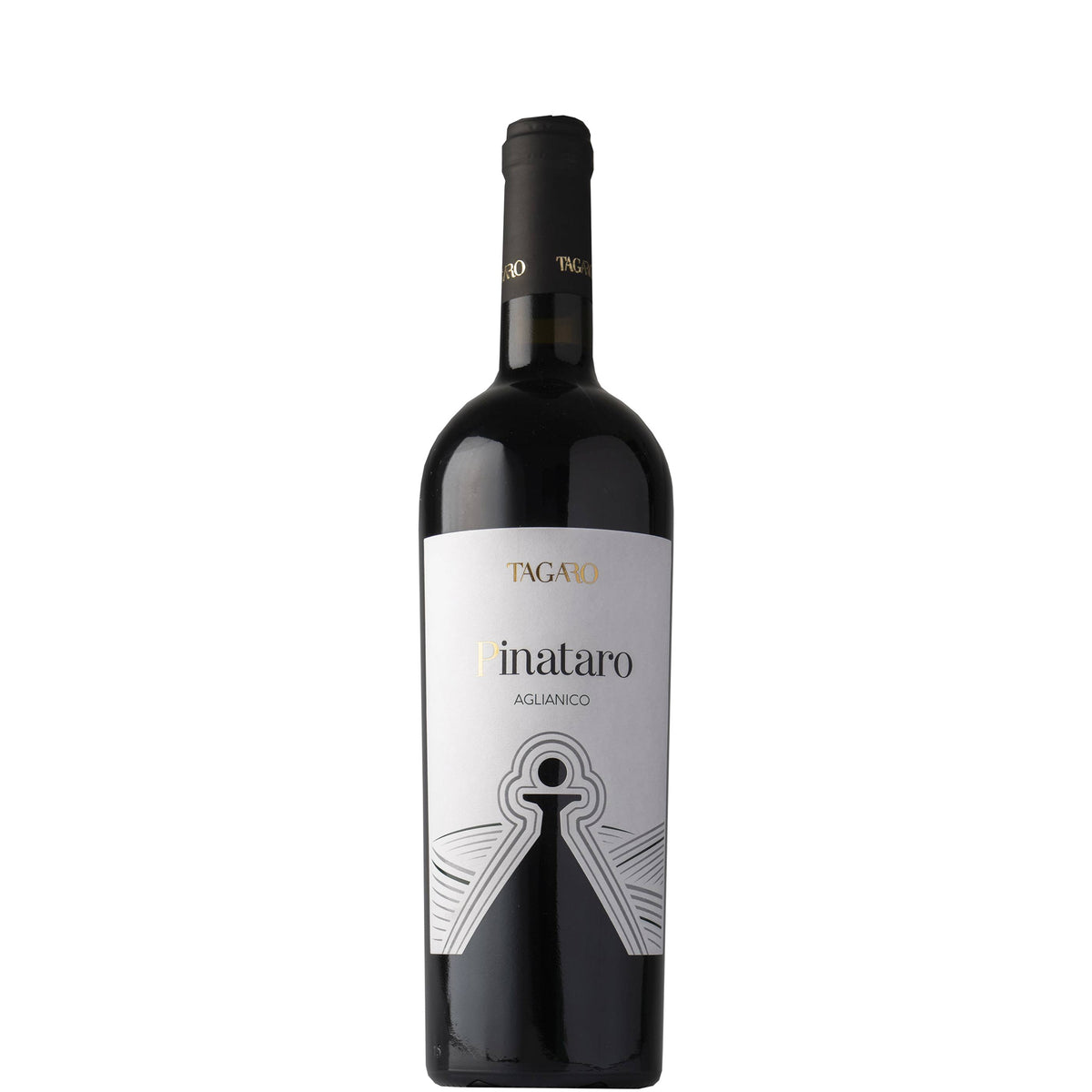
- Red Still
- 75.0cl
- 13.0%
- Aglianico
Aglianico is one of southern Italy's great grapes — ancient, brooding, and not in any hurry to please. Tagaro Pinataro's version from Campania is a young wine that already has something to say: dark fruit, volcanic mineral grip, and tannins that are firm without being brutal.
This is not a wine you open on a whim; it wants food, company, and a little time to settle into itself.
- ❖ ABV: 13.0%
Grapes
Aglianico
Vintage report
Campania in 2024 was shaped by a warm, dry growing season with heat pressure in the summer months that demanded careful management in the vineyard — particularly on south-facing sites where stress arrived early. Producers who could control yields and had the altitude or aspect to retain freshness navigated it well; those without those advantages felt the squeeze. Rainfall was below average across much of the season, concentrating flavours but testing water reserves, and harvest came in slightly earlier than the historical norm across most appellations.
The results skew towards wines with real structure and density — Aglianico in particular has produced some serious, brooding material that will reward patience. Fiano and Greco, where picked at the right moment, retained the tension and mineral drive that make them so compelling in the first place. This is not a vintage for immediate gratification across the board. The reds need time — think 2028 onwards for anything ambitious — while the better whites are already drinking well and should hold until around 2027 or 2028.
Tasting Notes
AppearanceDeep ruby-purple, almost opaque at the centre with a narrow garnet rim.
NoseDark cherry, dried violet, and a streak of iron and volcanic ash that's very much Aglianico's calling card. Underneath, there's wild thyme and a touch of leather — youthful but already showing real character.
PalateFirm, grippy tannins frame a core of black cherry and plum, with that same mineral, almost smoky quality carrying through from the nose. The acidity is bright and gives the wine real backbone — this has structure to spare for a 2024.
FinishLong, dry, and iron-edged, with herb and dark fruit lingering well after the glass is empty.
Overall impressionA proper expression of Aglianico — uncompromising, mineral, and built to go somewhere.
Food Pairings
In Campania, this is the wine you open for Sunday ragù — the kind that has been going since morning, slow-cooked with pork ribs and hand-rolled pasta. Braised lamb with wild herbs is a natural partner, as is anything from the grill: sausages charred over wood, or a bistecca rubbed with garlic and rosemary. Aged local cheeses like Pecorino di Carmasciano work well too, their salt and fat softening the tannins beautifully. Aglianico and aubergine-based dishes — melanzane alla parmigiana, for instance — is a pairing the locals have known about for centuries.
We think this wine would go well with
Serve at 17-18°C — too warm and the tannins turn heavy, too cold and the wine closes up entirely. Decant for at least an hour before serving; this is a young, firm wine and it needs air to open. A large-bowled red wine glass gives the fruit room to emerge against the tannins and mineral grip.
Campania's Aglianico vineyards are shaped by volcanic soils — largely ash and pumice deposits from the region's ancient eruptions — which give wines a distinctive mineral quality, somewhere between iron filings and warm stone. Altitude matters here too: higher sites slow ripening and preserve the acidity that keeps Aglianico's naturally formidable structure in balance. The climate is warm and Mediterranean at lower elevations but can be surprisingly cool at altitude, which is exactly what this thick-skinned grape needs to avoid tipping into jamminess.
Campania is home to some of Italy's most characterful reds, with Aglianico at the centre of the story — most famously in Taurasi DOCG, often called the Barolo of the south. Outside Taurasi's strict boundaries, Aglianico del Taburno and various IGT bottlings give producers more flexibility while still drawing on the same volcanic soils and ancient grape heritage. The rules vary by designation, but Aglianico's character — high acidity, firm tannins, deep colour, and serious ageing potential — remains consistent across the region.
Campania in 2024 was shaped by a warm, dry growing season with heat pressure in the summer months that demanded careful management in the vineyard — particularly on south-facing sites where stress arrived early. Producers who could control yields and had the altitude or aspect to retain freshness navigated it well; those without those advantages felt the squeeze. Rainfall was below average across much of the season, concentrating flavours but testing water reserves, and harvest came in slightly earlier than the historical norm across most appellations.
The results skew towards wines with real structure and density — Aglianico in particular has produced some serious, brooding material that will reward patience. Fiano and Greco, where picked at the right moment, retained the tension and mineral drive that make them so compelling in the first place. This is not a vintage for immediate gratification across the board. The reds need time — think 2028 onwards for anything ambitious — while the better whites are already drinking well and should hold until around 2027 or 2028.
FAQs
What does this wine taste like?
Dark cherry, iron, volcanic mineral, and wild herbs — grippy, dry, and structured, with a long savoury finish. It's not an easy, fruit-forward red; it has edges and attitude, which is exactly what makes Aglianico worth seeking out.
When should I drink this wine?
We'd suggest waiting until 2027 to get the most from it, though opening now with a good hour's decanting is perfectly reasonable. It will drink well until around 2034.
Does it need decanting?
Yes — at least an hour, ideally more. This is a young, firm wine and it needs air to show its best. Pouring straight from the bottle will give you tannins first, fruit second.
What food should I serve it with?
Slow-braised meat is the classic match — lamb, pork ragù, or beef cooked long and low with herbs. It's also excellent with aged hard cheeses and anything from a wood-fired grill. Aglianico's acidity and tannins are made for fatty, rich, savoury food.
Is this worth cellaring?
For a few years, yes. The structure is there and the wine has the balance to develop. We think the sweet spot is 2029 to 2032, when the tannins will have settled and the mineral complexity will have fully emerged.
Want to know more?
Discuss your requirements with our account managers, Jeremy & Jen
-
Personal Service
- Our team are always on hand to support you, taking orders online, by phone or email & responding to urgent requests.
- Our efficient warehouse & team of drivers always go the extra mile to deliver our wines to you.
- Our new, high-capacity warehouse ensures excellent availability of wines.
- Our new enterprise platform means hassle-free service, from inventory to billing.
-
Our Sales Team
Speak to one of our teamJeremy Cowan
After managing his own stores and a further stint in independent retail, Jeremy has dedicated 12 years to trade sales in the North West.
Jen Neilan
Twenty years in hospitality later, after curating the wine list for Manchester’s first Neapolitan pizza restaurant, and running a natural wine bar, Jen made the move to the other side of the table.