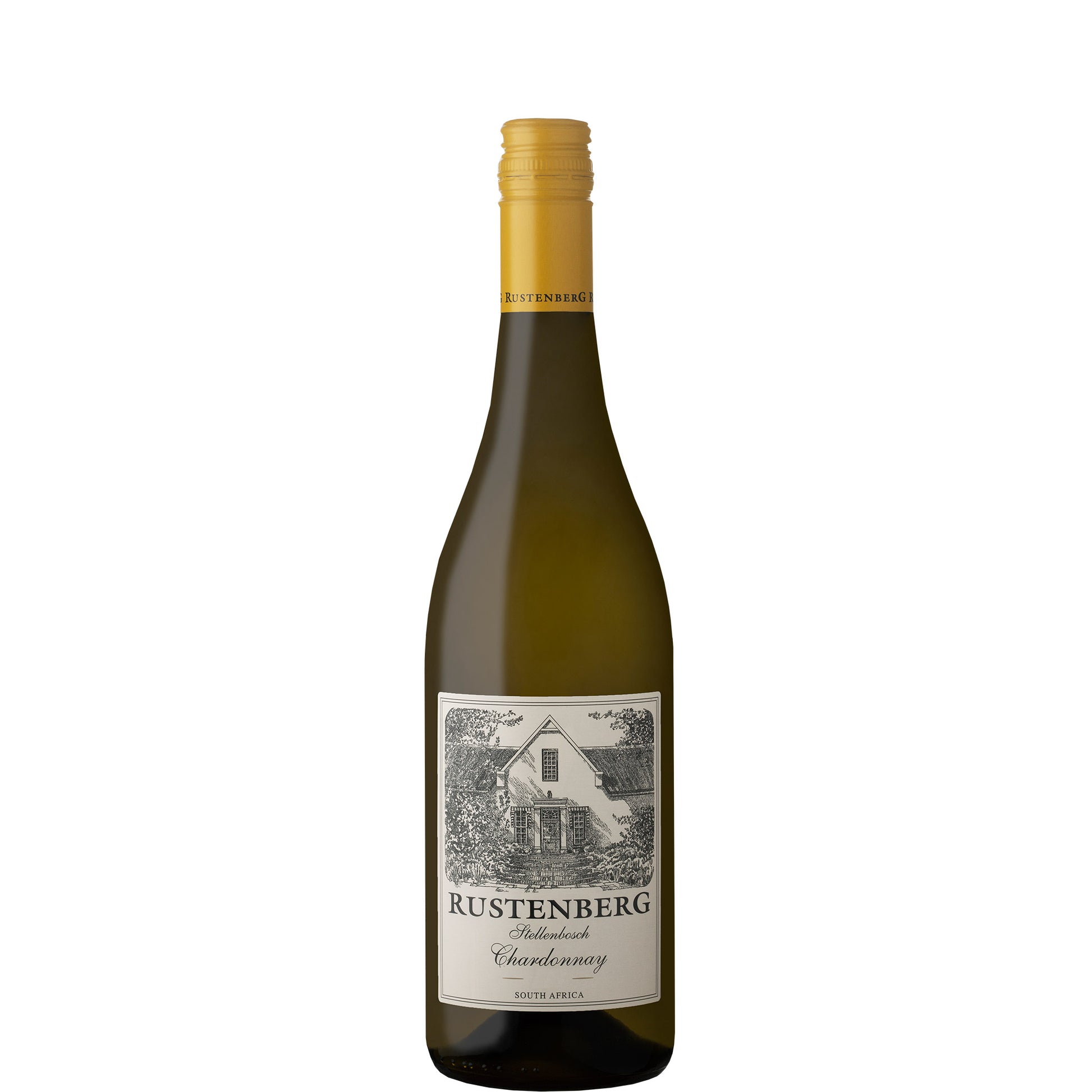

- White Still
- 75.0cl
- 13.5%
- Chardonnay
Rustenberg is one of the Cape's most historic estates, farming land in Stellenbosch that has been under vine since the late seventeenth century. Their Chardonnay is the kind of wine that reminds you why the Cape can do this grape so well: there's genuine freshness here, a brightness of fruit that the warmer appellations of the New World often struggle to hold onto, alongside the textural richness that comes from careful oak handling and ripe, sun-kissed fruit.
Think grilled peach, lemon curd, and a subtle toasty quality that frames rather than dominates. It's a confident, well-made white from an estate that has been doing this long enough to know exactly what it's after. Open a bottle with something from the grill and you won't be disappointed.
- ❖ ABV: 13.5%
Grapes
Chardonnay
Vintage report
The 2025 harvest in Stellenbosch is, frankly, one we're still getting to know — the wines are young, assessments are early, and we'd rather be honest about that than dress up uncertainty in confident clothing. What we do know is that the Western Cape experienced a relatively cool, dry growing season, with good diurnal temperature swings across the Helderberg and Simonsberg slopes that allowed gradual, even ripening. There were no catastrophic weather events to speak of, which is increasingly something to be grateful for in the Cape, and growers who managed their canopies carefully came in with fruit that was clean and well-structured.
Early indications suggest a vintage that rewards the reds — particularly Cabernet Sauvignon and Chenin Blanc on the whites — with wines that have real definition and freshness rather than the overworked, heat-driven weight that once plagued the region. These are not wines to rush. The better Cabernets and Bordeaux blends will want three to five years minimum, and the serious stuff from the mountain terroirs should be left alone until 2030 or beyond. Chenin is more generous early, but give the best examples a year or two and they'll reward your patience considerably.
Tasting Notes
AppearancePale gold with a bright, clear gleam in the glass.
NoseGrilled peach and ripe lemon upfront, with a subtle, well-integrated toastiness underneath. There's a freshness to it — a lift that stops the fruit from feeling heavy or tropical.
PalateMedium-bodied and rounded, with lemon curd, white nectarine, and a creamy mid-palate that tightens into clean, chalky acidity on the back end. The oak is present but measured — it adds weight without adding noise.
FinishCrisp and mineral-edged, with citrus pith lingering pleasantly.
Overall impressionA polished, confident Cape Chardonnay that earns its place at the table without making a fuss about it.
Food Pairings
Around Stellenbosch, a Chardonnay like this would traditionally find its way alongside a whole roasted yellowtail or snoek — the Cape's beloved fatty, smoky fish, often grilled over the coals with apricot jam. It also sits beautifully next to a classic braai spread of boerewors and pap, where the wine's acidity cuts through the richness rather than fighting it. Locally made hard cheeses, particularly aged Gouda from the nearby dairy farms of the Western Cape, are another natural partner. For something more refined, try it with a cream-based mushroom risotto or a simple roast chicken with lemon and herbs.
We think this wine would go well with
Serve at around 10-12°C — cold enough to keep it fresh, but not so cold that you lose the textural richness on the mid-palate. No need to decant; just let it sit out of the fridge for ten minutes if it's been chilling hard. A standard white Burgundy-style glass with a wider bowl will open up the fruit and let the subtle toasty quality come through properly.
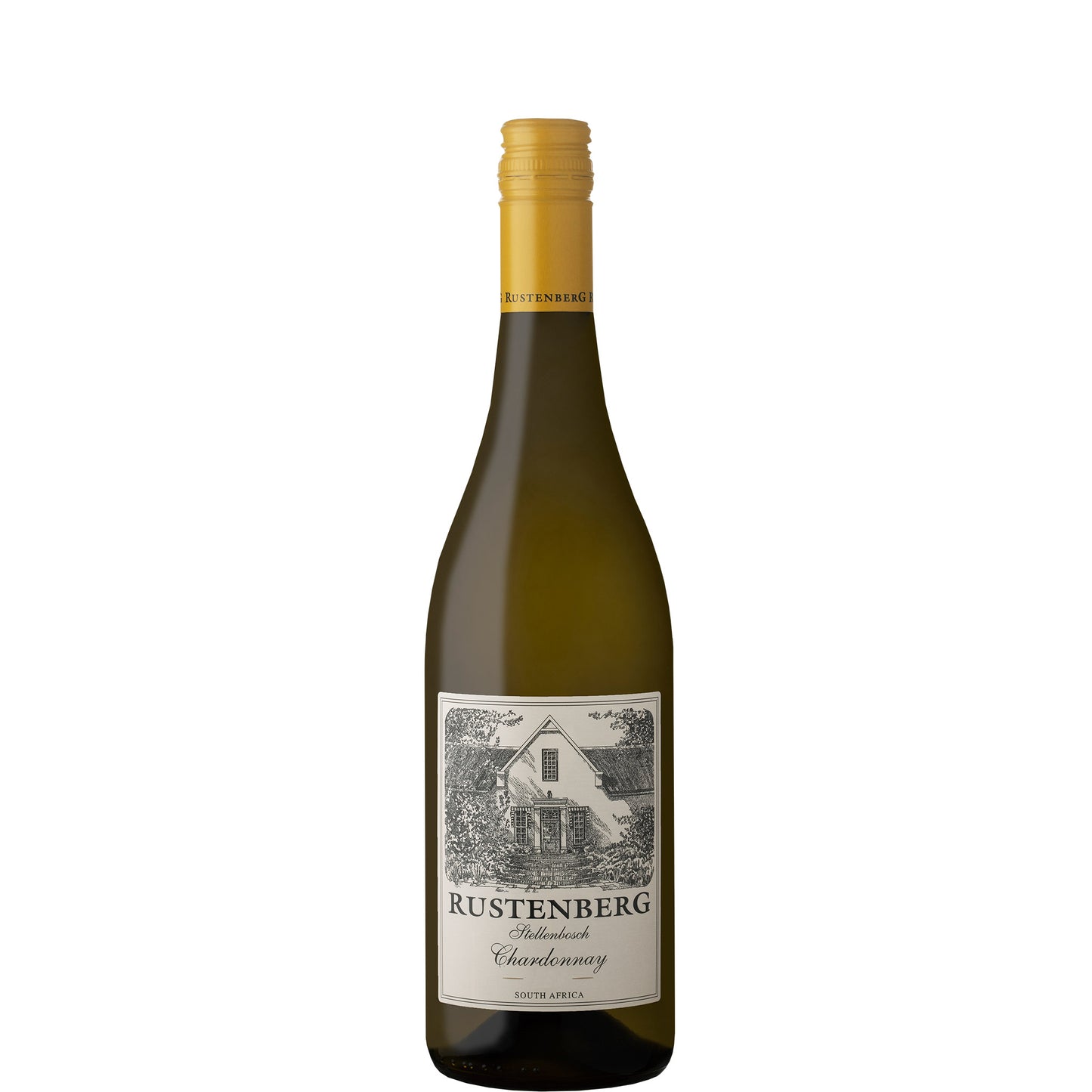
Rustenberg's vineyards sit on the lower slopes of the Simonsberg Mountain in Stellenbosch, where decomposed granite soils predominate, giving wines their characteristic mineral backbone and good natural drainage. Altitude moderates what can be a warm growing season, preserving the acidity that keeps the Chardonnay alive and focused. The combination of mountain influence, cooling afternoon breezes from False Bay, and well-drained soils pushes vines to work harder, concentrating flavour without losing freshness.
Stellenbosch is South Africa's most prestigious wine district, sitting inland from Cape Town between the Atlantic and the Hottentots Holland mountains. It produces some of the Cape's finest reds, but its cooler pockets and mountain-facing slopes have a strong case for white wine too. Compared to nearby Franschhoek, Stellenbosch is more varied in its mesoclimates, ranging from warm valley floors to significantly cooler, higher-altitude sites where Chardonnay, Sauvignon Blanc, and Chenin Blanc all find compelling expression.
The 2025 harvest in Stellenbosch is, frankly, one we're still getting to know — the wines are young, assessments are early, and we'd rather be honest about that than dress up uncertainty in confident clothing. What we do know is that the Western Cape experienced a relatively cool, dry growing season, with good diurnal temperature swings across the Helderberg and Simonsberg slopes that allowed gradual, even ripening. There were no catastrophic weather events to speak of, which is increasingly something to be grateful for in the Cape, and growers who managed their canopies carefully came in with fruit that was clean and well-structured.
Early indications suggest a vintage that rewards the reds — particularly Cabernet Sauvignon and Chenin Blanc on the whites — with wines that have real definition and freshness rather than the overworked, heat-driven weight that once plagued the region. These are not wines to rush. The better Cabernets and Bordeaux blends will want three to five years minimum, and the serious stuff from the mountain terroirs should be left alone until 2030 or beyond. Chenin is more generous early, but give the best examples a year or two and they'll reward your patience considerably.
FAQs
What does Rustenberg Chardonnay taste like?
Ripe stone fruit and lemon curd with a creamy mid-palate, well-integrated toasty oak, and a clean, mineral finish. It has the richness you'd expect from a Cape Chardonnay but with enough acidity to keep it fresh and lively.
When should I drink the 2025 vintage?
Right now, honestly. It's drinking well in 2026 and will continue to do so until around 2030. The fruit is vibrant and the oak is already comfortable. There's no need to wait, but equally no rush to panic-drink it.
What food should I pair this with?
Roast chicken with lemon and herbs is a reliable go-to. It also works really well with grilled fish, a cream-based pasta, or aged hard cheese. If you're braaiing, try it alongside yellowtail or snoek — a classic Western Cape combination.
How should I serve this wine?
Aim for around 10-12°C. If it's been in the fridge, take it out ten minutes before you pour. No need to decant — just pour straight into a reasonably generous white wine glass and let it breathe in the glass for a few minutes.
Is Rustenberg a well-regarded producer?
Very much so. It's one of the oldest estates in the Cape, farming land that has been under vine since 1682. The Barlow family has run it since 1941 and the wines have a long track record of quality. The Chardonnay is considered one of the estate's most consistent whites.
Is this worth cellaring?
For a few years, yes. The 2025 will develop a little more complexity between now and 2028-2029, and will hold comfortably until 2030. Beyond that, the freshness that makes it so appealing will start to fade, so there's not much case for going longer.
Want to know more?
Discuss your requirements with our account managers, Stephanie, Ed, & Jen
-
Personal Service
- Our team are always on hand to support you, taking orders online, by phone or email & responding to urgent requests.
- Our efficient warehouse & team of drivers always go the extra mile to deliver our wines to you.
- Our new, high-capacity warehouse ensures excellent availability of wines.
- Our new enterprise platform means hassle-free service, from inventory to billing.
-
Our Sales Team
Speak to one of our teamStephanie Duncan
With 25+ years in the wine trade, Steph knows the UK market inside out, from premium wine and wholesale to hospitality and retail. A WSET Diploma holder and unapologetic Champagne fan, she loves building great relationships and finding exciting wines.
Jen Neilan
Twenty years in hospitality later, after curating the wine list for Manchester’s first Neapolitan pizza restaurant, and running a natural wine bar, Jen made the move to the other side of the table.