
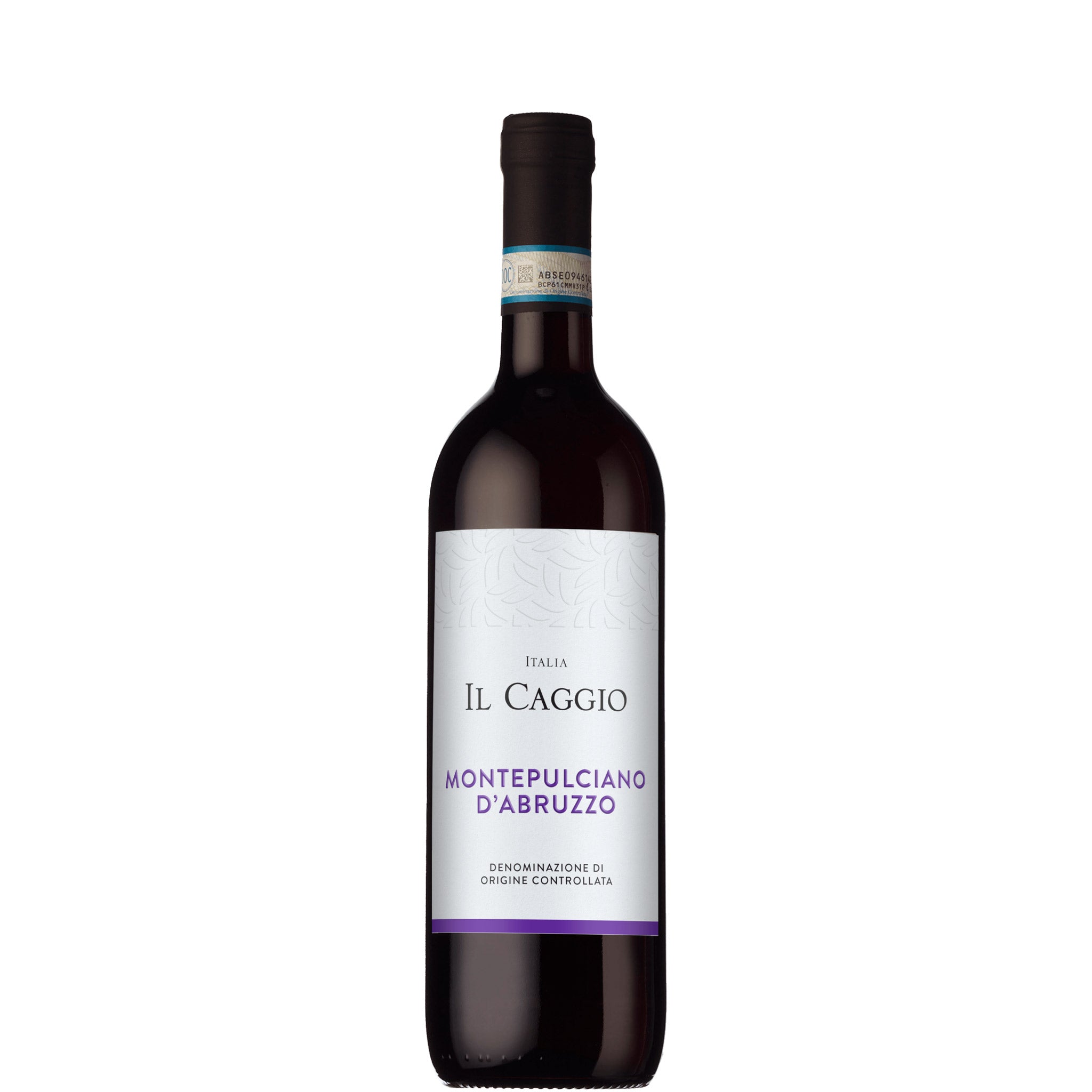
Il Caggio, Montepulciano d'Abruzzo, 2024
Il Caggio, Montepulciano d'Abruzzo, 2024
- Red Still
- 75.0cl
- 12.5%
- Montepulciano
Montepulciano d'Abruzzo is one of central Italy's great undersung reds — thick-skinned, deeply coloured, and capable of real generosity when handled well. Il Caggio's 2024 is a youthful, straight-talking expression of the grape: dark-fruited and earthy, with the variety's characteristic tannin grip and a warmth that speaks to Abruzzo's sun-drenched hillsides running down toward the Adriatic. This is not a wine trying to be something it isn't, and that's precisely what we like about it.
At two years old it's already drinking with confidence, making it an ideal mid-week red rather than a cellar candidate — though it has enough structure to reward another year or two of patience if you can leave it alone. Pull the cork, let it breathe for twenty minutes, and put something robustly meaty on the table. Drink until 2030.
- ❖ ABV: 12.5%
Grapes
Montepulciano
Vintage report
The 2024 growing season in Abruzzo was shaped by the kind of climatic whiplash that has become increasingly familiar across central Italy: a wet spring that built good reserves in the soil, followed by a warm, dry summer that demanded careful canopy management and, in some cases, earlier picking decisions than producers had originally planned. The Adriatic influence kept things fresher along the coast, but the heat pushed hard through the interior. Overall, yields were down in places, which tends to concentrate minds as well as fruit.
It is still early days for 2024, and we are cautious about grand pronouncements, but what we have tasted is promising rather than epoch-making. Montepulciano d'Abruzzo shows the variety's characteristic grip and dark fruit with good freshness holding the structure honest, while Pecorino continues its quiet run of reliable, characterful form. Most reds will reward patience and are probably best approached from 2026 onwards, though the whites are drinking well now.
Tasting Notes
AppearanceDeep ruby-purple, nearly opaque at the centre, with a vivid violet rim.
NoseDark cherry and blackberry upfront, with dried violets and a faintly earthy, iron-tinged note underneath. A suggestion of warm spice — think dried chilli rather than sweet oak — adds interest without complication.
PalateMedium-to-full bodied, with the variety's signature tannin grip arriving early and staying present throughout. The fruit is ripe and generous — plum, dark cherry, a touch of bitter chocolate — balanced by fresh acidity that stops the whole thing feeling heavy. Straightforward, satisfying, and honest.
FinishWarmly spiced with a clean, slightly tannic close and good length for the price.
Overall impressionUnpretentious, characterful, and exactly what a weeknight Abruzzese red should be.
Food Pairings
In Abruzzo, this kind of wine gets poured alongside arrosticini — those tiny skewers of mutton grilled over charcoal that are the region's unofficial signature dish and an absurdly good match for Montepulciano's dark fruit and firm tannins. Lamb in any form works brilliantly, as does a slow-cooked ragù over pasta alla chitarra, Abruzzo's egg-rich, square-cut noodle. Aged Pecorino di Farindola, made in the Gran Sasso foothills, would be a fine cheese pairing. On a cold evening, a bowl of cicerchia soup — an ancient legume still grown in the region — with a drizzle of local olive oil and a glass of this alongside is about as rooted in place as food-and-wine gets.
We think this wine would go well with
Serve at around 16-17°C — cool enough to keep the fruit lively, warm enough to let the tannins soften. A twenty-minute open decant or a quick pour into a wide-bowled glass will do the job; this isn't a wine that needs hours of air. A standard Bordeaux or large-format red wine glass suits the style well, giving the nose room to open without letting the warmth run away.
Abruzzo's vineyards run from the foothills of the Apennines eastward toward the Adriatic coast, with the best sites benefiting from significant diurnal temperature variation — warm days that ripen fruit generously, cool nights that preserve acidity and freshness. Soils in the region tend toward clay and limestone, giving Montepulciano its characteristic depth of colour and firm tannic backbone. The maritime influence from the Adriatic tempers the heat sufficiently to keep wines from feeling heavy or blowsy.
Montepulciano d'Abruzzo DOC is one of Italy's most recognisable appellations, covering red and rosato wines made predominantly from the Montepulciano grape across Abruzzo's four provinces. Despite occasionally being confused with Tuscany's Vino Nobile di Montepulciano — a Sangiovese-based wine named after a town — the two are entirely unrelated: Montepulciano d'Abruzzo takes its name from the grape, not a place. The DOC requires a minimum of 85% Montepulciano, with Sangiovese permitted to fill the balance, and wines range from youthful and fruit-forward to the more serious Colline Teramane DOCG subzone, which demands longer ageing and greater concentration.
The 2024 growing season in Abruzzo was shaped by the kind of climatic whiplash that has become increasingly familiar across central Italy: a wet spring that built good reserves in the soil, followed by a warm, dry summer that demanded careful canopy management and, in some cases, earlier picking decisions than producers had originally planned. The Adriatic influence kept things fresher along the coast, but the heat pushed hard through the interior. Overall, yields were down in places, which tends to concentrate minds as well as fruit.
It is still early days for 2024, and we are cautious about grand pronouncements, but what we have tasted is promising rather than epoch-making. Montepulciano d'Abruzzo shows the variety's characteristic grip and dark fruit with good freshness holding the structure honest, while Pecorino continues its quiet run of reliable, characterful form. Most reds will reward patience and are probably best approached from 2026 onwards, though the whites are drinking well now.
FAQs
What does this wine taste like?
Dark cherry, blackberry, and dried violets, with an earthy, iron-tinged quality that is distinctly Abruzzese. The tannins have genuine grip, there is good fresh acidity, and a warmly spiced finish. It is generous without being heavy.
When is the best time to drink it?
It is drinking well right now and will continue to do so until around 2030. The tannins will soften and a bit more savouriness will emerge over the next two to three years, but this is not a long-haul cellaring wine — its appeal is in its forthright, fruit-driven character.
What food should I serve with it?
Anything involving lamb is an excellent starting point — especially grilled or slow-roasted. Hearty pasta dishes with meat ragù work brilliantly, as does aged Pecorino. If you want to go full Abruzzo, track down some arrosticini and you are set.
How should I serve it?
Around 16-17°C is ideal. You do not need a lengthy decant — twenty minutes open or a good swirl in a wide-bowled glass will open it up nicely. A standard large red wine glass suits the style well.
Is this wine worth cellaring?
Not particularly, no — and that is not a criticism. Montepulciano d'Abruzzo at this level is built for pleasure in the near term. Drink it between now and 2030 and you will get everything it has to offer.
How does this compare to other Montepulciano d'Abruzzo wines?
Montepulciano d'Abruzzo ranges from simple, juicy, everyday reds to the more structured and age-worthy wines of the Colline Teramane DOCG. Il Caggio's version sits comfortably in the honest, characterful middle ground — more interesting than supermarket fare, less austere than the top-end DOCG bottles.
Want to know more?
Discuss your requirements with our account managers, Stephanie, Ed, & Jen

-
Personal Service
- Our team are always on hand to support you, taking orders online, by phone or email & responding to urgent requests.
- Our efficient warehouse & team of drivers always go the extra mile to deliver our wines to you.
- Our new, high-capacity warehouse ensures excellent availability of wines.
- Our new enterprise platform means hassle-free service, from inventory to billing.
-
Our Sales Team
Speak to one of our teamStephanie Duncan
With 25+ years in the wine trade, Steph knows the UK market inside out, from premium wine and wholesale to hospitality and retail. A WSET Diploma holder and unapologetic Champagne fan, she loves building great relationships and finding exciting wines.
Jen Neilan
Twenty years in hospitality later, after curating the wine list for Manchester’s first Neapolitan pizza restaurant, and running a natural wine bar, Jen made the move to the other side of the table.