

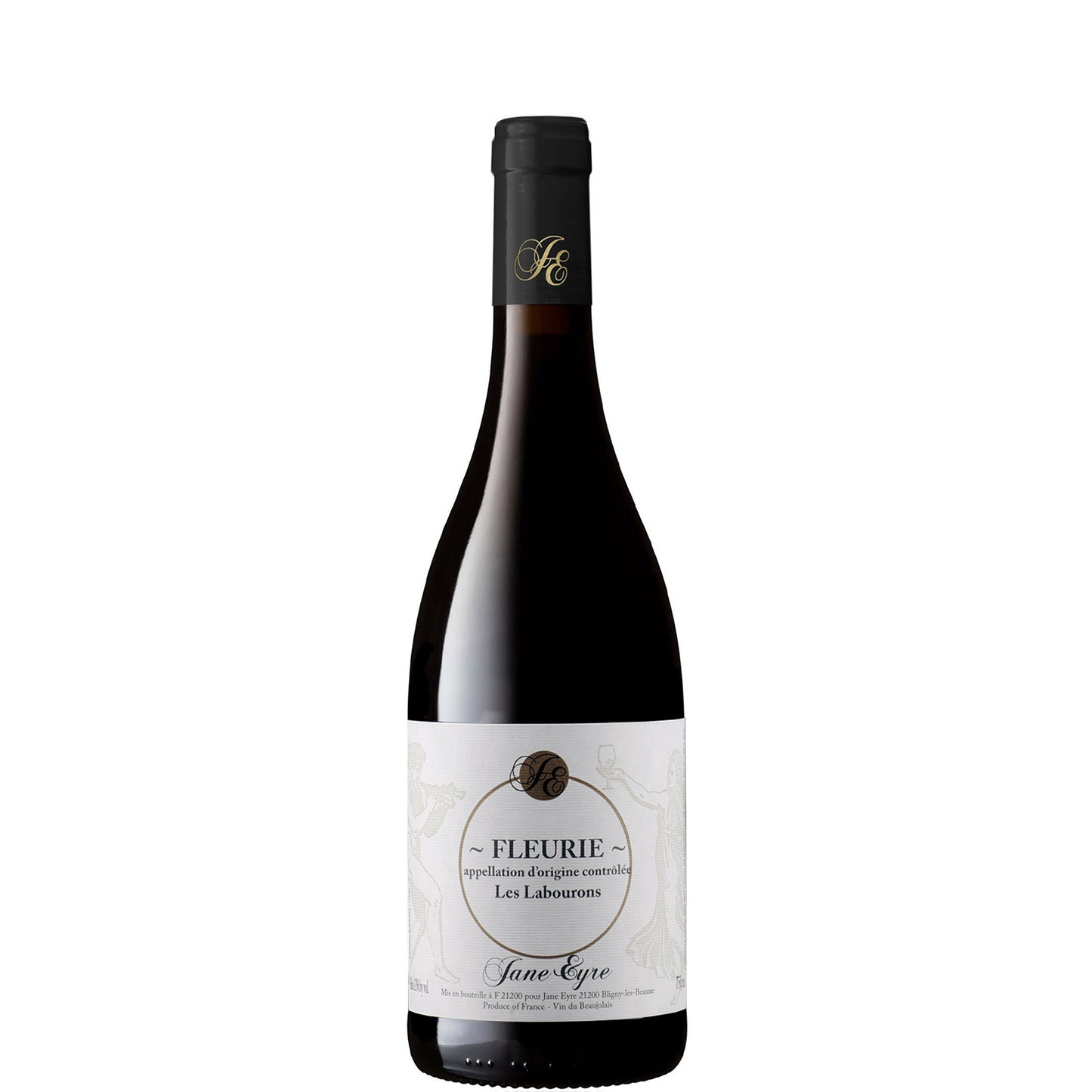
Fleurie 'Les Labourons', Jane Eyre, 2021
Fleurie 'Les Labourons', Jane Eyre, 2021
- Red Still
- 75.0cl
- 13.5%
- Gamay
Fleurie sits at the more perfumed, feminine end of Beaujolais — and Les Labourons is one of its most celebrated lieux-dits, a granite-rich hillside that consistently produces wines with more structure and lift than the appellation's easy reputation might suggest. Maison Jane Eyre is a small, quality-focused Beaujolais producer working with serious intent in a region that spent decades being underestimated. This 2021 is pure Gamay doing what only Gamay from great granite can do: a core of ripe red cherry and raspberry, a violet-laden nose that practically leaps from the glass, and that cool, stony mineral freshness underneath that keeps everything honest.
2021 was a tricky vintage across France, but producers who farmed carefully ended up with wines of genuine precision and energy rather than sheer weight. This is one of them.
- ❖ ABV: 13.5%
Grapes
Gamay
Vintage report
The 2021 vintage in Beaujolais arrived after a genuinely challenging growing season that kept vignerons on their toes from spring onwards. Early budbreak met with devastating frosts in April, followed by a cool, damp summer that had many producers worried about ripeness and disease pressure. September delivered salvation with warm, dry conditions that allowed the Gamay to ripen properly, though yields were significantly reduced across the region due to the earlier setbacks.
What emerged from this adversity were wines with lovely freshness and aromatic intensity – the cooler conditions preserved the bright red fruit character that makes Beaujolais so irresistible, whilst the lower yields concentrated flavours beautifully. The cru Beaujolais show particular promise, displaying more structure than the sometimes exuberant 2020s, with that classic combination of juicy fruit and mineral backbone. Most 2021s are drinking wonderfully now, offering immediate pleasure whilst the crus will reward patience over the next five to eight years.
Tasting Notes
AppearanceBright, translucent ruby with a pale, almost luminous rim — classic Gamay in colour.
NoseAn immediate rush of violet and fresh raspberry, with ripe red cherry underneath and a faint floral sweetness that stops well short of cloying. There's a cool, stony quality beneath the fruit — granite doing its quiet work.
PalateSilky and medium-bodied, with red fruits that are ripe but never heavy. The tannins are fine-grained and barely there, and the acidity keeps everything lively and focused from start to finish.
FinishClean, mineral, and refreshing, with a linger of violet and crushed stone.
Overall impressionFleurie at its most articulate — pretty without being frivolous, and genuinely hard to put down.
Food Pairings
In the Beaujolais hills, this is the wine you'd open with a platter of charcuterie — rosette de Lyon, saucisson sec, cornichons — alongside a slab of good butter and a half-baguette that's already going slightly stale. The locals would drink it slightly cool with quenelles de brochet in a cream sauce, or alongside a simple roast chicken with tarragon. Andouillette, that intensely funky tripe sausage that divides opinion so sharply, is a classic pairing in the region and one that Gamay's bright acidity handles better than most reds. A wedge of Saint-Nectaire or Comté is all you need to finish.
We think this wine would go well with
Serve at around 14-15°C — cool enough to keep the freshness alive, but not so cold that the aromatics shut down. No need to decant; just pour and go. A medium-sized tulip glass or a standard Burgundy-style bowl works perfectly, giving those violet florals room to open without dispersing them entirely.
Les Labourons sits on the hillsides north of Fleurie village, on decomposed granite soils that drain freely and force Gamay roots deep in search of water and nutrients. That struggle shows in the glass: wines from here have a mineral tension and a cooler, more precise character than those grown on the flatter, richer soils below. The elevation adds freshness, and the aspect means the fruit ripens slowly and evenly, building aromatic complexity without sacrificing acidity.
Fleurie is one of the ten Beaujolais crus, and arguably the most immediately seductive of the lot — known for its floral lift, silky tannins, and red-fruited generosity. Unlike Moulin-à-Vent or Morgon, which can age towards a Burgundian seriousness, Fleurie tends to reward drinking within its first three to five years, when those violet and cherry characters are at their most expressive. The appellation covers around 870 hectares of granite-based hillside, and its relatively light soils are a key reason the wines feel so elegant rather than weighty.
The 2021 vintage in Beaujolais arrived after a genuinely challenging growing season that kept vignerons on their toes from spring onwards. Early budbreak met with devastating frosts in April, followed by a cool, damp summer that had many producers worried about ripeness and disease pressure. September delivered salvation with warm, dry conditions that allowed the Gamay to ripen properly, though yields were significantly reduced across the region due to the earlier setbacks.
What emerged from this adversity were wines with lovely freshness and aromatic intensity – the cooler conditions preserved the bright red fruit character that makes Beaujolais so irresistible, whilst the lower yields concentrated flavours beautifully. The cru Beaujolais show particular promise, displaying more structure than the sometimes exuberant 2020s, with that classic combination of juicy fruit and mineral backbone. Most 2021s are drinking wonderfully now, offering immediate pleasure whilst the crus will reward patience over the next five to eight years.
FAQs
What does this wine taste like?
Think ripe red cherry and raspberry with a strong violet floral character and a cool, stony mineral freshness underneath. The tannins are silky and the acidity is lively — it's elegant rather than rich, and very easy to drink.
When should I drink this wine?
Now, frankly. The 2021 vintage is drinking beautifully in 2026 and will remain enjoyable until around 2029, but that primary fruit and floral lift are at their peak right now. This is not a wine to cellar for a decade.
What food works well with this wine?
Classic Lyonnais charcuterie is the natural match — saucisson, pâté, cornichons. It's also superb with roast chicken, salmon, or a good wedge of semi-hard cheese like Comté. The bright acidity makes it versatile at the table.
How should I serve it?
Slightly cool — around 14-15°C. Pull it from the fridge about 20 minutes before you pour. No need to decant; just open and drink. A standard Burgundy-style glass is ideal.
What makes Les Labourons special within Fleurie?
Les Labourons is one of Fleurie's most prized hillside sites, with decomposed granite soils that give the wine a mineral precision and structural lift that goes beyond the appellation's typically soft, immediately charming style. It's Fleurie with something extra to say.
Is Beaujolais worth taking seriously?
Absolutely — and this is a good place to start making that case. The Beaujolais crus, of which Fleurie is one, are genuinely serious wines that spent decades being overlooked. The best examples from granite hillsides like Les Labourons have elegance, mineral tension, and real personality. They just happen to also be a pleasure to drink young.
Want to know more?
Discuss your requirements with our account managers, Jeremy & Jen
-
Personal Service
- Our team are always on hand to support you, taking orders online, by phone or email & responding to urgent requests.
- Our efficient warehouse & team of drivers always go the extra mile to deliver our wines to you.
- Our new, high-capacity warehouse ensures excellent availability of wines.
- Our new enterprise platform means hassle-free service, from inventory to billing.
-
Our Sales Team
Speak to one of our teamJeremy Cowan
After managing his own stores and a further stint in independent retail, Jeremy has dedicated 12 years to trade sales in the North West.
Jen Neilan
Twenty years in hospitality later, after curating the wine list for Manchester’s first Neapolitan pizza restaurant, and running a natural wine bar, Jen made the move to the other side of the table.