

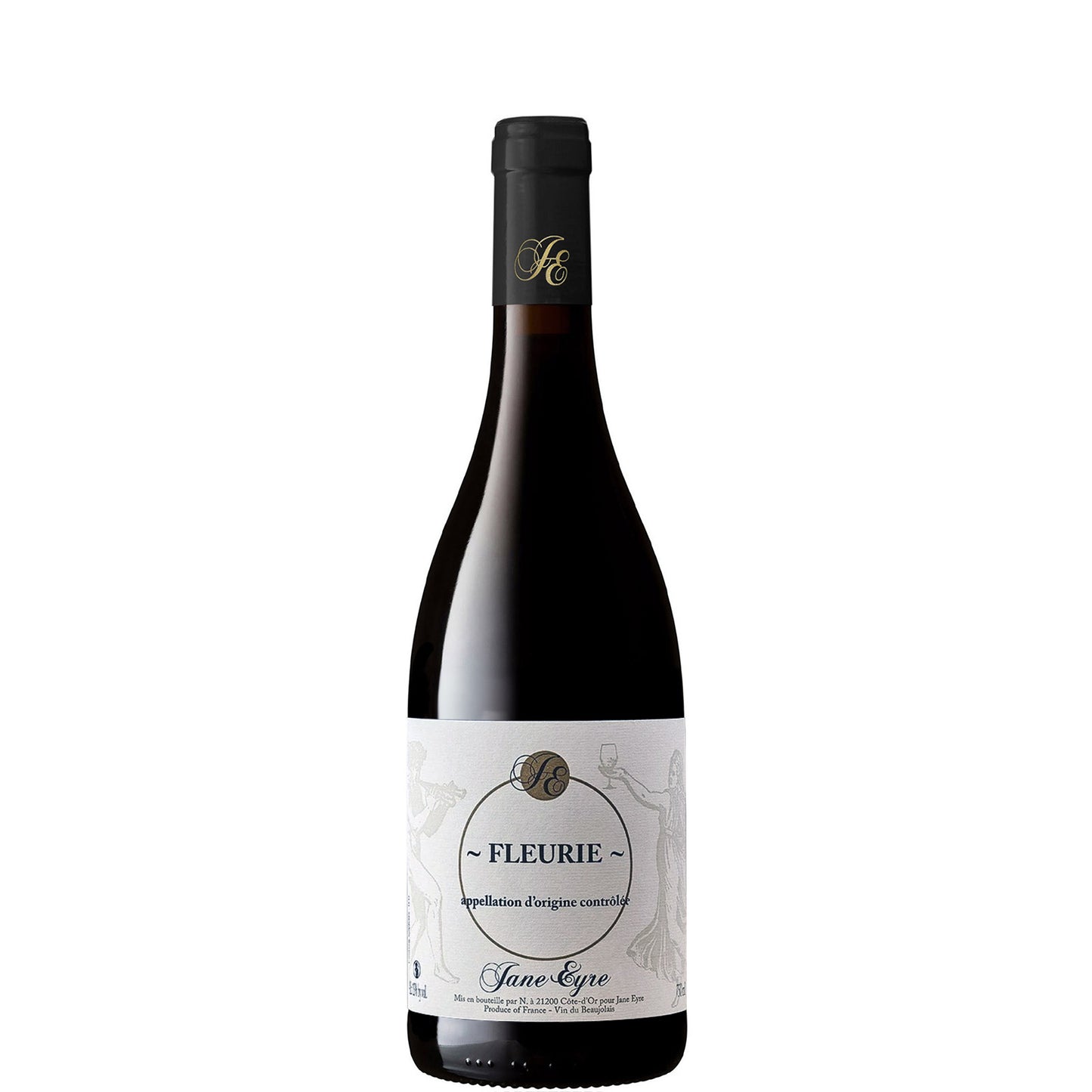
- Red Still
- 75.0cl
- 12.0%
- Gamay
Fleurie is the cru Beaujolais that earns its reputation for femininity without apology — and the 2017 from Maison Jane Eyre is a fine example of why. Gamay here produces something silkier and more perfumed than its neighbours: violet, ripe red cherry, and a faint peachy quality that sets Fleurie apart from the more muscular Moulin-à-Vent or the granite-driven Morgon. At nine years old, this is drinking right in its sweet spot.
The 2017 growing season in Beaujolais was warm and generous, giving wines a little more flesh than usual without sacrificing the lifted aromatics that make this cru sing. We'd open it over the next year or two, perhaps with a slight chill on it and no ceremony whatsoever.
- ❖ ABV: 12.0%
Grapes
Gamay
Vintage report
The 2017 growing season in Beaujolais started promisingly with a mild winter and early budbreak, only to be walloped by devastating spring frosts in late April that slashed yields across the region. What followed was a hot, dry summer that accelerated ripening and concentrated the remaining fruit, leading to one of the earliest harvests on record. Growers who escaped the worst of the frost damage found themselves with intensely flavoured grapes, though sorting was crucial as the rapid ripening left little margin for error.
The wines that emerged are powerfully fruited and surprisingly structured for such a warm year, with Gamay showing real backbone beneath all that ripe cherry and plum intensity. We find the village and cru wines particularly successful, where careful vineyard management produced wines that manage to be both generous and focused rather than simply jammy. Most 2017 Beaujolais hit their stride within two years of release and are drinking superbly now, though the better cru bottlings will happily cellar until 2027 for those who fancy watching that youthful exuberance develop into something more brooding.
Tasting Notes
AppearancePale to mid ruby with a translucent, garnet-tinged rim — classic for the cru at this age.
NoseViolet and dried rose lead, followed by ripe red cherry and a subtle peach-skin quality that is pure Fleurie. A little age has added a gentle earthiness, like damp woodland floor, which works beautifully with the fruit rather than competing with it.
PalateSilky and light-footed with a fine, almost imperceptible tannin structure. Red cherry and raspberry sit at the centre, with a hint of spice on the mid-palate that the warm 2017 season has contributed. Acidity is fresh but not sharp — this is the hallmark of Gamay on granite, generous without being soft.
FinishMedium in length with a lingering floral note and just a touch of savoury mineral dryness at the very end.
Overall impressionA pretty, composed Fleurie that has arrived at exactly the right moment.
Food Pairings
In the Beaujolais villages, a wine like this would almost certainly appear on the table alongside a pot of andouillette grillée or a plateful of rosette de Lyon — the local charcuterie that the region practically runs on. Quenelles de brochet with a light cream sauce are a classic Lyon-area pairing that the wine handles with ease, its acidity cutting through fat without fuss. A simple roast poulet de Bresse, the revered local chicken, is perhaps the most honest and satisfying match of all. In cooler months, a slice of tarte à la praline — the pink almond sugar tart that is a Lyonnais institution — works surprisingly well with Fleurie's fruit and sweetness of character.
We think this wine would go well with
Serve this at around 13-14°C — cooler than most reds, which lets the floral aromatics lift and stops the fruit from feeling heavy. No need to decant; just open and pour. A standard Burgundy-style tulip glass works perfectly, allowing the perfume to collect without the bowl overwhelming the wine's inherent delicacy.
Fleurie's vineyards sit on decomposed pink granite and sandy soils at elevations between 250 and 430 metres, which gives the wines their characteristic lightness of touch and aromatic lift. The granitic sand drains freely, keeping yields in check and pushing roots down for concentration without weight. This geology is central to what separates Fleurie from the heavier clay-influenced soils further south in the Beaujolais Villages zone.
Fleurie is one of ten Beaujolais Crus, each entitled to its own appellation, and is widely considered among the most elegant of them. Only Gamay Noir is permitted, and the wines must reach a minimum of 10% ABV. Fleurie sits north of Moulin-à-Vent and tends to produce lighter, more perfumed wines with less tannin and more immediate charm. Its reputation for floral, approachable reds has made it one of the cru's best-known names outside France, occasionally leading to underestimation by those who equate weight with seriousness.
The 2017 growing season in Beaujolais started promisingly with a mild winter and early budbreak, only to be walloped by devastating spring frosts in late April that slashed yields across the region. What followed was a hot, dry summer that accelerated ripening and concentrated the remaining fruit, leading to one of the earliest harvests on record. Growers who escaped the worst of the frost damage found themselves with intensely flavoured grapes, though sorting was crucial as the rapid ripening left little margin for error.
The wines that emerged are powerfully fruited and surprisingly structured for such a warm year, with Gamay showing real backbone beneath all that ripe cherry and plum intensity. We find the village and cru wines particularly successful, where careful vineyard management produced wines that manage to be both generous and focused rather than simply jammy. Most 2017 Beaujolais hit their stride within two years of release and are drinking superbly now, though the better cru bottlings will happily cellar until 2027 for those who fancy watching that youthful exuberance develop into something more brooding.
FAQs
What does this wine taste like?
Think silky, light-bodied red with violet, ripe cherry, and a faint peachy quality. It is perfumed and pretty rather than powerful, which is exactly what Fleurie is supposed to be. Nine years of age have added a gentle earthy edge that gives it a little extra interest.
When should I drink this wine?
Now, frankly. It is right in its sweet spot in 2026 and we would aim to drink it before 2028. Fleurie from a warm vintage like 2017 is built for pleasure in the medium term, not the cellar.
Does it need decanting?
No. Open it, pour it, and enjoy it. If anything, make sure it is well chilled to around 13-14 degrees before serving — that does more good than any amount of decanting.
What food works with this?
Charcuterie, roast chicken, quenelles, or anything with a light cream sauce. It also works well on its own as an aperitif, especially slightly chilled on a warm evening. Avoid big, tannic red-meat dishes — this wine is not built for that.
Is Fleurie worth cellaring?
Generally speaking, no — and this 2017 is no exception. Fleurie's charm is in its freshness and aromatic lift, and those qualities do not improve indefinitely with age. The best Beaujolais crus for cellaring are Moulin-à-Vent and Morgon. Drink this while it is singing.
Want to know more?
Discuss your requirements with our account managers, Jeremy & Jen
-
Personal Service
- Our team are always on hand to support you, taking orders online, by phone or email & responding to urgent requests.
- Our efficient warehouse & team of drivers always go the extra mile to deliver our wines to you.
- Our new, high-capacity warehouse ensures excellent availability of wines.
- Our new enterprise platform means hassle-free service, from inventory to billing.
-
Our Sales Team
Speak to one of our teamJeremy Cowan
After managing his own stores and a further stint in independent retail, Jeremy has dedicated 12 years to trade sales in the North West.
Jen Neilan
Twenty years in hospitality later, after curating the wine list for Manchester’s first Neapolitan pizza restaurant, and running a natural wine bar, Jen made the move to the other side of the table.