

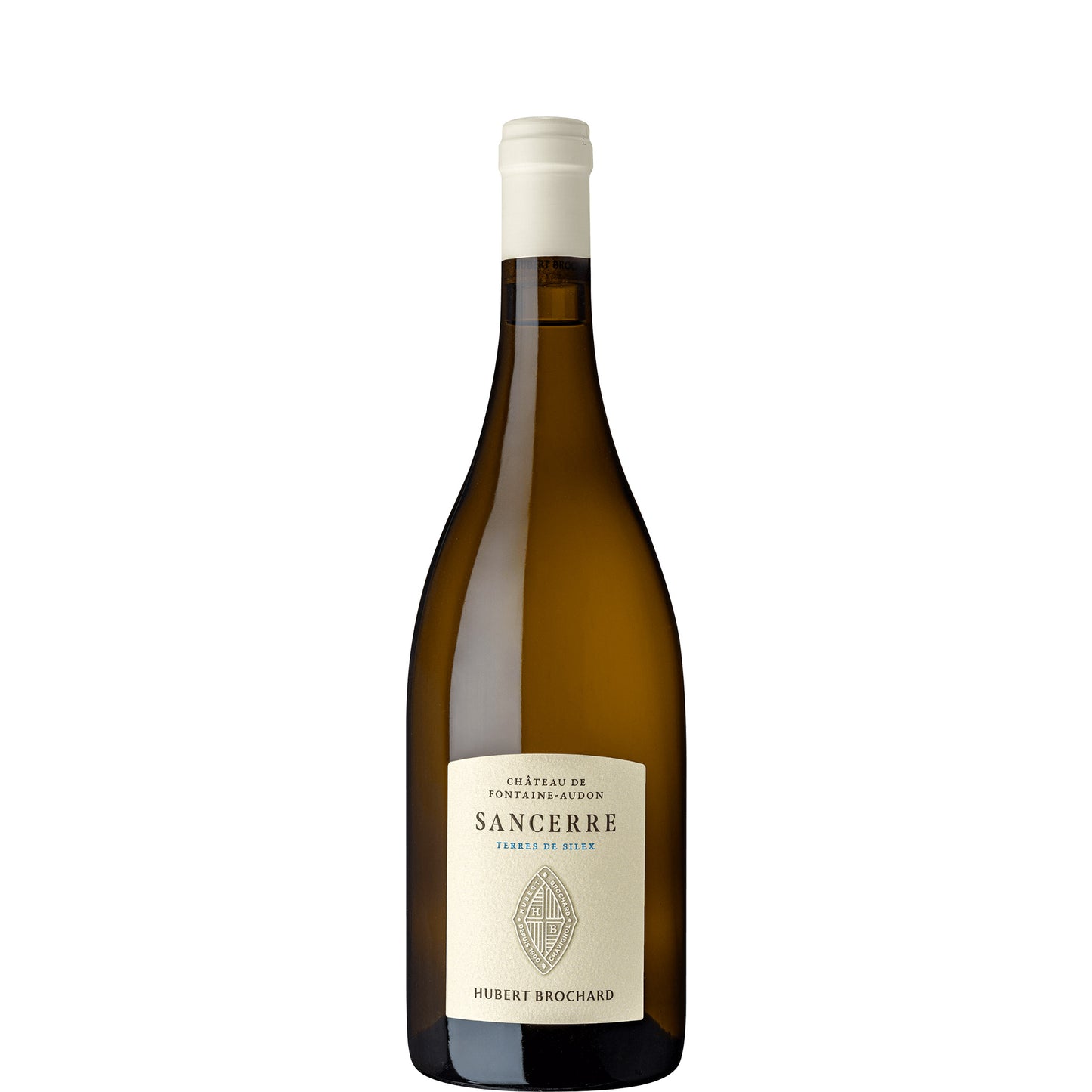
Domaine Hubert Brochard, Sancerre Terroir De Silex Fontaine-Audon, 2024
Domaine Hubert Brochard, Sancerre Terroir De Silex Fontaine-Audon, 2024
- White Still
- 75.0cl
- 13.5%
- Sauvignon Blanc
Fontaine-Audon is one of Sancerre's lesser-known but quietly excellent villages, and Brochard's Terroir de Silex bottling is its calling card. Silex — the local name for the flint-rich soils found on the plateau above the Loire — gives Sauvignon Blanc a character that's harder to pin down than the appellation's more famous chalky styles: a struck-match quality when young, then a kind of focused, almost electric tension as it opens up. This is a wine defined by precision rather than generosity.
The 2024 vintage brought a cooler, slower growing season across the Loire, which suits a wine like this down to the ground — more energy, less blowsy fruit, the kind of bright acidity that makes your mouth work.
- ❖ ABV: 13.5%
Grapes
Sauvignon Blanc
Vintage report
The 2024 growing season in the Loire was, to put it plainly, a test of nerve. A wet and unsettled spring and early summer brought persistent pressure from mildew, and yields across the valley were reduced as a result — in some appellations, significantly so. Growers who managed the canopy carefully and were prepared to sort rigorously at harvest came through; those who weren't, didn't. A warmer, drier late summer helped rescue the season, and the wines that did make it are genuinely interesting rather than compromised.
What we're seeing in bottle is a vintage of real freshness and nerve — Muscadet with the kind of saline, citrus-sharp precision that suits it well, Sancerre and Pouilly-Fumé with lovely tension rather than tropical weight, and Chenin Blanc from Vouvray and Savennières that looks promising for the medium term. Reds from Chinon and Bourgueil are leaner than a riper year, which we find rather appealing. Most whites are drinking well now, though the better Chenins will reward patience until 2028 or beyond.
Tasting Notes
AppearancePale gold with a faint green tint and excellent clarity.
NoseThe flint character is immediate — that cool, almost smoky quality that silex soils are famous for. Behind it, white peach, lemon curd, and a hint of fresh-cut grass that settles quickly as the wine opens up.
PalateTaut and focused, with the kind of bright, mouth-watering acidity that the 2024 vintage delivers particularly well. Citrus pith and green apple dominate, framed by a chalky, mineral dryness that runs from front to finish without interruption.
FinishClean, persistent, and stony — the mineral quality outlasts the fruit, which is exactly what you want from a silex Sancerre.
Overall impressionA textbook argument for why soil type matters in Sancerre, and a genuinely satisfying drink right now.
Food Pairings
In the Loire, this would almost automatically arrive alongside a Crottin de Chavignol — the local goat's cheese from the same village as Brochard's estate, and one of those food-and-wine pairings that exists for very good reason. Beyond that, the locals lean into the river: freshwater fish like pike perch (sandre) with beurre blanc is a classic pairing, the sauce's richness balanced by the wine's acidity. Asparagus, either grilled or with hollandaise, is another regional favourite in spring, and the wine handles it beautifully where many others falter. Simple, well-sourced seafood — oysters from nearby Marennes-Oléron, cold prawns, or smoked salmon — also work excellently.
We think this wine would go well with
Serve at 9-11°C — cold enough to keep the wine crisp and focused, but not so cold that you shut the flint character down before it has a chance to show itself. No need to decant; this wine is ready to pour straight from the bottle, though giving it ten minutes in the glass does coax out the more subtle mineral nuances. A tulip-shaped white wine glass or a standard Burgundy-style bowl both work well — something with a little width to let the nose develop without dispersing too quickly.
The Fontaine-Audon vineyard sits on the western edge of the Sancerre appellation, where the soils are dominated by silex: hard, dark flint that drains quickly and forces the vine's roots deep in search of water and nutrients. This stress produces lower yields and more concentrated fruit, but the real signature is mineral — silex soils consistently give Sancerre wines a smoky, almost gunpowder edge that clay-limestone (calcaire) and Kimmeridgian chalk (terres blanches) parcels simply don't replicate. The plateau sits at moderate elevation, exposed to the Loire Valley's continental climate with its sharp seasonal shifts and relatively cool nights during the growing season.
Sancerre is the Loire Valley's most celebrated white wine appellation, built almost entirely on Sauvignon Blanc (with a smaller red and rosé tradition from Pinot Noir). Sitting on the eastern bank of the Loire, the appellation covers around 3,000 hectares across 14 communes, each with its own soil signature. What sets Sancerre apart from its neighbour Pouilly-Fumé across the river is debated endlessly — broadly, Sancerre tends to be more aromatic and taut, Pouilly-Fumé slightly rounder and smokier, though both owe much of their character to producer rather than postcode. Within Sancerre itself, the three soil types — silex, terres blanches, and caillottes — produce noticeably different wines, and single-terroir bottlings like this one are increasingly how serious producers make the case for Sancerre's complexity.
The 2024 growing season in the Loire was, to put it plainly, a test of nerve. A wet and unsettled spring and early summer brought persistent pressure from mildew, and yields across the valley were reduced as a result — in some appellations, significantly so. Growers who managed the canopy carefully and were prepared to sort rigorously at harvest came through; those who weren't, didn't. A warmer, drier late summer helped rescue the season, and the wines that did make it are genuinely interesting rather than compromised.
What we're seeing in bottle is a vintage of real freshness and nerve — Muscadet with the kind of saline, citrus-sharp precision that suits it well, Sancerre and Pouilly-Fumé with lovely tension rather than tropical weight, and Chenin Blanc from Vouvray and Savennières that looks promising for the medium term. Reds from Chinon and Bourgueil are leaner than a riper year, which we find rather appealing. Most whites are drinking well now, though the better Chenins will reward patience until 2028 or beyond.
FAQs
What does this wine taste like?
Sharp, focused, and mineral-driven. The silex soils give it a distinctive flinty, almost smoky edge, with white peach and lemon citrus behind it and a long, stony finish. It is a wine built on tension rather than richness.
When should I drink it?
It is drinking well right now and will continue to do so until around 2030. The 2024 vintage has excellent freshness and energy that makes it a pleasure to open today, though a year or two of patience will allow the mineral complexity to integrate further.
What food should I serve it with?
Goat's cheese is the obvious and genuinely excellent answer — Crottin de Chavignol if you can find it. Beyond that, think river fish with butter sauces, grilled asparagus, oysters, or anything where bright acidity and mineral dryness will cut through richness or complement brininess.
How should I serve it?
Chill to around 9-11°C and serve straight from the bottle into a tulip or standard white wine glass. No need to decant. Give it ten minutes in the glass if you want to let the flinty mineral character open up fully before your first sip.
Is it worth cellaring?
For a few years, yes. The 2024 vintage has the acidity and structure to develop nicely until around 2028-2030, when the primary fruit will mellow and the mineral quality will become more complex and integrated. Beyond 2030, the freshness that makes it distinctive now will start to fade.
How does this differ from other Sancerres?
The silex soil is the key distinction. Many Sancerres come from terres blanches or caillottes, which give rounder, creamier, or more immediately aromatic wines. Silex parcels produce something harder-edged and more mineral — a struck-flint quality that is unique to this soil type and gives the wine its particular character and ageing potential.
Want to know more?
Discuss your requirements with our account managers, Stephanie, Ed, & Jen
-
Personal Service
- Our team are always on hand to support you, taking orders online, by phone or email & responding to urgent requests.
- Our efficient warehouse & team of drivers always go the extra mile to deliver our wines to you.
- Our new, high-capacity warehouse ensures excellent availability of wines.
- Our new enterprise platform means hassle-free service, from inventory to billing.
-
Our Sales Team
Speak to one of our teamStephanie Duncan
With 25+ years in the wine trade, Steph knows the UK market inside out, from premium wine and wholesale to hospitality and retail. A WSET Diploma holder and unapologetic Champagne fan, she loves building great relationships and finding exciting wines.
Jen Neilan
Twenty years in hospitality later, after curating the wine list for Manchester’s first Neapolitan pizza restaurant, and running a natural wine bar, Jen made the move to the other side of the table.