

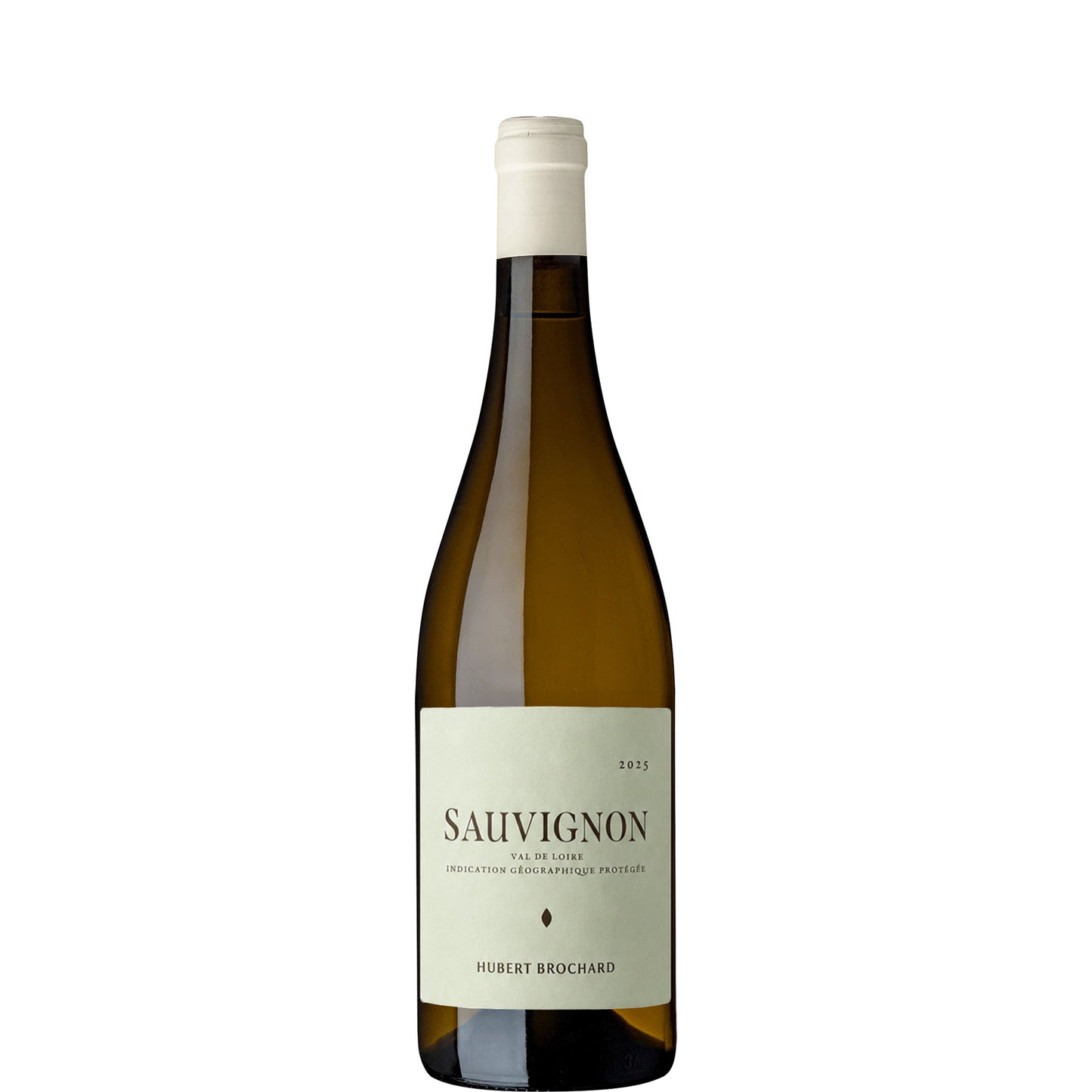
Domaine Hubert Brochard, IGP Sauvignon Blanc, 2024
Domaine Hubert Brochard, IGP Sauvignon Blanc, 2024
- White Still
- 75.0cl
- 12.0%
- Sauvignon Blanc
Domaine Hubert Brochard is best known for its Sancerre, but this IGP Sauvignon Blanc from the Loire shows exactly why the family has such a deft touch with the grape. Sitting outside the appellation rules, it gives Brochard a little more freedom — and the result is a wine that's bright, energetic, and built entirely for pleasure rather than posterity. White grapefruit, freshly cut grass, and a flinty, clean edge: classic Loire Sauvignon in spirit, if not in name.
This is a wine to open now, ideally with something from the sea. It won't wait around, and it doesn't need to. Drink it young, drink it cold.
- ❖ ABV: 12.0%
Grapes
Sauvignon Blanc
Vintage report
The 2024 growing season in the Loire was, to put it plainly, a test of nerve. A wet and unsettled spring and early summer brought persistent pressure from mildew, and yields across the valley were reduced as a result — in some appellations, significantly so. Growers who managed the canopy carefully and were prepared to sort rigorously at harvest came through; those who weren't, didn't. A warmer, drier late summer helped rescue the season, and the wines that did make it are genuinely interesting rather than compromised.
What we're seeing in bottle is a vintage of real freshness and nerve — Muscadet with the kind of saline, citrus-sharp precision that suits it well, Sancerre and Pouilly-Fumé with lovely tension rather than tropical weight, and Chenin Blanc from Vouvray and Savennières that looks promising for the medium term. Reds from Chinon and Bourgueil are leaner than a riper year, which we find rather appealing. Most whites are drinking well now, though the better Chenins will reward patience until 2028 or beyond.
Tasting Notes
AppearancePale lemon-gold with a bright, watery rim.
NoseFresh and immediately inviting — white grapefruit and green apple up front, with a waft of cut grass and a faint flinty note underneath. Clean as a whistle, no barrel influence to speak of.
PalateLight to medium bodied, with lively acidity that keeps everything lifted and precise. Citrus pith, gooseberry, and a touch of white pepper on the mid-palate. Refreshing rather than weighty, which is entirely the point.
FinishClean and moderately long with a lingering mineral, almost chalky quality.
Overall impressionA no-fuss, high-quality everyday Sauvignon Blanc that punches well above its price.
Food Pairings
In the Loire, this kind of Sauvignon Blanc was practically invented to go alongside Crottin de Chavignol — the small, tangy goats' cheese made just down the road from Brochard's cellars. Beyond that, locals would reach for a plate of freshwater fish from the Loire itself: pike perch with beurre blanc is the classic pairing, and it's hard to argue with. River crayfish with fresh herbs work equally well. Further afield, a simple platter of rillettes with cornichons and crusty bread is the kind of unpretentious lunch this wine was made for.
We think this wine would go well with
Serve well chilled, between 8 and 10°C — any warmer and you lose the zip that makes it so appealing. No need to decant; just pour straight from the bottle. A standard white wine glass with a medium bowl works perfectly, though a tulip-shaped glass will help concentrate those fresh citrus and grassy aromas if you want to get the most from it.
The IGP vineyards sit in the broader Loire Valley, drawing on the region's cool continental climate — warm summers, cold winters, and plenty of diurnal temperature variation that preserves natural acidity in the grapes. Soils in the area tend to be a mix of limestone, clay, and silex (flint), which lend the wines their characteristic mineral edge. At IGP level, Brochard can draw from a wider catchment than the strict Sancerre appellation allows, though the house style — taut, clean, and citrus-driven — remains consistent.
IGP Val de Loire (Indication Géographique Protégée) is the catch-all designation for wines from across the Loire Valley that fall outside the stricter AOC rules. It allows producers like Brochard to label wines by grape variety — something the Sancerre AOC does not permit — and to source fruit from a broader area. Think of it as the Loire's honest everyday tier: less prestige than Sancerre, but often excellent value, especially when the producer already knows exactly what they're doing with the grape.
The 2024 growing season in the Loire was, to put it plainly, a test of nerve. A wet and unsettled spring and early summer brought persistent pressure from mildew, and yields across the valley were reduced as a result — in some appellations, significantly so. Growers who managed the canopy carefully and were prepared to sort rigorously at harvest came through; those who weren't, didn't. A warmer, drier late summer helped rescue the season, and the wines that did make it are genuinely interesting rather than compromised.
What we're seeing in bottle is a vintage of real freshness and nerve — Muscadet with the kind of saline, citrus-sharp precision that suits it well, Sancerre and Pouilly-Fumé with lovely tension rather than tropical weight, and Chenin Blanc from Vouvray and Savennières that looks promising for the medium term. Reds from Chinon and Bourgueil are leaner than a riper year, which we find rather appealing. Most whites are drinking well now, though the better Chenins will reward patience until 2028 or beyond.
FAQs
What does this wine taste like?
Think classic Loire Sauvignon Blanc: white grapefruit, gooseberry, cut grass, and a clean flinty edge. It's light to medium bodied with refreshing acidity and no oak. Crisp, direct, and very easy to enjoy.
When should I drink this wine?
Now. The 2024 is already drinking brilliantly and there's no benefit to waiting. We'd keep it until 2027 at the very latest, but frankly the sooner the better — this style lives and dies by its freshness.
What food should I pair it with?
The classic match is goats' cheese, particularly something like Crottin de Chavignol from the same part of the Loire. Beyond that, think oysters, grilled fish, river trout with herbs, or a simple green salad with a sharp vinaigrette. Anything rich or heavily spiced will overwhelm it.
How should I serve it?
Serve it cold — between 8 and 10°C. No decanting needed, just pour straight from the fridge and enjoy. A standard white wine glass does the job, though a tulip-shaped bowl will concentrate the aromas nicely.
Is this worth cellaring?
No, and we say that affectionately. This is a wine built for immediate pleasure, not the cellar. Its charm is all about freshness, and that's a finite resource. Drink it young.
How does this compare to Brochard's Sancerre?
The family DNA is clearly there — that same clean, citrus-driven precision — but Sancerre brings more mineral depth and a sense of place that commands the premium. This IGP is the more relaxed, everyday expression: less gravitas, equal pleasure, significantly kinder on the wallet.
Want to know more?
Discuss your requirements with our account managers, Stephanie, Ed, & Jen
-
Personal Service
- Our team are always on hand to support you, taking orders online, by phone or email & responding to urgent requests.
- Our efficient warehouse & team of drivers always go the extra mile to deliver our wines to you.
- Our new, high-capacity warehouse ensures excellent availability of wines.
- Our new enterprise platform means hassle-free service, from inventory to billing.
-
Our Sales Team
Speak to one of our teamStephanie Duncan
With 25+ years in the wine trade, Steph knows the UK market inside out, from premium wine and wholesale to hospitality and retail. A WSET Diploma holder and unapologetic Champagne fan, she loves building great relationships and finding exciting wines.
Jen Neilan
Twenty years in hospitality later, after curating the wine list for Manchester’s first Neapolitan pizza restaurant, and running a natural wine bar, Jen made the move to the other side of the table.