

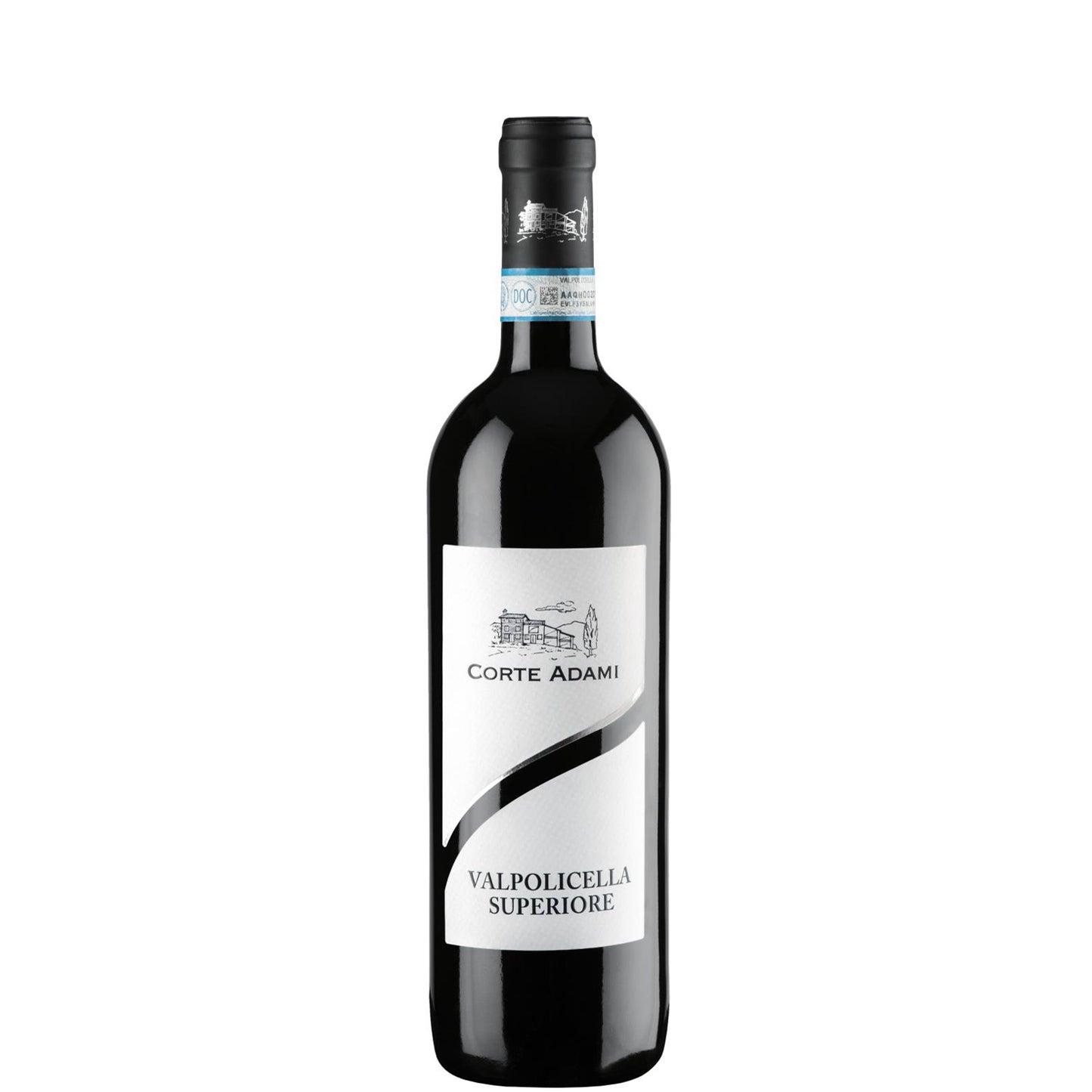
Corte Adami, Valpolicella Superiore, 2023
Corte Adami, Valpolicella Superiore, 2023
- Red Still
- 75.0cl
- 12.5%
- Corvina, Rondinella, Molinara
Valpolicella gets a bad reputation, and it's not entirely undeserved — the name spent decades on supermarket shelves attached to wines that bore no resemblance to what the region is actually capable of. Corte Adami's Superiore is a useful reminder of what the real thing looks like. Made from native Corvina, Rondinella, and Molinara grown on the hillside vineyards of the Classico zone, it's a wine of genuine character: light in body but bright with energy, built around sour cherry and dried herbs with just enough structure to reward food and a second glass.
The Superiore designation means the wine has seen at least a year of ageing, and you can feel that extra time at work — there's a composure here that the basic Valpolicella DOC rarely achieves. We'd drink it with something on the table rather than on its own.
- ❖ ABV: 12.5%
Grapes
Corvina, Rondinella, Molinara
Vintage report
Early signs suggest a vintage that kept producers on their toes. The growing season brought its share of challenges, with variable weather patterns that demanded careful vineyard management and precise timing at harvest. What emerges is a year where the best producers really earned their stripes, navigating conditions that rewarded experience and penalised complacency.
The wines we've tasted so far show promise rather than immediate fireworks. Soave displays lovely mineral backbone with citrus precision, while Valpolicella shows bright red fruit that's more vivacious than brooding. The Amarone producers we work with seem quietly confident about their drying grapes, though it's far too early for definitive judgments there. These aren't wines crying out for immediate attention, but they're building nicely in bottle and should reward patience over the next few years.
Tasting Notes
AppearanceTranslucent ruby with a garnet edge — the kind of colour that signals elegance over extraction.
NoseSour cherry and dried rose upfront, followed by dried herbs, a faint suggestion of clove, and something almost smoky underneath. It's expressive without being showy.
PalateLight to medium body with lively acidity and fine, grippy tannins that feel like they belong. Sour cherry carries through from the nose, with a subtle earthiness and just enough oak influence to add frame without dominating.
FinishClean, persistent, and slightly savoury — the kind of finish that makes you reach for the food.
Overall impressionA Valpolicella that earns its Superiore tag without making a fuss about it.
Food Pairings
In Verona and the surrounding hills, this style of wine is the everyday table red — it goes with everything because it's designed to. Locals would pour it alongside pastissada de caval, a slow-braised horse meat stew that's been on Veronese tables since the Middle Ages, or with risotto all'Amarone, where the wine's acidity cuts through the richness beautifully. Grilled meats, rabbit in herbs, and aged Monte Veronese cheese are all natural partners. This is also the wine you'd drink with a simple plate of cured meats and bread on a Tuesday evening without thinking twice about it.
We think this wine would go well with
Serve at around 16°C — cooler than you might expect for a red, but the lower temperature keeps the acidity alive and the fruit bright. A short decant of 20 to 30 minutes will open it up nicely, though it's not obligatory. A standard Bordeaux-style glass works well; no need for anything wider.
The vineyards sit on the hillsides of the Valpolicella Classico zone, where calcareous clay and limestone soils give the wines their characteristic freshness and mineral backbone. Altitude helps too, with cooler nights preserving the natural acidity that makes Corvina so distinctive when it's grown in the right place. This combination of limestone and elevation is what separates the Classico hills from the flatter, more productive plains further east.
Valpolicella Superiore is a step up from the basic DOC, requiring a minimum of one year's ageing and a slightly higher minimum alcohol level. The appellation covers a range of styles — from light, early-drinking reds to more structured expressions that share some of the same grape material used to make Amarone. The Classico subzone, in the original heartland west of Verona, is generally considered the finest source, with older vines and hillside sites that the expanded DOC boundary can't replicate.
Early signs suggest a vintage that kept producers on their toes. The growing season brought its share of challenges, with variable weather patterns that demanded careful vineyard management and precise timing at harvest. What emerges is a year where the best producers really earned their stripes, navigating conditions that rewarded experience and penalised complacency.
The wines we've tasted so far show promise rather than immediate fireworks. Soave displays lovely mineral backbone with citrus precision, while Valpolicella shows bright red fruit that's more vivacious than brooding. The Amarone producers we work with seem quietly confident about their drying grapes, though it's far too early for definitive judgments there. These aren't wines crying out for immediate attention, but they're building nicely in bottle and should reward patience over the next few years.
FAQs
What does this wine taste like?
Sour cherry, dried rose, and a touch of dried herbs, with light-to-medium body, lively acidity, and fine tannins. It's an elegant, food-friendly red rather than a big, extracted one — think precision over power.
When should I drink it?
It's drinking well right now and will continue to do so until around 2029 or 2030. The fruit is at its most vibrant in the next two to three years, so don't sit on it too long.
What food should I pair it with?
Anything from slow-braised meats and risotto to grilled lamb, rabbit, or aged hard cheeses. It's the kind of wine that's happiest with something on the table — it's not really a solo sipper.
How should I serve it?
Slightly cooler than most reds, around 16°C. A short decant of 20 to 30 minutes is worthwhile but not essential. A standard wine glass is all you need.
Is Valpolicella Superiore different from regular Valpolicella?
Yes — the Superiore has at least a year of ageing behind it and a slightly higher minimum alcohol, which gives it more structure and depth than the basic version. Think of it as the same region's more serious, dinner-table expression.
Is this related to Amarone or Ripasso?
It's made from the same grape varieties — Corvina, Rondinella, and Molinara — but without the dried-grape process that makes Amarone so concentrated, or the Ripasso technique of refermentation on Amarone skins. It's lighter and fresher than both, and considerably more food-friendly as a result.
Want to know more?
Discuss your requirements with our account managers, Jeremy & Jen
-
Personal Service
- Our team are always on hand to support you, taking orders online, by phone or email & responding to urgent requests.
- Our efficient warehouse & team of drivers always go the extra mile to deliver our wines to you.
- Our new, high-capacity warehouse ensures excellent availability of wines.
- Our new enterprise platform means hassle-free service, from inventory to billing.
-
Our Sales Team
Speak to one of our teamJeremy Cowan
After managing his own stores and a further stint in independent retail, Jeremy has dedicated 12 years to trade sales in the North West.
Jen Neilan
Twenty years in hospitality later, after curating the wine list for Manchester’s first Neapolitan pizza restaurant, and running a natural wine bar, Jen made the move to the other side of the table.