

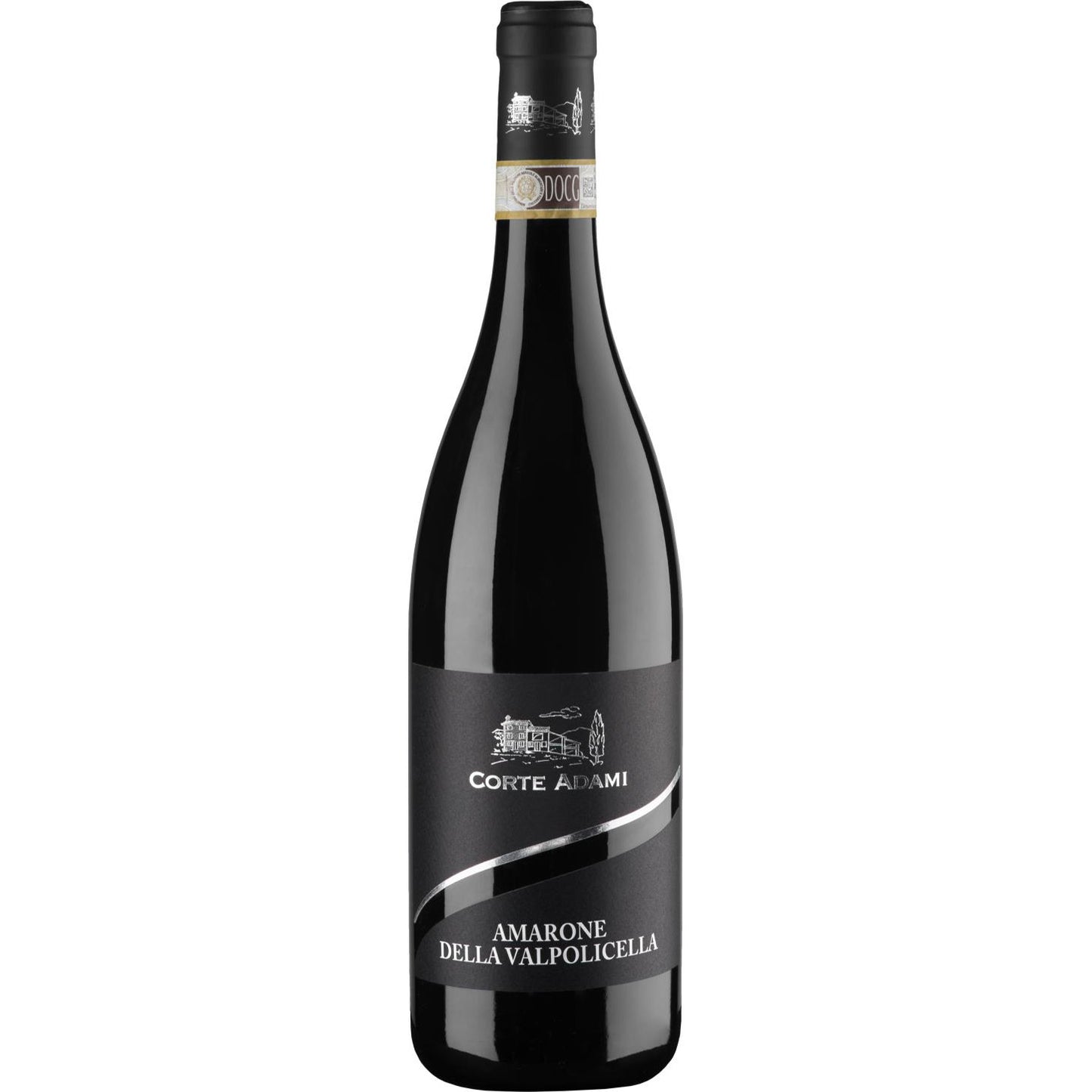
Corte Adami, Amarone della Valpolicella, 2017 - Magnum
Corte Adami, Amarone della Valpolicella, 2017 - Magnum
- Red Still
- 150.0cl
- 15.5%
- Corvina, Rondinella, Molinara
Amarone is one of Italy's great dramatic statements — grapes dried for months before fermentation, producing a wine of extraordinary concentration and weight. Corte Adami's 2017 comes from a warm, generous vintage in the Valpolicella Classica hills, and it shows: deep, brooding, and richly fruited, with dried cherry, dark chocolate, and a streak of bitter espresso running through a palate that's plush but never heavy-handed. In magnum, it has the mass to age gracefully for another decade or more.
A wine for a long winter evening, ideally with something equally uncompromising on the table.
- ❖ ABV: 15.5%
Grapes
Corvina, Rondinella, Molinara
Vintage report
The 2017 growing season across the Veneto was defined by heat and drought, with a dry spring and a summer that pushed temperatures well above average for extended periods. Yields dropped sharply across the region — in some areas dramatically so — as vines struggled without meaningful rainfall during the critical ripening window. What that stress produced, though, was concentrated fruit with naturally high sugars and good phenolic ripeness. The challenge, as ever in hot years, was preserving freshness and avoiding wines that feel overblown or heavy on the palate.
For Amarone and Ripasso, where concentration is the whole point, 2017 delivered handsomely — the Corvina and Corvinone came in with deep colour, serious structure, and the kind of brooding fruit weight that rewards patience. Soave had a trickier time, with some wines losing the crisp acidity that makes Garganega sing, though the best producers managed the heat well. Valpolicella in its lighter forms is largely drunk by now. The bigger reds still need time — most serious Amarones from 2017 are opening up but will continue to develop until 2030 and beyond.
Tasting Notes
AppearanceDeep garnet, almost opaque at the centre, with a slow, viscous rim that clings to the glass.
NoseDried black cherry and fig upfront, then dark chocolate, roasted coffee, and a touch of leather and dried herbs. There's a lifted violet note that keeps it from feeling heavy, and a faint whiff of warm spice — cinnamon, star anise — underneath.
PalateFull-bodied with the velvet weight you expect from Amarone, but with genuine grip from fine-grained tannins that are close to resolved. Flavours of bitter cherry, cocoa, and dried plum are knitted together by a line of acidity that gives the wine shape and stops it from feeling heavy. The 2017 warmth shows in the ripeness, but it's controlled.
FinishLong, warming, and slightly bitter in the best sense — like the last sip of an espresso — with dried fruit and dark chocolate lingering well after the glass is empty.
Overall impressionA serious, well-made Amarone from a warm vintage that's ready to drink now but has years of life ahead of it in magnum.
Food Pairings
In Verona, Amarone is the wine that appears when something truly worth celebrating lands on the table. Locals reach for it with brasato all'Amarone — beef braised slowly in the wine itself, with onions and bay, served with polenta. It has the weight for aged Valpolicella cheeses like Monte Veronese d'Allevo, and the structure to stand up to rich game, particularly wood pigeon or wild boar slow-cooked with juniper. At its simplest, a plate of Lessinia salami and some good bread is honestly all you need.
We think this wine would go well with
Serve at 18°C — no warmer, or the alcohol starts to push forward. Decant for at least two hours; this wine is still young and needs the air to open properly, particularly in the magnum format where it has had less oxygen contact over time. A large-bowled Burgundy-style glass works well, giving the aromatics room to unfold without concentrating the warmth of the alcohol.
The Valpolicella Classica hills west of Verona are defined by limestone and clay soils with volcanic basalt intrusions, sitting at altitudes of 150 to 400 metres. The elevation and the valley winds moderate what can be a warm continental climate, preserving the natural acidity that stops big, dried-grape wines from becoming heavy or flabby. In 2017 — a hot, dry year across northern Italy — those cooler hillside sites proved their worth, holding onto freshness that the valley floor vineyards lacked.
Amarone della Valpolicella DOCG is one of Italy's most singular appellations, requiring that Corvina, Rondinella, and Molinara grapes be dried — traditionally on bamboo racks in well-ventilated lofts — for a minimum of 90 days before pressing and fermentation. The result is a wine of formidable concentration, with a minimum alcohol of 14% and a style that sits somewhere between table wine and fortified, yet is neither. It sits alongside Valpolicella and Ripasso in the same hills but occupies an entirely different register — slower to make, slower to drink, and considerably more expensive to produce. The Classico subzone, covering the original historic communes, is widely considered the finest expression.
The 2017 growing season across the Veneto was defined by heat and drought, with a dry spring and a summer that pushed temperatures well above average for extended periods. Yields dropped sharply across the region — in some areas dramatically so — as vines struggled without meaningful rainfall during the critical ripening window. What that stress produced, though, was concentrated fruit with naturally high sugars and good phenolic ripeness. The challenge, as ever in hot years, was preserving freshness and avoiding wines that feel overblown or heavy on the palate.
For Amarone and Ripasso, where concentration is the whole point, 2017 delivered handsomely — the Corvina and Corvinone came in with deep colour, serious structure, and the kind of brooding fruit weight that rewards patience. Soave had a trickier time, with some wines losing the crisp acidity that makes Garganega sing, though the best producers managed the heat well. Valpolicella in its lighter forms is largely drunk by now. The bigger reds still need time — most serious Amarones from 2017 are opening up but will continue to develop until 2030 and beyond.
FAQs
What does this Amarone taste like?
Rich and full-bodied, with dried black cherry, dark chocolate, roasted coffee, and a long bitter-sweet finish. It has the weight and concentration you expect from Amarone but with enough acidity and grip to keep it from feeling heavy or overblown.
When is the best time to drink this wine?
It's drinking well now with a generous decant, but the magnum format means there's real development ahead. We'd suggest enjoying it any time from 2026, but the most interesting drinking window is probably 2030 to 2038, when secondary complexity will really start to emerge. It should hold until at least 2042.
Is Amarone worth cellaring?
Absolutely — and in magnum even more so. The larger format means slower, more even ageing, which tends to produce finer results over time. Great Amarone from a warm vintage like 2017 can evolve for 20 years or more. If you have the space and the patience, this is exactly the kind of wine the cellar is for.
What food should I serve with this?
Anything with enough richness and weight to match it. Braised beef or wild boar are classic choices, as is aged hard cheese. In a pinch, a good charcuterie board with strong salami will do the job very well. Avoid lighter dishes — this wine will simply overwhelm them.
How should I serve it?
At around 18°C and decanted for a minimum of two hours. The wine is still relatively young in magnum and needs air to open up fully. Use a large-bowled glass to let the aromas develop without concentrating the warmth of the alcohol.
What makes Amarone different from other Italian reds?
The key is the appassimento process — the grapes are dried for several months before fermentation, concentrating sugars, flavours, and tannins to a level no fresh-grape wine can match. The result is a style entirely its own: powerful and rich, but not fortified, and with a distinctive bitter-sweet character that sets it apart from anything else in the Italian canon.
Want to know more?
Discuss your requirements with our account managers, Jeremy & Jen
-
Personal Service
- Our team are always on hand to support you, taking orders online, by phone or email & responding to urgent requests.
- Our efficient warehouse & team of drivers always go the extra mile to deliver our wines to you.
- Our new, high-capacity warehouse ensures excellent availability of wines.
- Our new enterprise platform means hassle-free service, from inventory to billing.
-
Our Sales Team
Speak to one of our teamJeremy Cowan
After managing his own stores and a further stint in independent retail, Jeremy has dedicated 12 years to trade sales in the North West.
Jen Neilan
Twenty years in hospitality later, after curating the wine list for Manchester’s first Neapolitan pizza restaurant, and running a natural wine bar, Jen made the move to the other side of the table.