

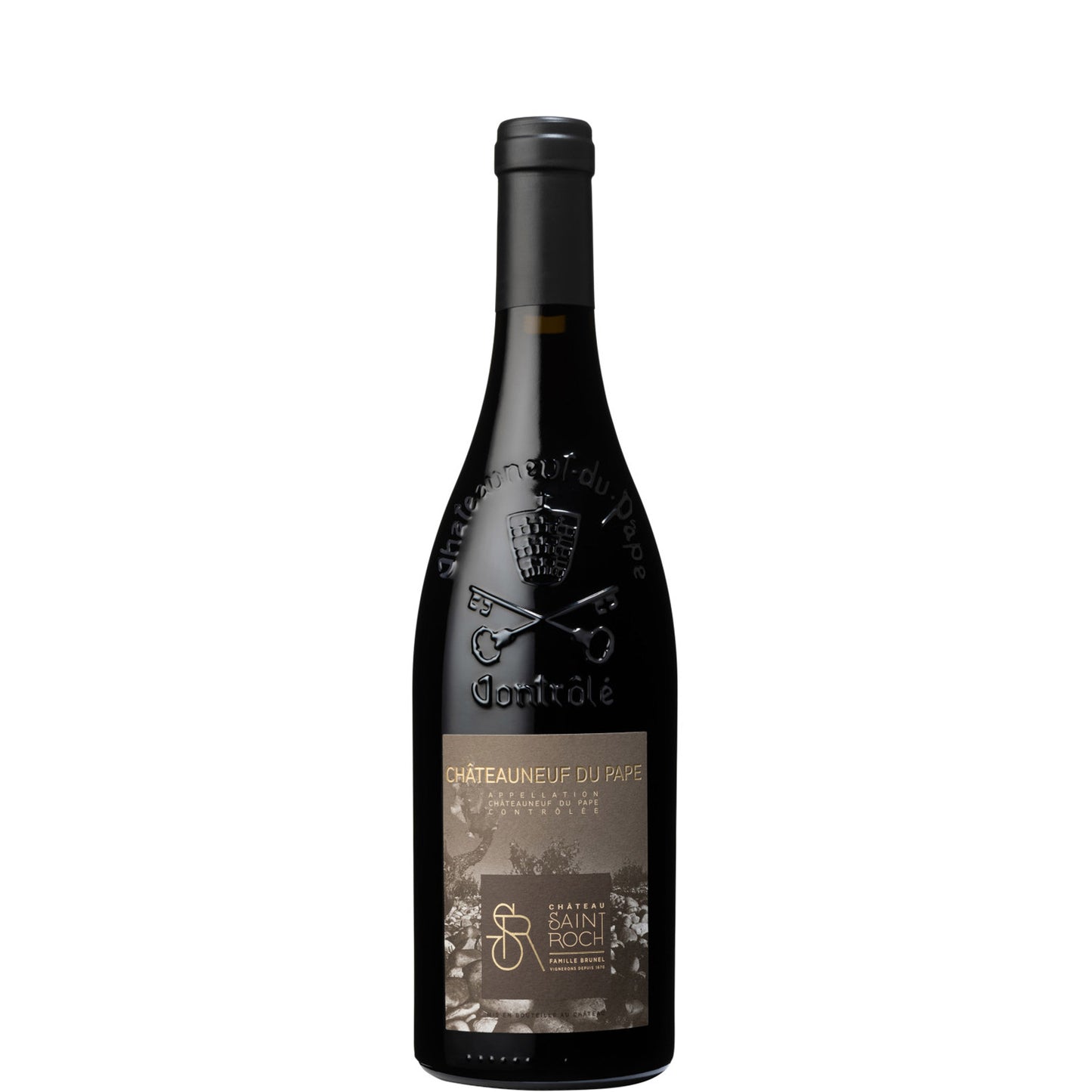
Château Saint-Roch, Châteauneuf Du Pape Rouge, 2023
Château Saint-Roch, Châteauneuf Du Pape Rouge, 2023
- Red Still
- 75.0cl
- 14.0%
- Vegetarian
- Vegan
- Grenache, Syrah, Mourvèdre
Châteauneuf-du-Pape is one of the southern Rhône's great names — and one of its most misunderstood. At its best, it is neither the rustic bruiser of legend nor the overblown fruit bomb of more recent caricature, but something genuinely profound: a wine of warmth, density, and unexpected finesse. Château Saint-Roch works within the appellation's generous rules — up to 18 permitted grape varieties — to craft a GSM-led blend that leans into the sun-baked, herb-strewn character of the plateau without losing its grip. The 2023 vintage brought another warm, dry southern summer, and the wines have the ripe, confident character you'd expect without tipping into excess.
Serve it with something equally bold from the kitchen and it will absolutely deliver.
- ❖ ABV: 14.0%
Grapes
Grenache, Syrah, Mourvèdre
Vintage report
The 2023 growing season in the Southern Rhône was defined by heat and drought, following a pattern that has become familiar across the south of France but was particularly pronounced here. A dry winter left soils with limited water reserves before the season even began, and summer temperatures pushed hard — stressing younger vines while older, deep-rooted Grenache and Mourvèdre held their nerve. Yields were down across much of the appellation, which concentrated what remained. Growers who managed canopies carefully and picked at the right moment produced outstanding fruit; those who hesitated found alcohol climbing and freshness fading.
What emerged is a vintage of real substance — ripe, structured, and with the kind of density that rewards patience. Grenache, the region's anchor variety, produced wines with genuine depth without tipping into jammy excess, while Syrah and Mourvèdre added grip and definition. Châteauneuf-du-Pape in particular looks impressive, with the better wines needing another two or three years to fully settle. The more approachable village-level wines are drinking well now, but the serious cuvées from 2023 have a long runway ahead of them.
Tasting Notes
AppearanceDeep ruby-garnet, opaque at the centre, with a warm crimson rim that speaks to the Grenache base and the southern sun.
NoseSun-dried cherry and blackberry lead, then garrigue — wild thyme, dried lavender, black olive — drifts in behind. There is a pleasing animal warmth underneath, leather and dried meat, which is entirely characteristic of the appellation at this stage.
PalateFull-bodied and generously structured, with ripe dark fruit front and centre and a savoury, peppery spine from the Syrah and Mourvèdre keeping things honest. The tannins are present but rounded, and the warmth of the alcohol is felt without being aggressive — the 2023 growing season managed heat without losing balance.
FinishLong and spiced, with dried herb, iron, and a lingering black pepper warmth that fades slowly and cleanly.
Overall impressionA classically built Châteauneuf that rewards patience but won't punish you for opening it a touch early.
Food Pairings
In Provence and the southern Rhône, a wine like this would go to the table alongside a daube de boeuf — slow-braised beef with olives, orange peel, and thyme, the dish practically a mirror of what's in the glass. Roast leg of lamb with anchovy and rosemary is another natural match, as is the local charcuterie: thick-cut saucisson, cured pork shoulder, tapenade. On a cooler evening, a cassoulet from across the border in the Languedoc would be magnificent. The common thread is richness and herbs — this wine thrives alongside food that has had time and heat applied to it.
We think this wine would go well with
Serve at 17-18°C — any warmer and the alcohol will dominate, any cooler and the fruit will close up. Decanting is worth doing: give it 45 minutes to an hour, which will open the nose and soften the structure without stripping the character. A large-bowled Burgundy-style glass works well here, giving the wine room to breathe and allowing the garrigue and spice aromatics to gather and develop.
Châteauneuf-du-Pape's vineyards sit on a plateau above the Rhône at around 50-100 metres, famously carpeted in large rounded galets roulés — heat-retaining quartzite stones that radiate warmth back onto the vines at night and help drive phenolic ripeness. Beneath the stones, the soils range from sandy loam to clay and limestone depending on the lieu-dit, each contributing differently to the final blend. The mistral is the great regulator here: it desiccates the grapes, reduces disease pressure, and concentrates both fruit and character. The combination of relentless sun, wind, and those iconic stones is what gives the appellation its unmistakable personality.
Châteauneuf-du-Pape is one of France's most historic appellations, granted AOC status in 1936 — the first in the country. It permits an unusually wide range of grape varieties (13 principal, with sub-varieties taking the theoretical total higher), though Grenache dominates most red blends, typically supported by Syrah, Mourvèdre, and Cinsault. The rules demand low yields and a minimum ABV of 12.5%, though most wines come in considerably higher — 14-15% is the norm. Compared to neighbours like Gigondas or Vacqueyras, Châteauneuf commands both a price premium and, at its best, a depth and longevity that justifies it entirely.
The 2023 growing season in the Southern Rhône was defined by heat and drought, following a pattern that has become familiar across the south of France but was particularly pronounced here. A dry winter left soils with limited water reserves before the season even began, and summer temperatures pushed hard — stressing younger vines while older, deep-rooted Grenache and Mourvèdre held their nerve. Yields were down across much of the appellation, which concentrated what remained. Growers who managed canopies carefully and picked at the right moment produced outstanding fruit; those who hesitated found alcohol climbing and freshness fading.
What emerged is a vintage of real substance — ripe, structured, and with the kind of density that rewards patience. Grenache, the region's anchor variety, produced wines with genuine depth without tipping into jammy excess, while Syrah and Mourvèdre added grip and definition. Châteauneuf-du-Pape in particular looks impressive, with the better wines needing another two or three years to fully settle. The more approachable village-level wines are drinking well now, but the serious cuvées from 2023 have a long runway ahead of them.
FAQs
What does this wine taste like?
Dark cherry, blackberry, roasted herbs, black olive, and white pepper, with a warm, full-bodied structure and a long savoury finish. It is classic southern Rhône in character — generous and sun-drenched but with enough spine to keep it honest.
When is the best time to drink this wine?
We would leave it until 2027 at the earliest to let the fruit and tannins settle. It should drink well from then until around 2038, with a peak somewhere in the early 2030s.
What food works best with this wine?
Slow-braised or roasted meats are the natural partners here — lamb, beef daube, cassoulet. The wine loves herbs and richness, so anything with thyme, rosemary, and a long cooking time will sing alongside it.
Should I decant it?
Yes. Give it 45 minutes to an hour in a decanter before serving. This opens the nose considerably and takes the edge off the youthful tannins. Serve in a large-bowled glass at 17-18°C.
Is Châteauneuf-du-Pape worth cellaring?
For wines with genuine structure and balance — yes, absolutely. A well-made Châteauneuf at this level will develop real complexity over five to ten years, moving from primary fruit into savoury, earthy, spiced territory. Just do not expect it to age like a classified Bordeaux — it has a different curve.
How does this compare to other southern Rhône appellations?
Châteauneuf sits at the top of the southern Rhône hierarchy in terms of both reputation and, typically, price. Compared to Gigondas or Vacqueyras — which can offer similar character at lower cost — Châteauneuf at its best has greater depth, concentration, and ageing potential. Whether that difference justifies the premium depends on the producer, but from a serious estate it usually does.
Want to know more?
Discuss your requirements with our account managers, Jeremy & Jen

-
Personal Service
- Our team are always on hand to support you, taking orders online, by phone or email & responding to urgent requests.
- Our efficient warehouse & team of drivers always go the extra mile to deliver our wines to you.
- Our new, high-capacity warehouse ensures excellent availability of wines.
- Our new enterprise platform means hassle-free service, from inventory to billing.
-
Our Sales Team
Speak to one of our teamJeremy Cowan
After managing his own stores and a further stint in independent retail, Jeremy has dedicated 12 years to trade sales in the North West.
Jen Neilan
Twenty years in hospitality later, after curating the wine list for Manchester’s first Neapolitan pizza restaurant, and running a natural wine bar, Jen made the move to the other side of the table.