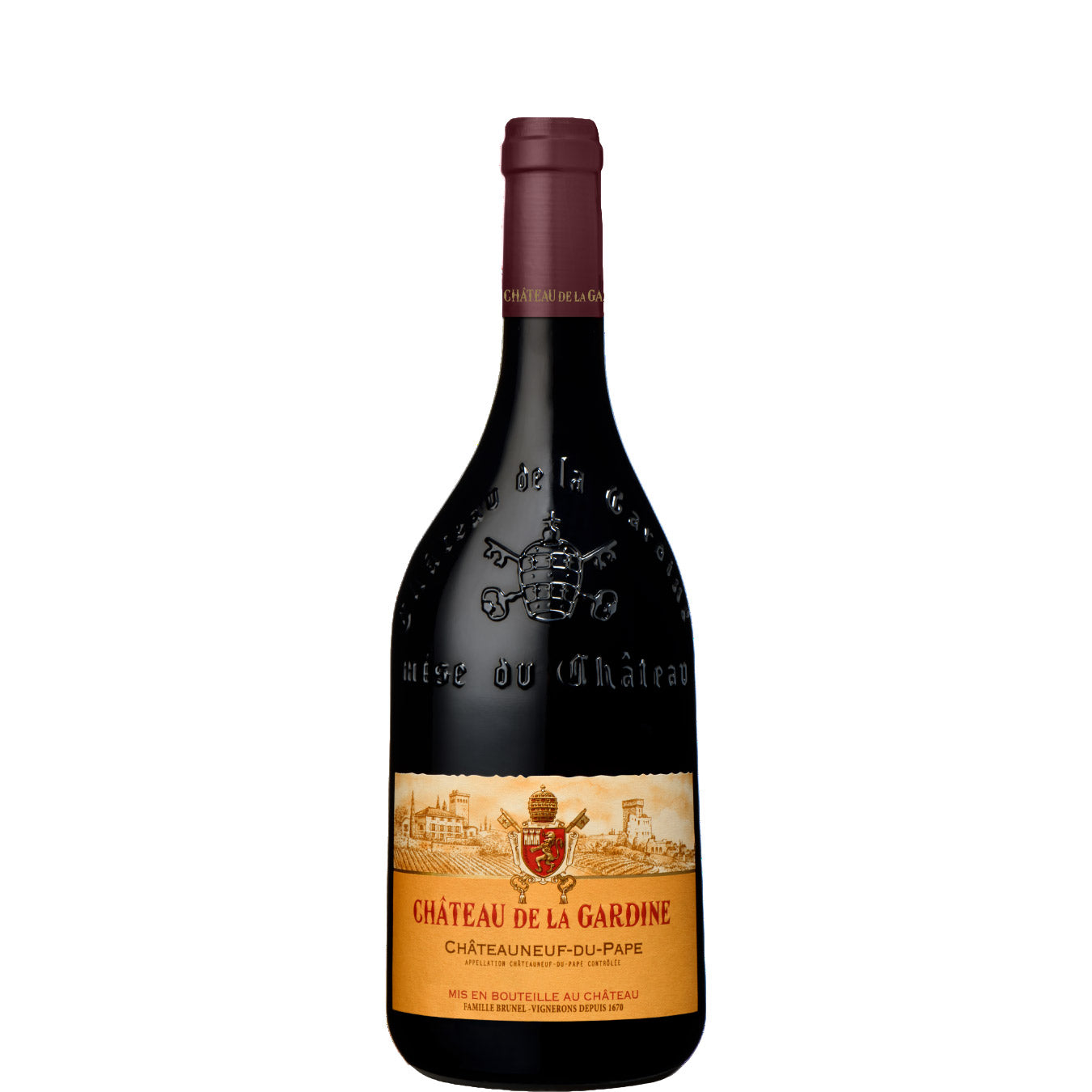

Château De La Gardine, Châteauneuf-du-Pape Rouge, 2023
Château De La Gardine, Châteauneuf-du-Pape Rouge, 2023
- Red Still
- 75.0cl
- 14.0%
- Vegetarian
- Vegan
- Grenache, Syrah, Mourvèdre
Châteauneuf-du-Pape is one of the southern Rhône's most storied names, and La Gardine is one of its more reliable addresses — a family estate that has been quietly overperforming for decades without making too much noise about it. This 2023 is a classic expression of the appellation: Grenache at its heart, fleshed out with Syrah and Mourvèdre, combining the sun-baked generosity the region does so well with enough structure to hold its shape at the table.
Expect dark plum and kirsch, wild herbs, leather, and a warming spice that feels entirely natural rather than overworked. The tannins are present but well-mannered, and there's a mineral grip on the finish that keeps things honest.
- ❖ ABV: 14.0%
Grapes
Grenache, Syrah, Mourvèdre
Vintage report
The 2023 growing season in the Southern Rhône was defined by heat and drought, following a pattern that has become familiar across the south of France but was particularly pronounced here. A dry winter left soils with limited water reserves before the season even began, and summer temperatures pushed hard — stressing younger vines while older, deep-rooted Grenache and Mourvèdre held their nerve. Yields were down across much of the appellation, which concentrated what remained. Growers who managed canopies carefully and picked at the right moment produced outstanding fruit; those who hesitated found alcohol climbing and freshness fading.
What emerged is a vintage of real substance — ripe, structured, and with the kind of density that rewards patience. Grenache, the region's anchor variety, produced wines with genuine depth without tipping into jammy excess, while Syrah and Mourvèdre added grip and definition. Châteauneuf-du-Pape in particular looks impressive, with the better wines needing another two or three years to fully settle. The more approachable village-level wines are drinking well now, but the serious cuvées from 2023 have a long runway ahead of them.
Tasting Notes
AppearanceDeep ruby-garnet, dense at the core, with a warm ruby rim that already hints at the generosity inside.
NoseDark plum, kirsch, and dried fig lead, backed by the signature garrigue — wild thyme, rosemary, a breath of lavender. Give it a few minutes and a suggestion of leather and black olive emerges, rooted and savoury.
PalateFull-bodied but not heavy, with ripe tannins that grip politely rather than clench. The fruit is generous — black cherry, damson, a touch of warm spice — balanced by that characteristic earthy mineral quality that separates the real thing from mere southern warmth. Good acidity keeps it from feeling overblown.
FinishLong and savoury, with iron-tinged mineral grip and a fading echo of dried herb.
Overall impressionA thoroughly convincing Châteauneuf that earns its name without resorting to excess.
Food Pairings
In the southern Rhône, this kind of wine lands on the table alongside daube de boeuf — beef braised slowly with olives, orange peel, and herbs in a way that seems designed specifically to flatter Grenache. Roasted lamb with anchovy and garlic is another local staple that works brilliantly, the salt and funk of the anchovy doing something interesting with the wine's mineral edge. Tapenade on thick bread, a board of aged Comté or Tomme de Provence, or a slow-roasted leg of wild boar with root vegetables would all be genuinely at home here. Even a simple roast chicken rubbed with herbes de Provence will find the wine obliging.
We think this wine would go well with
Serve at around 17°C — any warmer and the alcohol starts to dominate. This 2023 will benefit from decanting for 45 minutes to an hour; it's young enough that the fruit needs a little air to open up fully. Use a large-bowled Burgundy-style glass, which gives the garrigue and spice notes room to breathe rather than crowding them towards the rim.
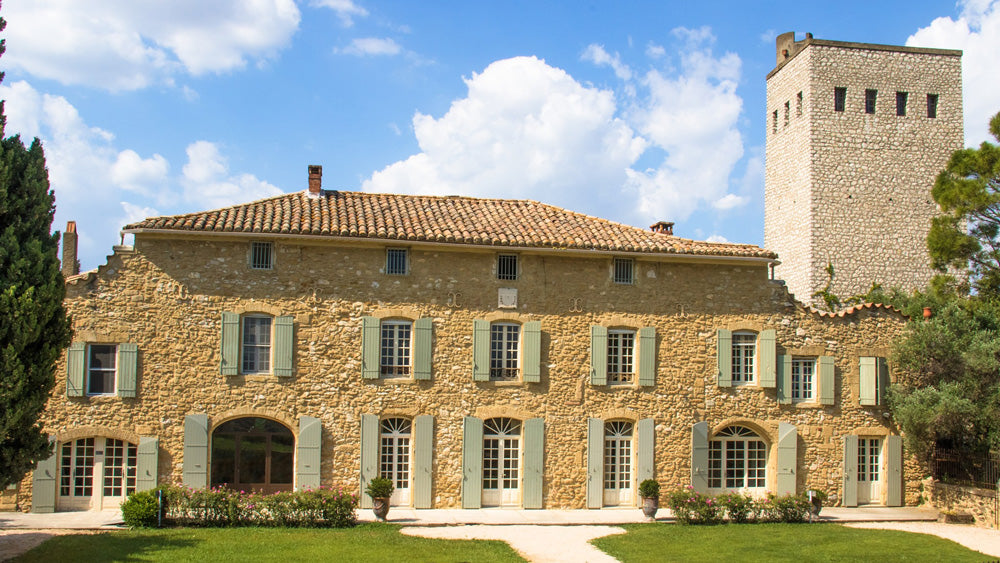
La Gardine's vineyards span several of Châteauneuf-du-Pape's distinct soil types, from the famous galets roulés — those large, smooth, heat-retaining pebbles — to sandy and clay-limestone patches that give freshness and structure respectively. The galets absorb heat during the day and radiate it back at night, keeping the fruit ripening steadily through the long, dry Provençal summers. The mistral wind is both a blessing and a challenge: it keeps the vines dry and disease pressure low, but it can also stress the fruit if it blows hard at the wrong moment. Together these conditions produce wines of warmth and concentration that nonetheless retain a mineral edge.
Châteauneuf-du-Pape sits at the heart of the southern Rhône, and its rules are among the most permissive of any major French appellation — up to 18 grape varieties are permitted, though Grenache dominates almost everywhere. Minimum alcohol is 12.5%, though in practice most wines come in well above that given the region's heat, and the wines must be made from hand-harvested fruit. The appellation's reputation was built on its papal history — the 14th-century popes who moved to Avignon planted vines here — and while that heritage sometimes attracts inflated prices, the best estates consistently justify their standing. Compared to its neighbours in Gigondas or Vacqueyras, Châteauneuf tends to be riper, more powerful, and more age-worthy, though the gap is narrowing as those appellations gain confidence.
The 2023 growing season in the Southern Rhône was defined by heat and drought, following a pattern that has become familiar across the south of France but was particularly pronounced here. A dry winter left soils with limited water reserves before the season even began, and summer temperatures pushed hard — stressing younger vines while older, deep-rooted Grenache and Mourvèdre held their nerve. Yields were down across much of the appellation, which concentrated what remained. Growers who managed canopies carefully and picked at the right moment produced outstanding fruit; those who hesitated found alcohol climbing and freshness fading.
What emerged is a vintage of real substance — ripe, structured, and with the kind of density that rewards patience. Grenache, the region's anchor variety, produced wines with genuine depth without tipping into jammy excess, while Syrah and Mourvèdre added grip and definition. Châteauneuf-du-Pape in particular looks impressive, with the better wines needing another two or three years to fully settle. The more approachable village-level wines are drinking well now, but the serious cuvées from 2023 have a long runway ahead of them.
FAQs
What does this wine taste like?
Dark plum, kirsch, and dried fig on the nose, with wild herbs — thyme, rosemary — running through everything. The palate is full-bodied and warming, with ripe but well-mannered tannins, good acidity, and a savoury, mineral finish. It's generous without being overblown.
When should I drink it?
We'd suggest waiting until 2027 or 2028 to let it settle properly. It will drink well until around 2038, with its peak likely falling somewhere in the early-to-mid 2030s. That said, it won't punish you for opening a bottle a year early.
What food should I serve with it?
Slow-braised beef or lamb are the obvious partners — daube de boeuf, a shoulder of lamb with garlic and anchovy, or roasted wild boar. Aged hard cheeses like Comté work well too, and tapenade with good bread is a perfectly respectable way to start an evening with this in the glass.
Should I decant it?
Yes. Give it around 45 minutes to an hour in a decanter before serving. It's young enough that the fruit needs air to open up, and a large-bowled glass will help the herbal and spice notes express themselves properly.
Is it worth cellaring?
Absolutely, if you have the patience. This is a proper Châteauneuf built for the medium term — not a wine that demands decades in the cellar, but one that will reward three to eight years of waiting with significantly more complexity and integration than it shows right now.
How does La Gardine compare to other Châteauneuf-du-Pape producers?
La Gardine sits comfortably in the reliable upper-middle tier of the appellation — not as flashy as some of the trophy names, but consistently honest and well-made. Think of it as the kind of estate that serious wine lovers return to precisely because it doesn't overpromise. Good value relative to the appellation's bigger names.
Want to know more?
Discuss your requirements with our account managers, Jeremy & Jen
-
Personal Service
- Our team are always on hand to support you, taking orders online, by phone or email & responding to urgent requests.
- Our efficient warehouse & team of drivers always go the extra mile to deliver our wines to you.
- Our new, high-capacity warehouse ensures excellent availability of wines.
- Our new enterprise platform means hassle-free service, from inventory to billing.
-
Our Sales Team
Speak to one of our teamJeremy Cowan
After managing his own stores and a further stint in independent retail, Jeremy has dedicated 12 years to trade sales in the North West.
Jen Neilan
Twenty years in hospitality later, after curating the wine list for Manchester’s first Neapolitan pizza restaurant, and running a natural wine bar, Jen made the move to the other side of the table.