
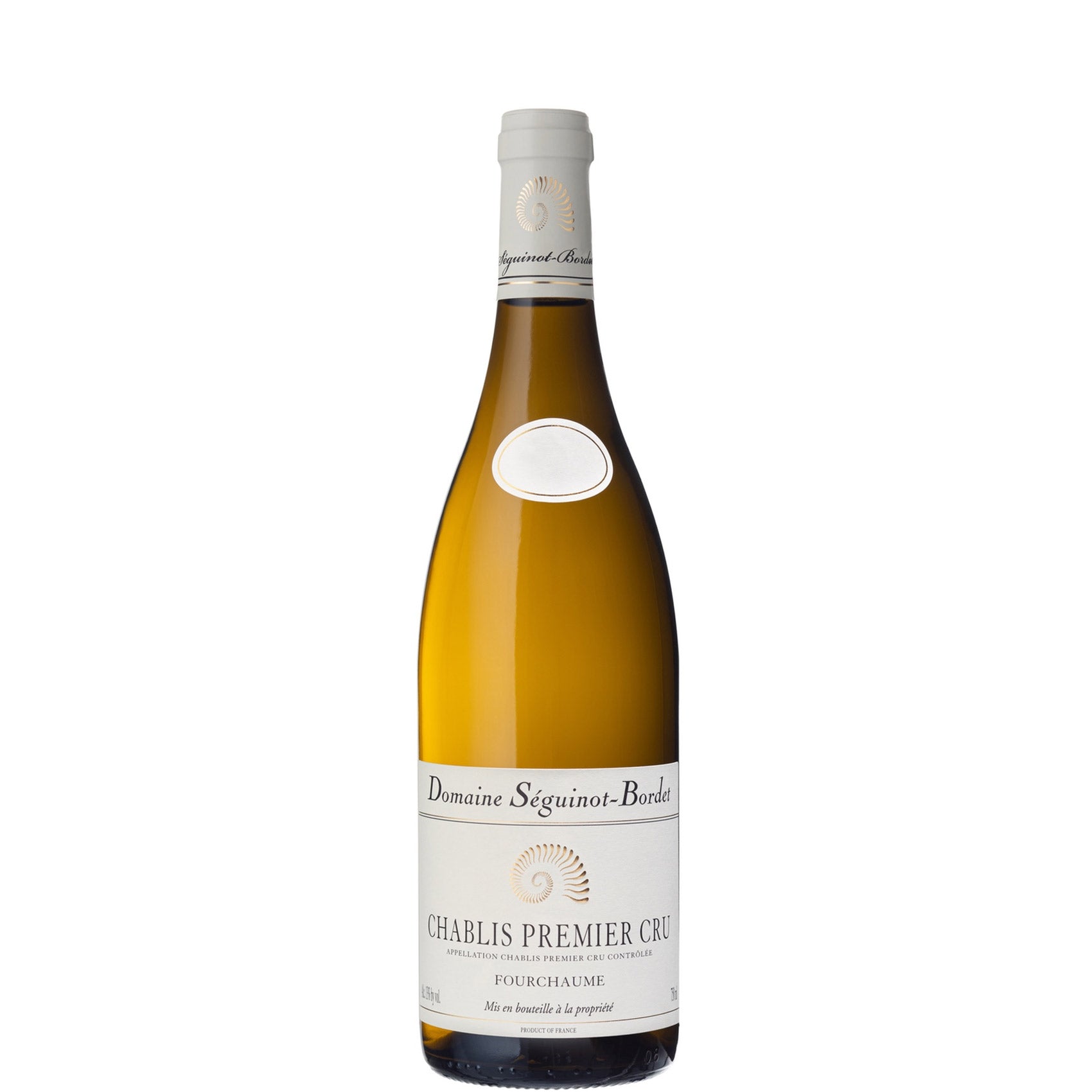
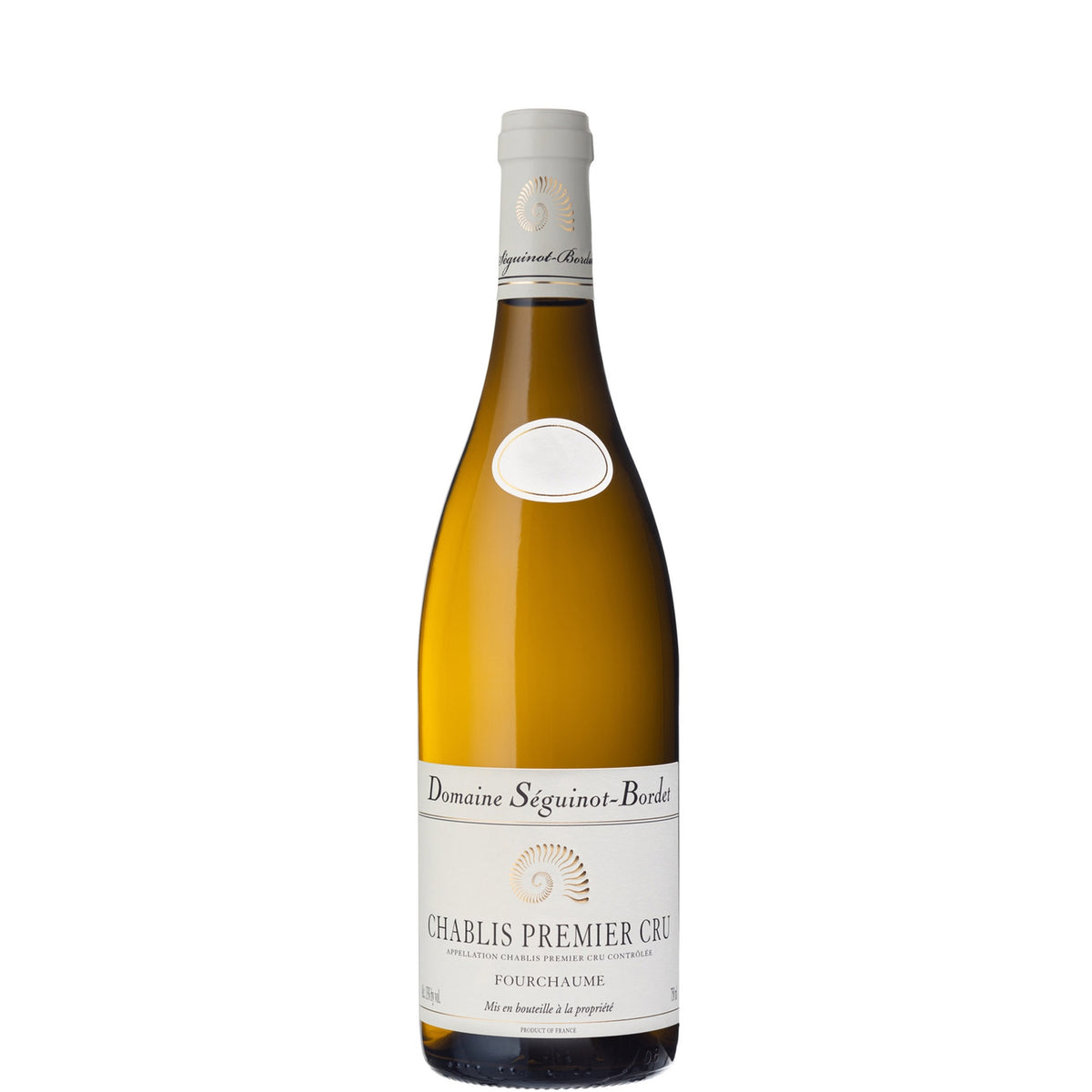
Chablis Premier Cru 'Fourchaume', Domaine Séguinot-Bordet, 2025
Chablis Premier Cru 'Fourchaume', Domaine Séguinot-Bordet, 2025
- White Still
- 75.0cl
- 12.5%
- Chardonnay
Fourchaume is Chablis Premier Cru royalty in all but name, perched on the right bank of the Serein with a south-facing aspect that ripens Chardonnay just enough to give it flesh without ever losing its nerve. Domaine Séguinot-Bordet, a family estate run with quiet precision through six generations, makes a Fourchaume that speaks of chalk and cool air rather than oak or artifice.
Expect a wine still in its infancy as we write this, all green apple and citrus zest, with that unmistakable flinty tension Chablis lovers chase. This is the kind of wine that makes you understand why Chablis needs no fancy perfume to seduce.
- ❖ ABV: 12.5%
Grapes
Chardonnay
Vintage report
The 2025 vintage in Burgundy remains a work in progress, with harvest only recently concluded and the wines still settling into their skins in cellars across the Côte d'Or. Early reports suggest a season that kept vignerons on their toes, though we're still waiting for the full picture to emerge as the wines complete their primary fermentation and malolactic conversion.
What we can say is that 2025 appears to be shaping up as a vintage that will require patience rather than immediate gratification. The reds seem to have good colour and structure, whilst the whites are showing promising acidity that should reward those willing to wait. We'd recommend holding fire on firm judgements until the wines have had proper time to show their true character, likely not until late 2026 at the earliest. For now, it's one to watch rather than one to declare.
Tasting Notes
AppearancePale lemon with a faint green tinge at the rim.
NoseGreen apple, white peach, and lemon zest lifted by a distinct flinty, oyster-shell minerality. There's a quiet floral note underneath, white blossom rather than anything showy.
PalateBright and taut, with citrus and orchard fruit carried on a chalky, saline backbone. The acidity is vivid but well-judged, giving real energy without ever feeling sharp.
FinishLong, dry, and mineral, with a persistent note of crushed stone.
Overall impressionA coiled, precise Chablis that needs a little patience to show its full hand.
Food Pairings
In Chablis itself, this would happily sit beside andouillette grilled over coals or a simple plate of jambon persillé from the local charcuterie. Oysters are the obvious match, their brininess echoing the wine's own salinity, but we'd also reach for a creamy Époisses or a quenelle de brochet in beurre blanc. Escargots with garlic butter, a Burgundian classic, work wonderfully too, the wine's acidity cutting straight through the richness.
We think this wine would go well with
Serve at 10-12°C, cool enough to keep the acidity crisp but not so cold as to mute the aromatics. No decanting required, though opening it twenty minutes before serving won't hurt. A tulip-shaped white wine glass will concentrate the mineral nose without losing the delicacy of the fruit.
Fourchaume sits on the right bank of the Serein, its slopes facing south and southeast to catch maximum sunshine in a marginal climate. The soils are the famous Kimmeridgian marl, a crumbly mix of limestone and clay studded with tiny fossilised oyster shells, which gives Chablis its signature salinity. The cooler mesoclimate here, tempered by the river below, preserves acidity even as the grapes reach full ripeness.
Chablis Premier Cru sits one rung below Grand Cru in the village's strict hierarchy, covering specific named climats including Fourchaume that consistently produce wines of greater depth and ageing potential than straight Chablis. The appellation demands Chardonnay alone, grown on Kimmeridgian limestone, and typically shows more textural weight and complexity than basic Chablis while retaining the region's hallmark austerity and chalky drive.
The 2025 vintage in Burgundy remains a work in progress, with harvest only recently concluded and the wines still settling into their skins in cellars across the Côte d'Or. Early reports suggest a season that kept vignerons on their toes, though we're still waiting for the full picture to emerge as the wines complete their primary fermentation and malolactic conversion.
What we can say is that 2025 appears to be shaping up as a vintage that will require patience rather than immediate gratification. The reds seem to have good colour and structure, whilst the whites are showing promising acidity that should reward those willing to wait. We'd recommend holding fire on firm judgements until the wines have had proper time to show their true character, likely not until late 2026 at the earliest. For now, it's one to watch rather than one to declare.
FAQs
What does this wine taste like?
Crisp and mineral, with green apple, citrus, and a distinctive chalky, saline edge typical of Chablis.
When should I drink this wine?
It's better from 2027 onwards once the fruit settles, and will drink well until 2036.
What food should I pair it with?
Oysters and other shellfish are classic, but it also suits creamy cheeses, grilled charcuterie, or escargots.
How should I serve it?
Serve at 10-12°C in a white wine glass; no decanting needed.
Is this wine worth cellaring?
Yes, Premier Cru Fourchaume has the structure to reward a few years of patience, though it's not built for decades-long ageing.
Want to know more?
Discuss your requirements with our account managers, Stephanie, Ed, & Jen

-
Personal Service
- Our team are always on hand to support you, taking orders online, by phone or email & responding to urgent requests.
- Our efficient warehouse & team of drivers always go the extra mile to deliver our wines to you.
- Our new, high-capacity warehouse ensures excellent availability of wines.
- Our new enterprise platform means hassle-free service, from inventory to billing.
-
Our Sales Team
Speak to one of our teamStephanie Duncan
With 25+ years in the wine trade, Steph knows the UK market inside out, from premium wine and wholesale to hospitality and retail. A WSET Diploma holder and unapologetic Champagne fan, she loves building great relationships and finding exciting wines.
Jen Neilan
Twenty years in hospitality later, after curating the wine list for Manchester’s first Neapolitan pizza restaurant, and running a natural wine bar, Jen made the move to the other side of the table.