

Bourgogne Aligoté, Albert Bichot, 2024
Bourgogne Aligoté, Albert Bichot, 2024
- White Still
- 75.0cl
- 12.5%
- Organic
- Aligoté
Aligoté is Burgundy's other white grape — the one that isn't Chardonnay, and rather proud of it. Albert Bichot, one of the Côte d'Or's most established négociant-growers, turns out a textbook example of the style: lean, lively, and built for the table rather than the cellar. Expect a wine of real freshness, with green apple, lemon, and a distinctly chalky, almost saline quality that makes it genuinely thirst-quenching rather than merely pleasant.
This is the grape that goes into a Kir, and you can taste why — it has the bright, slightly tart character that plays beautifully against a splash of blackcurrant liqueur. But it absolutely doesn't need one. Drink it young, drink it cold, and drink it with something simple and good.
- ❖ ABV: 12.5%
Grapes
Aligoté
Vintage report
The 2024 growing season in Burgundy was, frankly, a test of nerve. A wet spring brought significant mildew pressure, and vignerons who stayed sharp in the vineyard — working fast, keeping canopies open, reducing yields where necessary — came out the other side with something worth talking about. Summer brought warmer, drier conditions that helped the fruit recover composure, and harvest arrived broadly on the later side, with growers picking carefully to find phenolic ripeness without sacrificing freshness. Quantity was down across much of the Côte, which concentrates minds as much as it concentrates wine.
What emerged is a vintage that rewards those who put the work in. The Pinots we have tasted carry real precision and translucency — not because they are light, but because the acidity is lively and the fruit unforced. Chardonnays from the Côte de Beaune look particularly promising: taut, mineral, with genuine length. This is not a vintage to panic-open. Most village and premier cru reds want three to five years at minimum, with the better appellations drinking well until 2035 and beyond. The whites are more approachable now, though the best will reward patience too.
Tasting Notes
AppearancePale gold with a hint of green, clear and bright in the glass.
NoseCrisp and clean, with green apple, lemon rind, and a touch of white blossom. There's a flinty, slightly chalky quality underneath that gives it more character than you might expect at this level.
PalateLight to medium-bodied with a sharp, lively acidity that's the whole point here. Green apple and citrus again, with a saline, mineral thread running through to the finish. It's lean and precise rather than generous.
FinishShort to medium, clean and refreshing, with a lingering citrus and chalk edge.
Overall impressionAn honest, lively Aligoté that does exactly what you want it to — no more, no less.
Food Pairings
In Burgundy, Aligoté is the aperitif grape — it's what locals pour before they open the good stuff, often with gougères fresh from the oven or a plate of jambon persillé. In Bouzeron and the Côte Chalonnaise, you'll find it alongside escargots in garlic butter, where the wine's acidity cuts through the richness perfectly. It's also a natural match for fresh chèvre or a simple salade Lyonnaise with lardons and a poached egg. And, of course, there's always a Kir — a splash of Cassis de Dijon in a glass of cold Aligoté remains one of Burgundy's great pleasures.
We think this wine would go well with
Serve well-chilled, between 8 and 10°C — this is not a wine that benefits from warming up. No need to decant; pour it straight from the fridge and drink it fresh. A standard white Burgundy tulip glass works well, though a smaller, narrower glass will help keep it cool if you're drinking slowly.
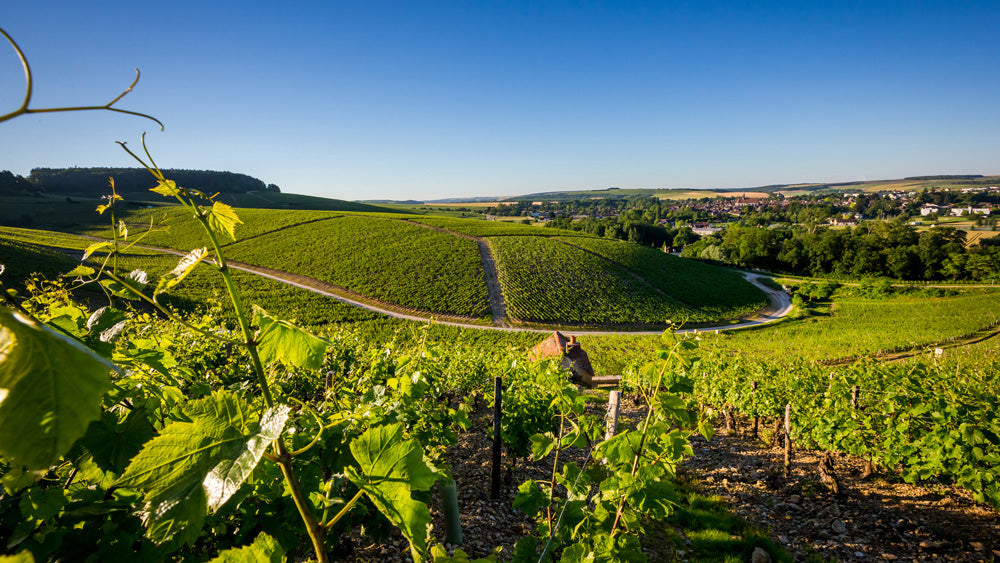
Bourgogne Aligoté is a regional appellation, so fruit can be sourced from across Burgundy, though Aligoté has traditionally found a home on less favoured limestone hillside sites and in the village of Bouzeron in the Côte Chalonnaise. The soils tend to be thin, stony, and calcium-rich, which suits the grape's naturally high acidity and lean frame. The cooler sites and limestone subsoil give the wine its characteristic chalkiness and minerally edge.
Bourgogne Aligoté is the regional AOC dedicated solely to Aligoté, Burgundy's secondary white grape. It can be produced across the region, though the best expressions often come from the Côte Chalonnaise village of Bouzeron, which has its own AOC for single-village Aligoté. The rules are straightforward: 100% Aligoté, and no mistaking it for Chardonnay — it's lighter, sharper, and more nervy by nature. It sits below village and premier cru Burgundy in the hierarchy, but at its best it is a characterful, honest wine that puts freshness first.
The 2024 growing season in Burgundy was, frankly, a test of nerve. A wet spring brought significant mildew pressure, and vignerons who stayed sharp in the vineyard — working fast, keeping canopies open, reducing yields where necessary — came out the other side with something worth talking about. Summer brought warmer, drier conditions that helped the fruit recover composure, and harvest arrived broadly on the later side, with growers picking carefully to find phenolic ripeness without sacrificing freshness. Quantity was down across much of the Côte, which concentrates minds as much as it concentrates wine.
What emerged is a vintage that rewards those who put the work in. The Pinots we have tasted carry real precision and translucency — not because they are light, but because the acidity is lively and the fruit unforced. Chardonnays from the Côte de Beaune look particularly promising: taut, mineral, with genuine length. This is not a vintage to panic-open. Most village and premier cru reds want three to five years at minimum, with the better appellations drinking well until 2035 and beyond. The whites are more approachable now, though the best will reward patience too.
FAQs
What does Bourgogne Aligoté taste like?
Think crisp green apple, lemon rind, and a chalky, saline edge. It's light, sharp, and refreshing rather than rich or round — if you love Chablis, you'll feel at home here.
When should I drink this wine?
Now. This is a 2024 wine best drunk in 2026 or 2027 while the fruit is vivid and the acidity is singing. It won't improve with age — freshness is the whole point.
What food works best with this wine?
It's a natural aperitif wine, great with gougères, fresh goat's cheese, or charcuterie. It also works well with escargots, light fish dishes, or anything with a buttery or creamy element that needs a sharp counterpoint.
How should I serve it?
Serve it cold — around 8 to 10°C. Straight from the fridge is fine. No decanting needed, and a standard white wine tulip glass does the job perfectly.
Is Aligoté worth exploring if I usually drink white Burgundy?
Yes, and at a fraction of the price of village Chardonnay. It's a different register entirely — leaner, more tart, more mineral — but that's what makes it interesting. It's Burgundy in its most unguarded, unpretentious form.
What is the difference between Bourgogne Aligoté and Bouzeron?
Bouzeron is a specific village appellation in the Côte Chalonnaise dedicated entirely to Aligoté, often considered the finest expression of the grape. Bourgogne Aligoté is the broader regional appellation and can source fruit from across Burgundy. Bouzeron tends to show more depth and precision; Bourgogne Aligoté is typically lighter and made for early drinking.
Want to know more?
Discuss your requirements with our account managers, Jeremy & Jen

-
Personal Service
- Our team are always on hand to support you, taking orders online, by phone or email & responding to urgent requests.
- Our efficient warehouse & team of drivers always go the extra mile to deliver our wines to you.
- Our new, high-capacity warehouse ensures excellent availability of wines.
- Our new enterprise platform means hassle-free service, from inventory to billing.
-
Our Sales Team
Speak to one of our teamJeremy Cowan
After managing his own stores and a further stint in independent retail, Jeremy has dedicated 12 years to trade sales in the North West.
Jen Neilan
Twenty years in hospitality later, after curating the wine list for Manchester’s first Neapolitan pizza restaurant, and running a natural wine bar, Jen made the move to the other side of the table.